
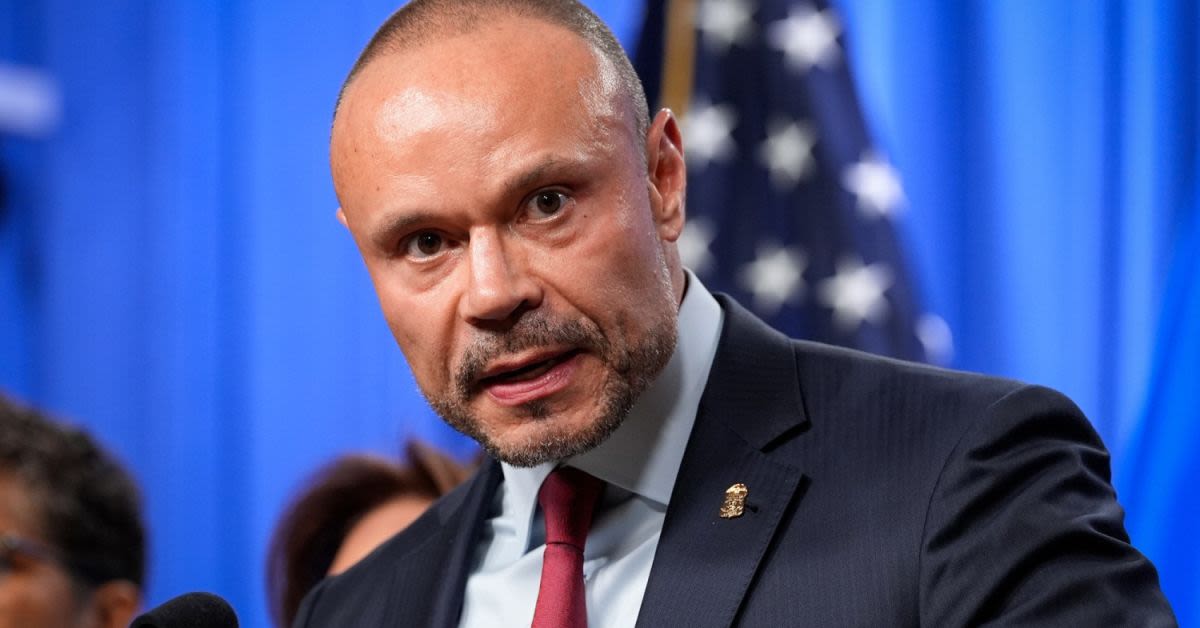
The former Deputy Director of the FBI is urging Americans to start preparing now for a potential crisis as governments across the Western world quietly move to stockpile supplies and harden critical infrastructure.
According to the Daily Mail, Dan Bongino, who resigned as the FBIs number two official in January after just a year in the post, is warning that ordinary citizens should mirror the guidance now being pushed by several European governments and have a basic emergency plan in place, including at least three days worth of food and power. He argued that what is being recommended in the United Kingdom and across Europe ought to be standard practice in the United States, where families have long prided themselves on self-reliance and personal responsibility rather than dependence on federal agencies.
Have yourself an emergency radio, have yourself some batteries, get yourself some emergency food, get yourself a rain collection and water filtration, some filtration tablets, Bongino said on Monday, laying out a simple checklist that any household could follow. Get your stuff today. Please. Do it for your family, he added, framing preparedness not as paranoia but as a basic duty to loved ones in an increasingly unstable world.
Governments in the UK, Sweden, Germany, Ireland, the Netherlands and France have all encouraged households to keep food, water, medicines and other essentials on hand for emergencies, a coordinated posture that has raised questions about what Western officials see on the horizon. The UKs updated guidance, released this month, recommends enough supplies for three days to help families cope if severe weather, cyberattacks or other disruptions interrupt essential services, a modest but telling acknowledgment that government may not be able to respond instantly when systems fail.
Bongino, who previously served in the Secret Service and the New York Police Department before his brief tenure at the FBI, said that preparing in advance can reduce anxiety and prevent families from being caught without necessities when a crisis hits. Theres nothing wrong with being prepared. Its not panicking or anything like that, he said, pushing back against the media caricature that anyone who plans ahead is some sort of fringe prepper.
Across Europe, public warnings have urged citizens to begin storing emergency food and water in case of a crisis, even as officials have been vague about the specific threats they anticipate. Stock images of families with flashlights and canned goods now accompany government advisories, underscoring how mainstream the message of basic self-sufficiency has become in countries that typically lean heavily on expansive welfare states.
The former Deputy Director of the FBI is now using his platform as a conservative commentator to press Americans to take similar steps, arguing that the United States is not immune to the same vulnerabilities. Bongino announced his resignation as the bureaus number two on December 17, 2025, without offering a clear explanation for his abrupt departure, a move that fueled speculation among conservatives already distrustful of the agencys direction.
The long-time law enforcement officer explained that the U.S. military is already preparing for a potential crisis that could cut off access to food, water and emergency supplies, and that the public should not assume the Pentagons contingency plans will automatically shield civilians. Bonginos warning came just hours after details emerged of FORTRESS, a sweeping plan to keep U.S. forces fighting and military bases stocked for at least 90 days even if civilian infrastructure fails, highlighting a stark contrast between military readiness and civilian complacency.
The Pentagons doing its job to keep our national security safe and make Fortress America. You have to make Fortress my house, Fortress my apartment. Please, do it for everyone. Your neighbors are not going to have any extra food, he said on his podcast, urging listeners not to assume that others will bail them out. The Pentagons emergency plan arrives as several European countries issue urgent pleas for citizens to begin stockpiling supplies for a potential disaster, though the alerts have conspicuously avoided spelling out exactly what kind of emergency they are bracing for.
Bongino, 51, stressed that emotional overreaction is itself a danger, insisting that calm, advance planning is the best way to avoid tragedy when events spiral out of control. Panic kills has become a recurring theme in his commentary, and he reiterated that message by saying, I was not in the military. I havent been in combat but ask your heroes who have been. They will tell you: you cant panic.
Under the FORTRESS plan, the Pentagon is calling for portable nuclear reactors, large battery systems and independent local power grids to keep U.S. military bases running during blackouts or cyber-induced grid failures. Every major military base in the continental United States is expected to maintain essential operations, including independent access to electricity, water, fuel and communications for 90 days, a level of redundancy that stands in sharp contrast to the fragility of many American cities.
British officials, for their part, have launched the Be Ready campaign, urging the public to prepare for a possible disaster by stockpiling basic supplies and planning for temporary disruptions to daily life. Civilian factories in the United States would also be prepared to switch to defense production under FORTRESS, backed by stockpiles of ammunition, fuel, critical minerals, electronics, spare parts and medical supplies, a reminder that industrial capacity still matters in a dangerous world.
Critical military needs would require at least two qualified supply or production options to prevent the loss of a single supplier from disrupting operations, a redundancy that free-market conservatives have long argued is essential for national security. Pentagon chief spokesperson Sean Parnell told Fox News: We don't want to rely on standard civilian municipal infrastructure to run our national defense, a blunt admission that the civilian grid and supply chains are simply not reliable enough in a crisis.
The warnings from Bongino and the Pentagon come against a backdrop of boiling tensions across Europe that have already devolved into mass civil unrest, with riots and protests erupting in Paris, Rome, Milan, Barcelona and Albanias capital of Tirana. In the UK, officials formally launched the Be Ready campaign on October 22, urging households to keep multiple days worth of essentials in case a crisis temporarily disrupts everyday services, a message that implicitly acknowledges the limits of big-government promises.
In Sweden, the countrys civil defense guidance is now warning households to be able to manage on their own for at least one week in case of crisis or war, a striking shift for a nation often held up by progressives as a model social democracy. The state of the world has worsened drastically in recent years. War is being waged in our vicinity. Extreme weather events are becoming increasingly common. Terror threats, cyberattacks, and disinformation campaigns are being used to undermine and influence us, the bulletin stated, capturing a sense of unease that is no longer confined to conservative circles.
Bongino, who returned to conservative commentary and podcasting after leaving the FBI, has long been a lightning rod for controversy over his criticism of the federal bureaucracy. Prior to taking the Deputy Director role under FBI leader Kash Patel, he accused the FBI and Department of Justice of acting as the so-called deep state, which targeted President Trump and other conservatives during the Biden Administration, a charge that resonated with many on the right who watched the weaponization of federal power with alarm.
Months after exiting the intelligence community, Bongino said he was living in fear and believed thugs might come after him for his outspoken views. I'm terrified, he said on the Hang Out with Sean Hannity podcast in May. Theyre going to send some thugs to my house, remarks that underscored his belief that entrenched elements within the government resent internal dissent.
Bongino has previously referred to some of his former FBI colleagues as thugs, though it remained unclear exactly whom he was referencing in those comments, a vagueness that critics seized upon even as supporters saw it as further evidence of a hostile bureaucracy. His latest warning, however, is less about internal politics and more about the specific preparedness messages now being broadcast across Europe, including a joint statement from the UK and Canada announcing the strengthening of their defense financing and cooperation on defense industrial readiness.
Elsewhere, Japans Disaster Management Minister Goshi Hosono has announced that on November 2 the nation will officially urge every household to keep at least three days of food, water and toilet supplies so people can manage on their own immediately after a major natural disaster such as a large earthquake or volcanic eruption. For Bongino and many conservatives, these moves abroad and the Pentagons FORTRESS blueprint at home point to a simple conclusion: in an era of geopolitical turmoil, cyber threats and social unrest, families cannot afford to outsource their safety to sprawling bureaucracies when a modest investment in personal preparedness could make all the difference.
Login