
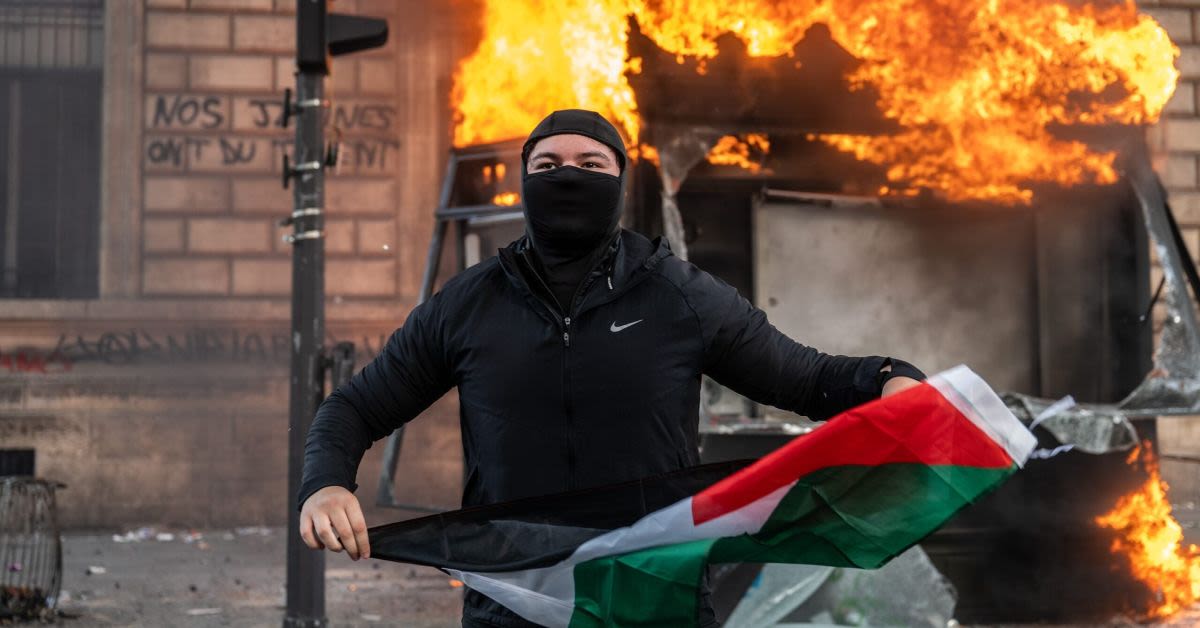
Hundreds of demonstrators stormed Romes ancient Colosseum and clashed with police at its historic gates as unrest over economic hardship and the Gaza war spilled from France into Italy over the weekend.
According to the New York Post, many of the protesters were young and waving Palestinian flags as they cheered and shouted inside the 2,000-year-old amphitheater while security forces moved to expel them. The chaotic scenes in Rome were mirrored nationwide on Saturday, with thousands marching through Rome, Milan, Turin and other cities to denounce the cost-of-living crisis and the ongoing conflict in Gaza.
Authorities had already tightened security at the Colosseum after months of unruly behavior by tourists, designating the monument a security red zone last month. Alongside the clashes at the arena, officials reported another violent confrontation near the Piazza della Repubblica, where police used tear gas and water cannons to disperse the crowd.
In Milan, demonstrators escalated their tactics by dumping manure outside the countrys energy regulator and burning an oversized electricity bill. Businesses across the city boarded up their windows, wary of a repeat of last weeks looting in France, where protesters were filmed fleeing with luxury goods.
Prime Minister Giorgia Meloni deployed roughly 500 soldiers to Milan to reinforce the 5,000 police officers already on the streets, underscoring the governments determination to restore order. The soldiers were deliberately limited in their equipment, carrying no pepper spray or Tasers and armed only with plastic restraint ties to help arrest rowdy protesters, Defense Minister Guido Crosetto said.
The Italian unrest closely mirrors the demonstrations that erupted in France last month and have since rippled across Europe amid mounting economic anxiety. Along with Italy, large protests were reported in the capitals of Spain, Portugal and Albania, raising fresh questions about how long European leaders can tolerate escalating street radicalism before it further undermines public safety and economic stability.
Login