
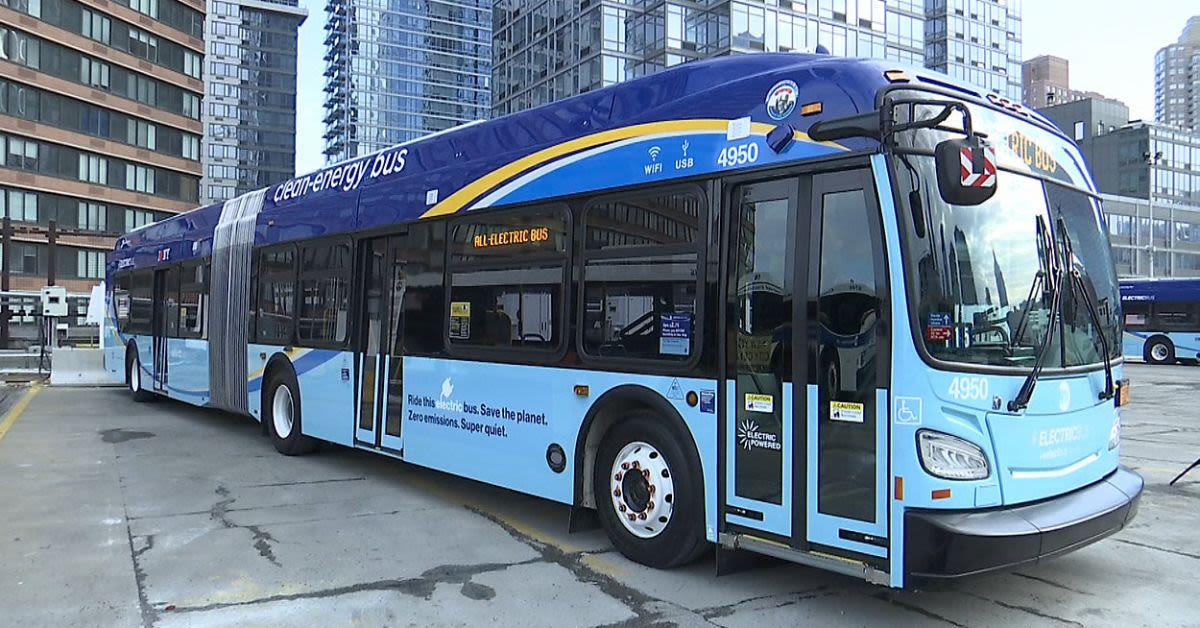
New York Citys transit leadership has abruptly halted a key bus fare-enforcement initiative after a widely publicized confrontation between unarmed inspectors and a school aide accused of skipping a $2.90 ride.
According to Just The News, the Metropolitan Transportation Authority announced it is suspending its Evasion and Graffiti Lawlessness Eradication, or EAGLE, program, a system that deployed roughly 350 civilian inspectors to check fares and issue civil citations on buses. These inspectors, hired directly by the MTA, have no legal authority to detain or arrest riders, a limitation that now sits at the center of a growing debate over public order, accountability, and the rule of law on New Yorks transit network.
The move follows the release of surveillance footage that appears to show several EAGLE inspectors wrestling 53-year-old school aide Kyler Taylor to the floor of a Bronx bus during a fare dispute. Taylor, who is black, has threatened to sue the MTA for racial discrimination, according to published reports, injecting race and civil rights claims into what is fundamentally a question of whether the city is willing to enforce basic standards of conduct on public transportation.
"I was not happy that the leadership of the MTA, and even New York City Transit, didnt even hear about that episode until more than a week afterward," MTA chief executive Janno Lieber told reporters, signaling frustration not only with the incident but with the agencys internal communication failures. "Im not willing to keep our teams active in the field until I know all protocols are followed," he added, effectively sidelining fare enforcement on buses at a time when the system is hemorrhaging revenue.
Fare evasion has become a massive drain on the MTAs finances, with more than $1 billion lost in 2025 to riders who refuse to pay and motorists who dodge tolls, according to a state watchdog report. The MTA itself acknowledged two years ago that nearly half of bus ridersan astonishing 48%were not paying the required fare, a figure that would be unthinkable in any responsibly managed system.
The Citizens Budget Commission, a nonpartisan fiscal watchdog, estimates that the MTA forfeited $568 million in unpaid bus fares and $350 million in unpaid subway fares in a single year. Another $46 million vanished from commuter rail fare evasion and $51 million from unpaid bridge and tunnel tolls, underscoring how a culture of noncompliance can metastasize across an entire network when enforcement is weak or politically constrained.
The MTAs $918 million loss to subway and bus fare evasion in 2024 alone was triple the $305 million lost in 2019, before the COVID-19 pandemic disrupted ridership patterns. That 2024 figure was also 53% higher than the $600 million lost in 2022, according to the watchdog report, illustrating how quickly disorder and lax enforcement can escalate when deterrence is undermined.
Transit officials insist they have recently made headway, saying fare evasion has declined "steadily" from the third quarter of 2024 through the second quarter of 2025 even as ridership climbed. They also cite increased arrests and civil citations as evidence that targeted enforcement can work when it is allowed to function without being paralyzed by political pressure or activist outrage.
Fares and tolls generate roughly $7 billion annually for the MTA, forming a critical pillar of its operating budget and reducing the need for ever-expanding taxpayer subsidies. The agency warns that every dollar lost to evasion "impairs the MTAs financial stability, threatens reliable transit for all New Yorkers, and increases the need for alternative revenue sources, including through larger fare and toll hikes," a stark reminder that when government refuses to enforce basic rules, law-abiding riders and drivers are the ones left to pick up the tab.
Login