
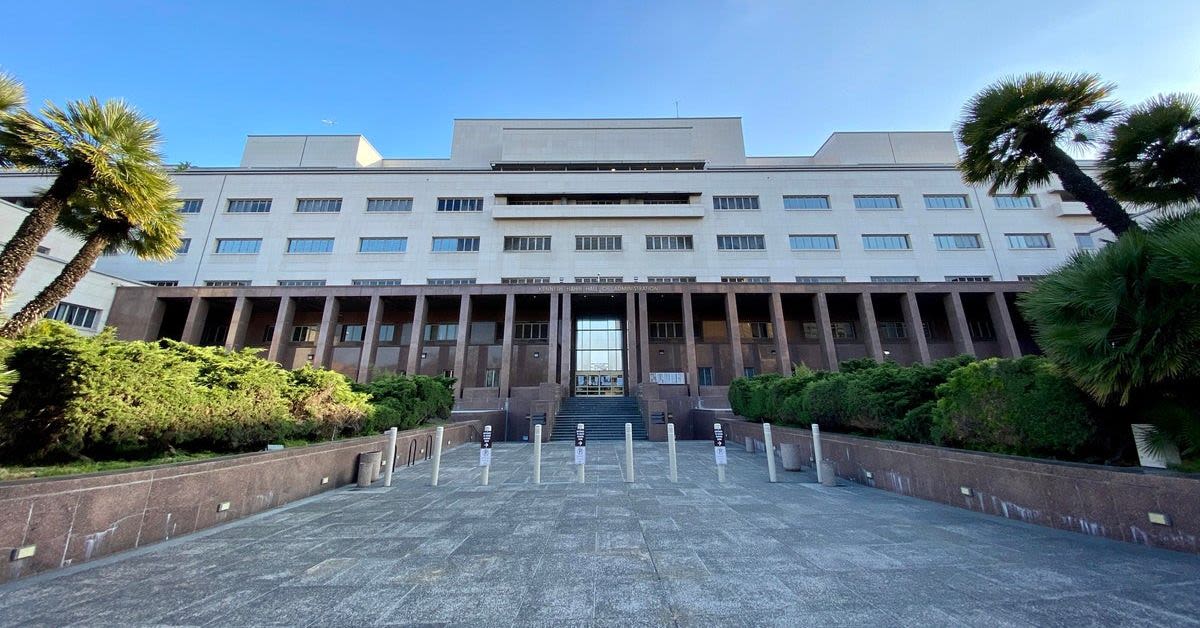
Los Angeles County has quietly begun opening some public meetings with a sweeping labor acknowledgment that portrays the American economy as fundamentally rooted in stolen and exploited labor, raising new concerns about taxpayer-funded ideological messaging in government forums.
According to Just The News, the scripted statement was spotlighted by City Journal investigative reporter Austen Hufford, who posted video on X last week of the pre-recorded message being played at a county meeting. The acknowledgment, now circulating on county servers, declares that Most modern-day U.S. institutions have benefited from the unaddressed legacy of stolen labor at the foundation of this nation and its vast and inequitable wealth, framing the United States as structurally unjust from its inception.
The message goes on to assert a sweeping moral liability on behalf of current residents and officials. We respectfully acknowledge our debt to the enslaved people, primarily of African descent, whose labor and suffering built and grew the economy and infrastructure of a nation that refused to recognize their humanity, the acknowledgment continues, effectively placing contemporary citizens in a posture of perpetual apology for historic wrongs.
Hufford, who first drew public attention to the recording, contends that the language is not a neutral historical statement but a politicized narrative being imposed without public consent. In an interview with Just the News, Hufford argued the statement casts the county's residents of color as victims of theft even though California was at no time in history a slave state, challenging the factual and moral basis for such a sweeping claim in this particular jurisdiction.
They're claiming that, you know, the country is built on slavery, and that every person of color in Los Angeles has had their, you know, I guess their money stolen from them in some sense, City Journal reporter Austen Hufford told the Just the News, No Noise TV show. And remember, you know you don't need to be a history scholar to remember that California joined America as a free state. So [...] it's very unclear what they're even apologizing for, to be honest. To me, it's just kind of crazy that this propaganda is being pushed to all of the citizens at every public meeting without any sort of discussion about what's actually going on, he continued.
California entered the Union as a free state in 1850, a fact that undercuts the implication that the state itself was built on chattel slavery. Yet the countys new script adopts a nationalized guilt narrative, blurring distinctions between states that permitted slavery and those that did not, and treating all present-day institutions as beneficiaries of the same alleged stolen labor.
The labor acknowledgment does not stop with slavery but extends the concept of a collective debt to a broad array of groups. It recognizes indigenous people, Chinese immigrants that built railroads, Japanese-Americans interned during World War II by order of President Franklin D. Roosevelt, and Mexican immigrants, effectively transforming a public meeting preamble into a catalog of historical grievances.
The text then shifts from past to present, insisting that the modern economy still rests on systemic exploitation. We recognize that our economy continues to rely on the exploited labor of incarcerated people, largely people of color, who earn pennies an hour while generating billions in goods and services each year, the acknowledgment reads, echoing activist rhetoric that equates prison labor with a continuation of slavery.
Basic questions about democratic accountability remain unanswered, including who wrote the statement and who authorized its use in official proceedings. It is not immediately clear from what meeting the labor acknowledgment was recorded, or who in Los Angeles County approved or even authored the statement, though the video depicts Veronica Lewis, a member of L.A. County's Public Social Services Commission, on screen as the message plays.
The new labor script comes on top of an existing ideological preface already used in county government. L.A. County Board of Supervisors meetings already open with a land acknowledgment that says settler colonization led to land seizure, disease, subjugation, slavery, relocation, broken promises, genocide and "multi-generational trauma," embedding a highly critical view of Americas founding into routine civic business.
That land statement further asserts that the end of legal slavery did not end what activists describe as coerced labor. The statement adds: "While the 13th Amendment to the Constitution technically ended 'slavery' in the U.S., we know that slaverys ongoing impacts are still felt by countless people forced through violence, threats, and coercion to work in the U.S," language that mirrors the broader progressive push to redefine modern economic and criminal-justice practices as forms of neo-slavery.
Initial research into the labor acknowledgments origins points away from local voters and toward national activist networks. Initial research shows that the statement originates from various left-wing community organizations, and its origin appears to be from Solid Ground, first used by the Seattle-based anti-racism nonprofit on September 5, 2022, suggesting that Los Angeles officials may have imported a pre-packaged ideological script rather than crafting their own language.
Solid Ground, according to public records, is a long-standing nonprofit with significant financial resources. According to ProPublica, Solid Ground is a 501(c)3 tax-free charity operating since at least 1988, and that organization's most recent IRS filings show revenues of $7.95 million, and expenses of $5.37 million, underscoring how well-funded activist infrastructure can shape local government messaging far from its Seattle base.
Despite the statements sweeping claims and moral implications, neither the county nor the nonprofit have explained how this outside language migrated into official Los Angeles proceedings. Neither Los Angeles County nor Solid Ground have disclosed any information available at publication time about how the statement became adopted by the county, while Just the News' research indicates that the statement resides on servers maintained by Los Angeles County, and the file path used (SDSInter/jcod/ati/) indicates that the statement belongs to the records of the Justice, Care, and Opportunities Department (JCOD) (formerly the Alternatives to Incarceration / ATI initiative) within the Los Angeles County system.
Complicating matters further, the county has publicly acknowledged only part of this ideological framework. At the same time, and adding to the mystery of whether it has been adopted countywide, the Los Angeles County Department of Arts and Culture disclosed the adoption of a "land acknowledgment" as part of a larger "Countywide Cultural Strategic Plan" as early as 2022, but is silent on the issue of "labor," leaving residents to wonder how far this new narrative has spread behind the scenes.
Los Angeles is not alone in experimenting with such ritualized declarations, which critics see as moralizing lectures rather than neutral civic formalities. In Denver, Council member Shontel Lewis proposed a labor acknowledgment that would recognize the lasting impact of slavery, the transatlantic slave trade and racial segregation, but some of her colleagues argued that other groups, like Japanese-Americans and indigenous people, should be recognized alongside enslaved Africans, exposing internal disagreements on how far to extend the language of collective guilt.
That Denver proposal ultimately stalled, at least for now. Lewis withdrew the measure in late September, saying the community group she worked with did not support expanding it to other groups, a reminder that even among progressives there is no consensus on how aggressively to rewrite civic rituals around historical grievancewhile in places like Los Angeles County, those decisions appear to be made with little transparency and even less input from the taxpayers expected to sit through them.
Login