
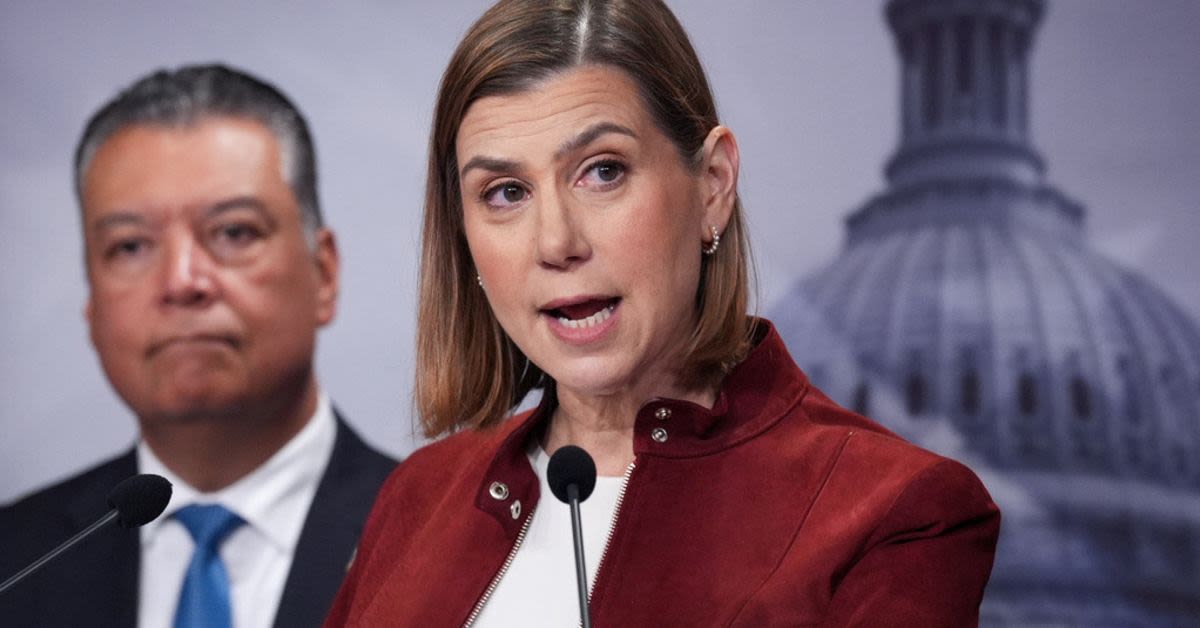
A Democratic senator once marketed as a pragmatic moderate is now facing a formal ethics complaint for openly musing about using government power to frighten young conservatives away from serving in a future Trump administration.
According to RedState, the Center to Advance Security in America (CASA) has filed a complaint with the Senate Ethics Committee against Sen. Elissa Slotkin (D-MI), arguing that her recent comments at the University of Chicago crossed a bright ethical line. The group contends that Slotkins rhetoric went beyond routine partisan criticism and veered into an attempt to intimidate Americans who might consider lawful public service under a Republican president.
Slotkin, who previously portrayed herself as a victim of supposed weaponization of government for being part of the so-called "seditious six," is now under fire for appearing to endorse precisely that tactic against her political opponents. The senators remarks have reignited concerns on the right that Democrats are increasingly comfortable using lawfare and prosecutorial threats as tools to punish dissent and chill conservative participation in government.
During an October 13 appearance at the University of Chicago, Slotkin urged Democrats to pursue signature cases not only against President Donald Trump but also against those who enabled him. She then made her objective unmistakably clear, saying she wanted young Americans graduating from college to look at a job in a Trump administration and conclude it might mean buying myself a ton of problems that I dont want.
I want that deterrence message sent, Slotkin declared, leaving little doubt that the goal was to instill fear in would-be conservative staffers. A clip of the event, shared widely online, was summarized this way: ON UCHICAGO CAMPUS: U.S. Senator from Michigan Elissa Slotkin hopes planned political prosecutions of republican leaders will scare young conservatives from getting involved in politics. @ElissaSlotkin https://t.co/p7NBJpDcQW.
The complaint filed by CASA argues that this language is not mere rhetorical excess but a targeted attempt to chill lawful participation in government based solely on political affiliation. The organization maintains that Slotkins comments were not tied to any specific allegation of criminal conduct, but instead framed service in a Trump administration itself as grounds for future legal trouble.
"Threatening young professionals with future 'problems' for the mere sin of working for the President that the American People elected is an anathema to the very foundations of our political systems," the filing states. "It is already immoral to weaponize our government against those running for office or who have been elected in the form of lawfare."
"But it is another level to weaponize it against those who are entering their careers as public servants." CASAs complaint underscores that such threats, if normalized, would fundamentally alter the incentives for civic engagement, especially for conservatives who already see a double standard in how institutions treat them.
The group further contends that Slotkins threat of lawfare against young professionals for seeking employment with a sitting president violates the Constitution she swore to uphold. It argues that her comments imperil the First Amendment right of free association by effectively warning Americans that affiliating with the wrong administration could bring legal retaliation.
"Her words and actions demonstrate a desire to take all available measures to undermine a duly elected president, even if it means prosecuting individuals for no other reason than working for the Trump administration," the complaint continues. "She only respects the rights of those who support her and think like her."
CASA is urging the Senate Ethics Committee to treat the matter with utmost seriousness, asking that the panel give the complaint its "full attention." In a public statement amplifying the filing, the group reiterated that Slotkin had publicly called for deterring young Americans from working in the Trump administration and highlighted her remark that prospective staffers should fear they could be buying myself a ton of problems by taking such a job.
The organization emphasized that Slotkin had been explicit: I want that deterrence message sent. It added that CASA is calling on the Senate Ethics Committee to investigate whether those remarks crossed the line from political criticism into INTIMIDATION of Americans seeking public service.
For conservatives, Slotkins comments are further evidence that the Democratic Partys talk of norms and democracy masks a willingness to punish ideological opponents through the machinery of the state. Many on the right recall that not long ago, Slotkin was showcased as a supposedly reasonable, level-headed Democrat, even chosen to deliver a rebuttal to one of President Trumps addresses to Congress.
Now, critics argue, the mask has slipped, revealing an extremist mindset that treats prosecution as a partisan weapon rather than a neutral tool of justice. The message to young conservatives, they warn, is that if the radical nutjobs get back in office, they plan to channel Oprah with 'you get a prosecution, and you get a prosecution ... everybody gets a prosecution.'"
The broader concern is that what conservatives describe as the weaponization of government will only intensify if Democrats regain full control of Congress. From their perspective, Slotkins remarks are not an isolated gaffe but part of a pattern in which lawfare, selective prosecutions, and bureaucratic pressure are deployed to marginalize Trump and those who support him.
President Trump himself blasted Slotkins comments when speaking to reporters on Monday, denouncing her as a "low-life." Reacting to her threat, he added, "That's a hell of a statement," before driving home his broader critique: "That's a Democrat, and that's what they do. That's all they're good at and you know what? That's why they're getting their a**es kicked."
For voters weighing the stakes of the coming elections, the Slotkin episode crystallizes a stark choice about the future of American governance: whether public service will remain open to citizens of all political stripes, or whether one party will be allowed to intimidate and punish those who dare to serve under a president it despises. As conservatives see it, her words are a reminder that the left is less interested in improving Americans lives than in making the lives of Trump and his supporters miserable, and that the surest check on such abuses remains at the ballot box.
Login