
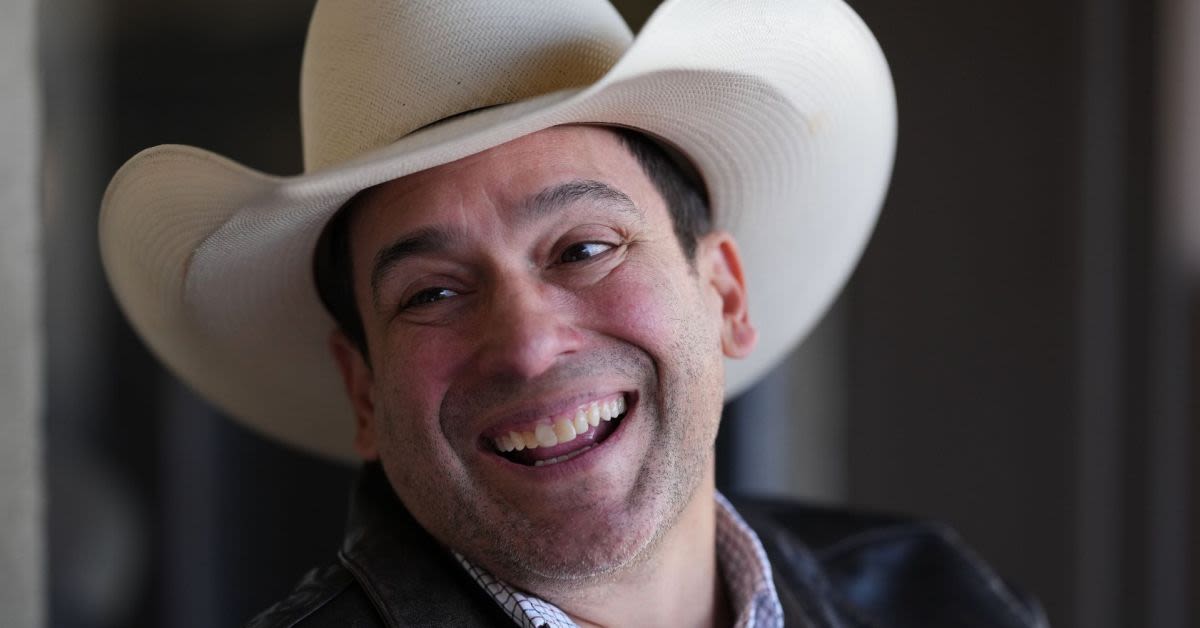
Bobby Pulidos shifting explanations about his longtime accordionist and convicted child molester Frankie Caballero have become a central liability in his bid to represent Texass 15th Congressional District, raising serious questions about his judgment, his honesty, and the political machine that has long surrounded his family in South Texas.
According to the Washington Free Beacon, the Tejano star and Democratic nominee has offered a series of conflicting accounts about what he knewand when he knew itregarding Caballeros criminal history, including sex crimes against children. Those contradictions now loom large in his tight race against Republican incumbent Rep. Monica De La Cruz, a conservative who has made law and order, border security, and accountability core themes of her tenure.
For voters who believe public officials should be transparent and tough on crime, the Pulido-Caballero saga underscores a troubling pattern of evasions and political protection that appears to have shielded a repeat offender for decades.
Pulidos relationship with Caballero first came under intense scrutiny after the New York Post reported in April that the musician had toured for years with the registered sex offender, including just months after Caballero was released from prison for molesting an eight-year-old girl. Pulido initially insisted he had no idea Caballero had a criminal record, but later conceded he knew the accordionist had been jailed, while still claiming ignorance of the most serious sex offenses.
That evolving narrative has fueled doubts about whether Pulido is being forthright with the public or simply adjusting his story as new facts emerge.
The inconsistencies are not new. They stretch back to the mid-1990s, when Pulidos career was taking off and Caballero first joined his band, and they intersect with the influence of Pulidos great-uncle, Rene Guerra, the longtime Hidalgo County district attorney.
Before Caballero ever faced the child molestation charges that ultimately put him on the sex offender registry, he had already walked away from a sexual assault case under circumstances that critics say reflect the power of the Pulido-Guerra political network. It is precisely the kind of insider favoritism and soft-on-crime leniency that conservatives have long warned can flourish when entrenched local officials are not held to account.
Pulido himself has repeatedly muddied the waters about his role in Caballeros early legal troubles. In a May 2019 YouTube appearance, he said that when I started out, I went to get him out of jail, a remark the New York Post first highlighted.
A campaign spokesperson later tried to walk that back, claiming Pulido was speaking metaphorically and did not post his bail or pick him up from jail or prison, while Pulido told CNN he had been hyperbolic and that the comment was made on a comedians show and we were drinking. For a candidate now asking voters to trust his word, the casual way he has treated such a serious subject is difficult to reconcile with the gravity of the underlying crimes.
The timeline of Caballeros alleged and proven offenses is equally disturbing. Caballero was arrested in July 1994 on a sexual assault charge carrying a potential 20-year sentence, yet he was released on a $75,000 personal recognizance bondan unusually lenient arrangement for a repeat offender accused of such a serious crime.
A former Hidalgo County prosecutor who worked under Guerra at the time said such a bond would not have been granted without the district attorneys consent, and that three failures to appear in a felony rape case would have landed any other defendant in jail. Instead, in 2000, Guerra dismissed the sexual assault and a burglary charge in the interest of justice, even though Caballero had skipped multiple court dates and forfeited his bond.
Pulidos public statements about when and why he first hired Caballero also conflict with the record. Last year, he claimed he brought Caballero into the studio to record his breakout hit Desvelado in January 1995 only because his keyboard player failed to show up.
Yet in a July interview with the McAllen Monitor, he said he poached Caballero from another band in early- to mid-1995 because he wanted his music to be accordion driven, and I was a very big fan of his work. Meanwhile, Caballero continued to receive credits on Pulidos albums through 1999, despite Pulidos assertion that he fired the accordionist in 1996 for drug abuse.
The former Hidalgo County prosecutor, who requested anonymity because crossing the Pulidos carries a cost in the region, was blunt about what all of this suggests.
Mr. Pulido has repeatedly lied about his ties to Caballero, the former prosecutor told the Washington Free Beacon. An honest man tells the same story every time and Bobby Pulido has told at least four different versions of what he knew about Frankie Caballeros criminal past.
For voters who value integrity and consistency, that assessment cuts to the heart of Pulidos credibility.
Pulidos more recent explanations have only deepened the confusion. A campaign spokesperson told the New York Post in April that Pulido only knew Caballero had long struggled with addiction issues, and in July, Pulido said he had no knowledge of Caballeros criminal history after the accordionist left the band in the 1990s.
Just three days later, however, he admitted he knew Caballero had been in jail, and a month after that, he acknowledged being aware that Caballero had violated a lot of his paroles and that he had gone to prison for transferring illegal aliens. These shifting admissions suggest that Pulido has been calibrating his story to minimize political damage rather than offering a straightforward account from the outset.
The record of Caballeros offenses between his first stint with Pulido and his eventual return to the band is extensive. After the 1994 sexual assault case stalled and was ultimately dismissed, Caballero accumulated a string of arrests, including for cocaine possession and forgery, yet repeatedly avoided state prosecution thanks to dismissals from Guerras office.
In 2009, he was convicted in federal court for transporting an illegal immigrant across the southern border, a crime that should have raised red flags for any employerlet alone a public figure now running for Congress on a platform that presumably includes respect for the law.
In 2014, Caballero was charged with indecent sexual contact with an eight-year-old, a crime that carried a maximum 20-year sentence. Guerra, then a lame-duck district attorney after losing reelection to a challenger who campaigned on anti-corruption, offered what the former prosecutor described as a lenient plea deal in that child molestation case.
Caballero ultimately served a three-year prison term and was placed on the sex offender registry, yet even that did not prevent his return to Pulidos orbit.
Pulido has claimed that he and Caballero lost touch until December 2017, when the accordionist rejoined him on stagejust months after completing his sentence for molesting the eight-year-old. During this period, Caballeros status as a convicted child sex offender was a matter of public record, and a South Texas musician told the New York Post that the conviction was widely known in the Tejano music community, describing the scene as a very tight-knit industry.
For Pulido to maintain that he was unaware of Caballeros sex crimes strains credulity, particularly given the close-knit nature of both the local music world and Hidalgo County politics.
Guerra, for his part, has attempted to distance himself from the scandal even as he has publicly backed his nephews congressional bid. In recent months, he has lavished praise on Pulido and donated $3,500 to his campaign, yet he told the Free Beacon he does not have any knowledge of Caballero and had never heard of him until Pulido launched his run for office.
He insisted Pulido would not consciously hire a child abuser and suggested that various factors could explain the dismissals in Caballeros cases that might not appear in court filings, while denying he had ever met Caballero at family functions, concerts, or other events where the accordionist was known to appear.
Pulidos own comments have at times veered into flippancy. In 2018, he joked that Caballero went to Penn State, a line that inevitably evokes the universitys notorious child molestation scandal.
Pulido later told Bloomberg that he was referring to the state penitentiary, explaining, They call the penitentiary the Pen, and people say Penn State. For families who have suffered from sexual abuse and for voters who expect seriousness from their elected officials, such wordplay about a convicted child molester is likely to be seen as deeply inappropriate.
The timeline of Caballeros second stint with Pulidos band raises further questions. A campaign spokesperson told the Texas Tribune that Caballero was fired immediately in 2021 after Pulidos management company learned he had engaged in domestic abuse.
Yet records show Caballero was arrested in May 2020 for strangling his daughter, a crime that ultimately resulted in a five-year prison sentence, and that he was still performing on stage with Pulido in June 2021more than a year after the arrest. That discrepancy suggests either a stunning lack of due diligence or a deliberate attempt to obscure how long Pulido continued to employ a man with a known history of violence and sexual predation.
The circumstances surrounding Caballeros 2021 booking are particularly telling. If Pulidos team learned of the domestic assault from that booking, they would also have seen that Caballero was accused of failing to update his sex offender registry and faced another child molestation charge.
Court records indicate he was indicted for sexually assaulting two additional children, though those charges were later dropped. For a candidate now seeking federal office, the notion that he or his management could have missed or ignored such information is difficult to reconcile with any claim of responsible leadership.
The web of political and financial ties around Caballeros legal troubles extends beyond the Pulido and Guerra families. A company called South Texas Bail Bonds posted Caballeros bail in February 2021, with its owner, Norman Cordova, signing the surety oath.
Less than a year later, in January, Cordova hosted a campaign rally for Pulido, underscoring how the same local network that helped keep Caballero out of jail has now rallied behind Pulidos congressional ambitions. For conservatives who have long argued that entrenched Democratic machines in South Texas protect their own at the expense of public safety, this pattern will look all too familiar.
Pulido has tried to deflect scrutiny by attacking his Republican opponent rather than addressing the contradictions in his own story. He has accused De La Cruz of falsely portraying Caballero as his buddy and dismissed concerns about their relationship as a desperate narrative pushed by her campaign because they're losing in the polls.
When pressed on the inconsistencies, his campaign declined to answer detailed questions and instead pointed reporters to De La Cruzs voting record on Jeffrey Epstein and former Rep. Matt Gaetz, with a spokesman insisting, These are serious questions involving a sitting member of Congress, her congressional voting record, and the use of taxpayer dollars. We would welcome the same level of scrutiny you've dedicated to the personnel decisions of a Tejano band from the 1990s.
Pulido has also suggested that industry norms absolve him of responsibility, saying his manager and uncle, Jimmy Montez, rehired Caballero and that it is not standard practice in the music business to conduct background checks. Yet that argument rings hollow when the employee in question is a convicted child molester whose crimes were widely known in local circles and whose name appears repeatedly in public court records.
For a man now seeking to craft federal law, the refusal to apply even basic vetting to those he places on stage with himsometimes at events with children present, including a 2018 middle school benefit concertraises serious doubts about his judgment.
The unresolved questions surrounding Pulidos relationship with Caballero, the leniency shown by his great-uncles office, and the political allies who helped keep a repeat offender on the streets go to the heart of what kind of leadership Texans can expect from him in Washington. Conservatives who prioritize the protection of children, the rule of law, and equal justice under the law will see in this saga a troubling example of how a well-connected Democrat and his familys influence appear to have shielded a dangerous man for years.
As voters in Texass 15th District weigh their choices, they must decide whether Pulidos shifting stories, political connections, and pattern of deflection reflect the kind of accountability and moral clarity they want representing them in Congressor whether they are better served by a representative who has not spent decades explaining away the presence of a convicted child molester in his inner circle.
Login