
The Trump Justice Department has finally launched a civil-rights investigation into Washington, D.
C.s notorious jail system, years after scores of January 6 defendants first alleged they were being subjected to inhumane and politically motivated mistreatment behind its walls.
According to RedState, the Department of Justice announced Monday that it has opened a federal probe into conditions at District of Columbia jails to determine whether the citys Department of Corrections has engaged in a pattern of constitutional violations against inmates. The inquiry, led by Assistant Attorney General Harmeet Dhillons Civil Rights Division, will examine conditions dating back to early 2021, following persistent complaints of excessive force, substandard medical care, filthy living quarters, and inadequate food.
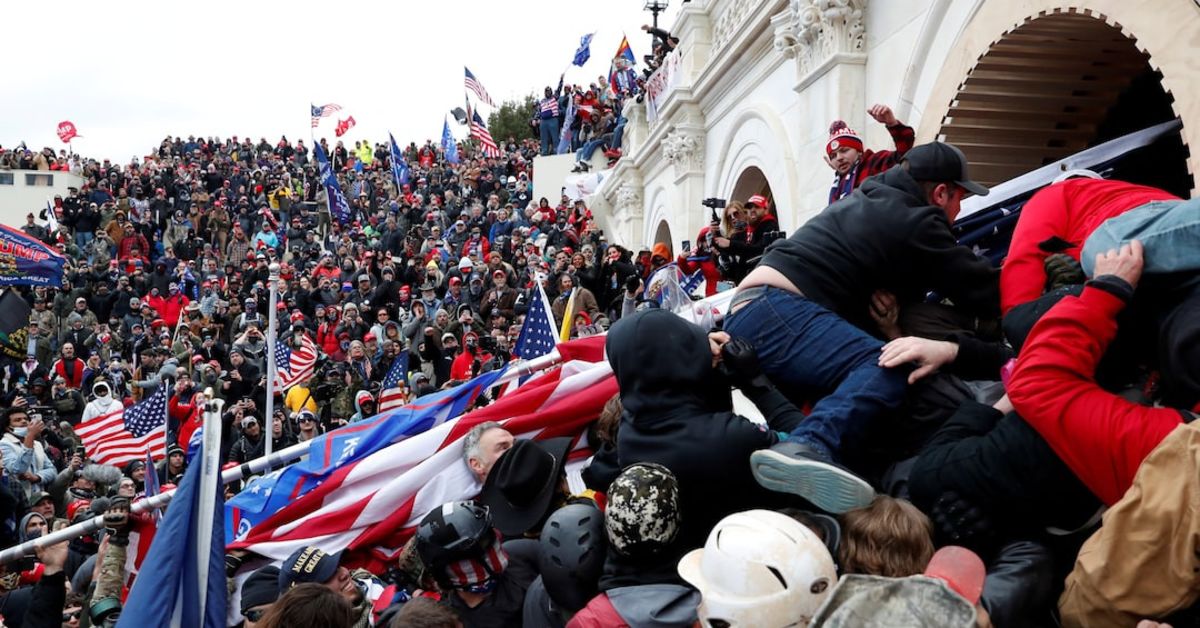
That timeline is hardly incidental, beginning just before the events of January 6, 2021, which Democrats have elevated into a kind of secular holy day of outrage and political utility. As many as 50 individuals convicted in connection with the Capitol protest were held in these facilities, where some defendants have long described the environment as abusive and degrading.
In a letter to Mayor Muriel Bowser, the Justice Department noted that many of the same concerns had already been flagged by the Districts own auditor, raising questions about why local officials failed to act sooner. Dhillon emphasized that the Constitution does not stop at the jailhouse door and that the federal government has a duty to intervene when basic rights are at risk.
The Constitution protects the rights of every incarcerated American, including those held in custody in our nations capital, Dhillon said. We are committed to upholding our federal civil rights laws so that no inmate is confined in unconstitutional conditions or subject to unconstitutional mistreatment at the District of Columbia Department of Corrections.
Reinforcing that message, the Civil Rights Division publicly stressed its role in safeguarding the rights of all inmates, including those in the D.C. Jail. The @CivilRights Division protects the rights of all incarcerated Americans, including those held in the DC Jail. We @theJusticeDept will make sure DC inmates are not subjected to unconstitutional conditions of confinement, the division stated.
Yet the timing of this investigation raises an obvious question: why now, and why so late. It has taken nearly five years for the Justice Department to formally scrutinize a jail system that January 6 defendants and their advocates have been decrying since 2021.
Many of those protesters were aggressively prosecuted for conduct that, in numerous cases, amounted to little more than walking through open doors and peacefully milling about the Capitol complex. For some, the real punishment began not in the courtroom but in the D.C. jail, where they say they were treated less like citizens awaiting trial and more like enemies of the regime.
One of the most disturbing cases involved Christopher Worrell, a January 6 defendant suffering from non-Hodgkins lymphoma. He waited months for surgery on a broken hand after jail officials failed to provide the medical records needed to authorize the procedure, a delay so egregious that Judge Royce Lamberth held the jails warden and the Department of Corrections director in contempt and referred the matter for a civil-rights investigation.
A 2021 inspection by the U.S. Marshals Service, along with detainee accounts, painted a grim picture of life inside the facility, describing standing sewage in cells, water and food allegedly withheld as punishment, black mold on surfaces, and even worms in meals. These are not the conditions of a civilized republic, let alone the capital city of the United States.
Further documentation came in a letter from dozens of January 6 defendants and in a report by former Rep. Marjorie Taylor Greene, who detailed cells smeared with human waste and blood, along with restricted access to medical treatment and religious services. Conditions were reportedly so appalling that some inmates said they would have preferred to be held at Guantanamo Bay.
Against this backdrop, President Trump has repeatedly described those swept up in the Biden administrations January 6 prosecutions as hostages or political prisoners. His language reflects a broader conservative concern that the justice system has been weaponized against ideological opponents while violent criminals in many blue cities walk free.
On his first day back in office for his second term, Trump moved swiftly to address what many on the right view as a grave injustice. He issued executive pardons and commutations for roughly 1,500 people charged or convicted in connection with the mostly peaceful protest, and at the time those pardons were granted, about 20 of those individuals remained in D.C. Department of Corrections custody.
The new DOJ investigation now forces an uncomfortable reckoning for officials who dismissed these complaints as partisan theatrics rather than potential civil-rights violations. Whether this probe leads to real accountability or merely serves as political damage control, the record of delayed action, documented abuse, and the treatment of January 6 defendants as expendable dissidents will remain a stark indictment of how far the nations capital has drifted from equal justice under law.
Login