
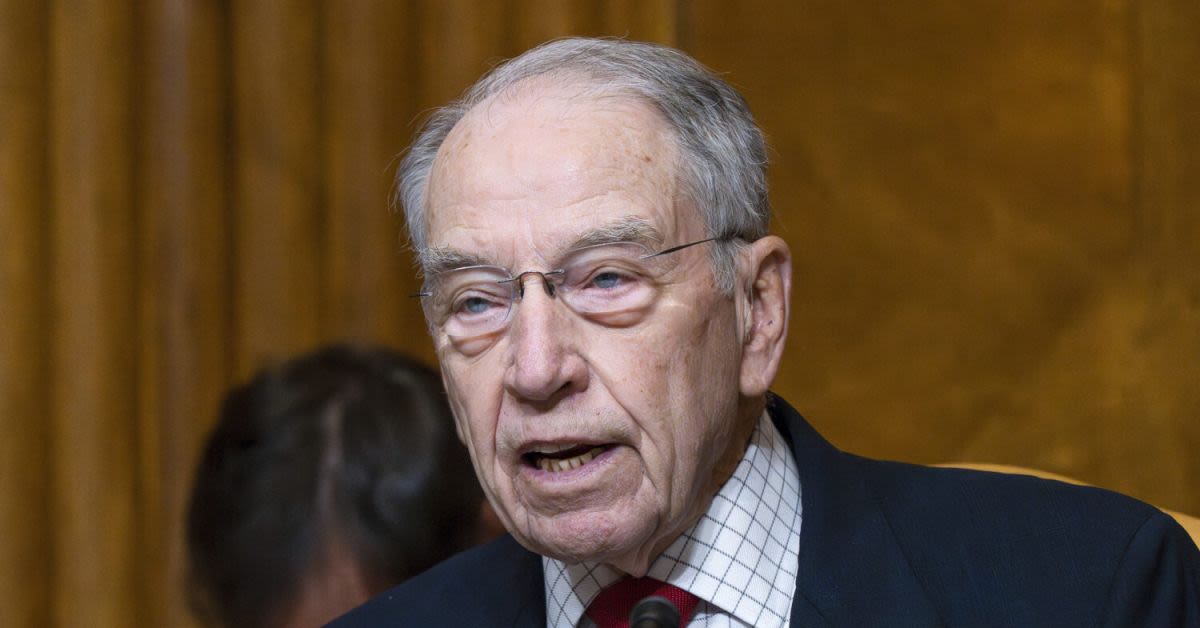
Republican Sen. Chuck Grassley of Iowa has taken the first formal step toward seeking another six-year term, a move that would keep him in the Senate until the age of 101.
The 93-year-old lawmaker, who marked his birthday on Sept. 17, has filed preliminary paperwork with the Federal Election Commission signaling his intention to run again in November 2028. According to Western Journal, Grassley had previously indicated in September that he did not want a Democratic governor to have the power to appoint his successor should he die in office.
Under Iowa law, if Grassley were to pass away while serving, the states governor would appoint a temporary replacement until a special election could be held. As of Monday, Democratic gubernatorial nominee Rob Sand held an average lead of 8.4 points over Republican nominee Zach Lahn, according to RealClearPolling, suggesting that a Democrat could control the governors mansion for the next four years.
Grassley currently chairs the powerful Senate Judiciary Committee and serves as president pro tempore of the Senate, the second-highest-ranking position in the chamber. By virtue of that role, he stands third in the presidential line of succession, following the vice president and the speaker of the House.
The Iowa Republicans political career stretches back nearly seven decades, beginning with his election to the Iowa House of Representatives in 1958. He later secured a seat representing Iowas third congressional district in the U.S. House before winning election to the Senate, where he has served since being sworn in in 1981.
While Grassley and other long-serving Republicans have largely maintained their grip on Capitol Hill, Democrats have increasingly turned to younger candidates in the 2026 primary cycle. At the same time, GOP voters have shown a willingness to oust incumbents who do not align with President Donald Trump, who turned 80 in June.
The debate over age and fitness in office has intensified in recent years, particularly following the decline and death of prominent Democratic figures. Former Democratic California Sen. Dianne Feinstein was absent from the Senate between February and May 2023 after being diagnosed with shingles, missing 91 votes, and she appeared frail during her public appearances and spent the remainder of her time in office in a wheelchair.
Feinstein ultimately died in office in September 2023 at the age of 90, after months of visible health struggles that raised questions about the Democrats willingness to confront the issue of aging leadership. Her case has often been cited by conservatives as a cautionary tale about party leaders clinging to power rather than ensuring effective representation.
Republican leadership has not been immune to health concerns, though the partys base has been more inclined to demand transparency and accountability. Republican Kentucky Sen. Mitch McConnell suffered a fall in June and did not return until Sept. 14, and his staff remained largely silent about McConnells whereabouts or condition until his return, although the 84-year-old remains in a wheelchair and has not spoken to reporters in the Capitol.
Other veteran Republicans continue to win support from their constituents, reflecting a preference for experience and seniority when paired with conservative governance. Republican Kentucky Rep. Hal Rogers, a 79-year-old incumbent who has served in Congress since 1981, won his primary in May against four challengers, while in the House, Republican North Carolina Rep. Virginia Foxx is 83 years old and chairs the Rules Committee.
History shows that advanced age in the Senate is not unprecedented, particularly among Republicans who have built reputations as institutional pillars. Former Republican South Carolina Sen. Storm Thurmond retired from the Senate at age 100, where he served as pro tempore, underscoring that longevity in office has long been a feature of American political life rather than an anomaly.
Grassleys decision to prepare for another campaign highlights a broader tension in Washington between continuity and renewal, especially as conservatives weigh the value of seasoned lawmakers against the need to cultivate a new generation of leaders. For many on the right, the central question is less about a candidates age than about whether that candidate defends constitutional limits on government, protects individual liberty, and resists the leftward drift that has characterized much of the Democratic Partys recent agenda.
Login