
Elon Musks long-promised next-generation Tesla Roadster has finally appeared in public not merely as a supercar, but as something edging into the realm of a low-altitude spacecraft.
According to RedState, the latest prototype did far more than rev its engine and circle a test track. During a dramatic unveiling, the Roadster used a combination of high-powered fans and SpaceX-derived cold-gas thrusters to vault over a row of Tesla vehicles, execute controlled aerial maneuvers, and then settle back onto the pavement in one piece. The prototype also demonstrated blistering acceleration, reportedly going from zero to 60 miles per hour in approximately one second.
Musks public reaction to the spectacle was, in his typically laconic fashion, Well, it worked. That understatement belied the fact that the demonstration looked less like a conventional product launch and more like a proof-of-concept for a new category of vehicle that regulators have never contemplated.
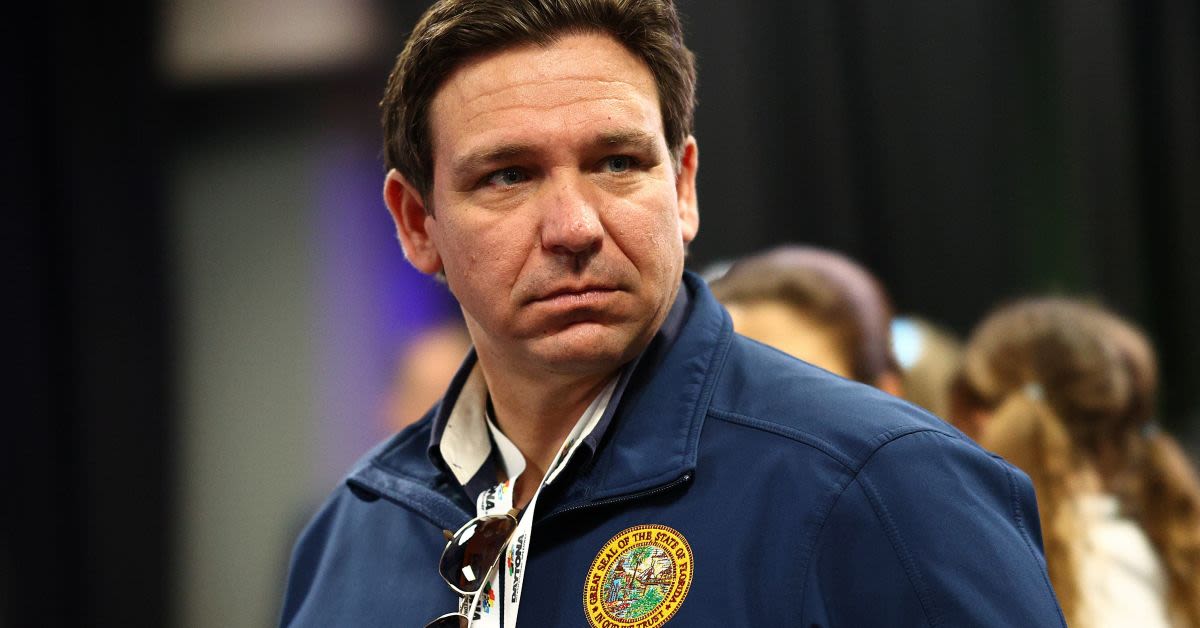
Florida Governor Ron DeSantis, who has made a point of aligning himself with pro-innovation, pro-business policies, was clearly impressed. Tesla Roadster = Wow! the governor posted on X, sharing footage of the airborne stunt with his followers.
But DeSantis offered an even more memorable response when an X user raised the obvious practical question about the Roadsters extraordinary capabilities. Will this be street legal in Florida? asked Ryan Vogel, voicing the concern of anyone who has ever dealt with a Department of Motor Vehicles.
DeSantis replied with a characteristically wry nod to his states most famous retirement enclave: We will make sure that it's legal at a minimum could be used to leapfrog golf carts in the Villages. The quip instantly resonated online, with one user tagging the governor, @RonDeSantis ??, and Musk himself signaling his approval by replying with a fire emoji.
For those unfamiliar with The Villages, it is a sprawling Central Florida retirement community where golf carts are not a novelty but a primary mode of transportation. Residents routinely use them to reach restaurants, shops, golf courses, and recreation centers, and the development boasts an extensive network of golf-cart paths that function as arteries of daily life.
If that sounds surreal, there is already an infamous viral video of Not-Joe-Biden singing The Villages theme song that captures the communitys quirky energy. Now imagine, as social media users did, a rocket-powered Tesla Roadster casually vaulting over those golf carts as retirees putter along the paths.
The image is amusing, but it underscores a serious point: Teslas most extreme Roadster configuration faces daunting legal and regulatory barriers before it can operate on public streets. The redesigned Roadster is expected to be offered in three versions, each escalating in performance and complexity.
The two-seat Performance model is described as road ready and features advanced aerodynamics and a suction system intended to enhance grip and handling. The Thrust model adds rear-mounted cold-gas thrusters to deliver extraordinary acceleration, while the single-seat Rocket version incorporates 10 thrusters capable of producing the kind of airborne maneuvers displayed during Thursdays demonstration.
Tesla has already made clear that the Rocket version is not approved for public-road use. Federal motor vehicle safety standards were never drafted with rocket-assisted sports cars in mind, and state registration rules add another layer of bureaucracy that could slow or block deployment.
If regulators determine that the Roadsters airborne capabilities amount to controlled flight, aviation rules could also come into play, dragging the Federal Aviation Administration into what has traditionally been the domain of the National Highway Traffic Safety Administration. Even Musk conceded during the unveiling that the Roadster might not be legal everywhere, joking when asked about street legality, Depends on your street.
The Roadster reportedly targets a top speed of around 230 miles per hour, with production currently slated for 2028. Tesla is already accepting reservations, but final pricing and the legal status of the more exotic configurations remain unresolved, leaving early adopters to place their bets on Musks ability to bend both engineering and regulation to his will.
There is also the lingering question of whether Tesla can deliver the production vehicle on time, given that Musk first unveiled the second-generation Roadster in 2017 with production initially expected years ago. The jaw-dropping flight demonstration marks a major milestone, yet the company still faces the unglamorous work of certification, manufacturing, and regulatory negotiation before customers can actually driveor perhaps launchthe souped-up Roadsters.
For conservatives who favor limited government and a light regulatory touch, the spectacle highlights a familiar tension between innovation and bureaucracy, and it may strengthen calls for states like Florida to carve out friendlier rules for cutting-edge technology. And if DeSantiss joke about using the Roadster to leapfrog golf carts in the Villages ever became reality, Musk might just find his next lucrative niche market in rocket-propelled golf carts.
Login