
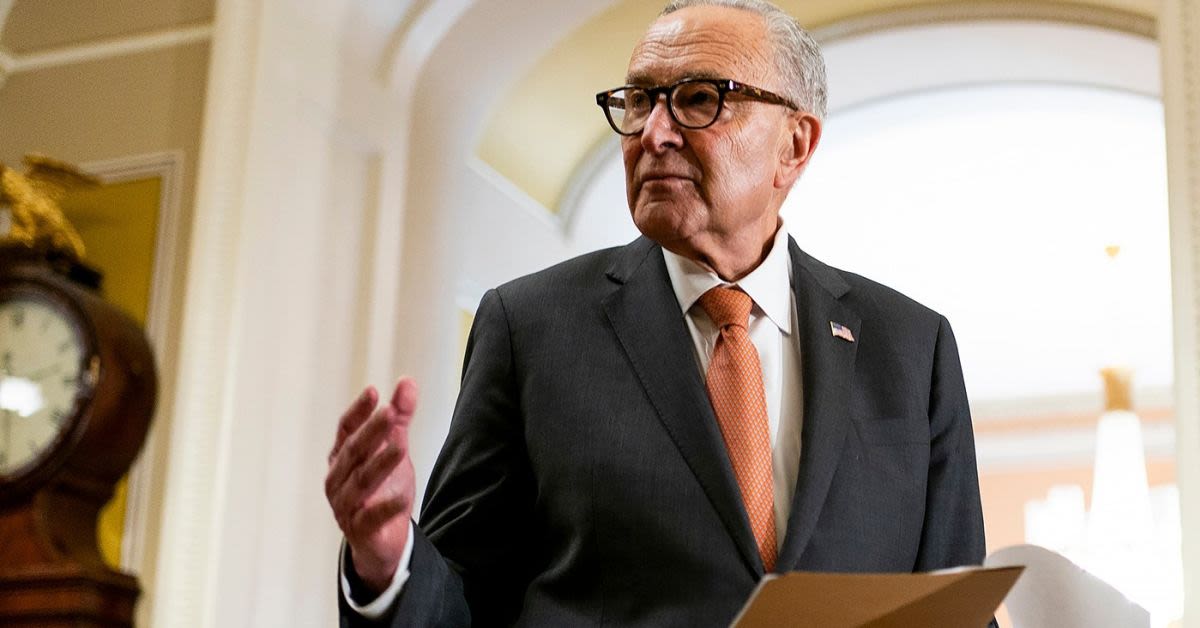
Chuck Schumers political future, and with it the direction of Senate Democrats, now hinges on a midterm election cycle that could either cement his leadership or intensify calls for a generational changing of the guard.
Over the past decade, Schumer has alternated between majority and minority leader, but this years contests are widely viewed as a defining test of his grip on power and his partys identity. According to The Associated Press, some Democrats have openly argued that the 73?year?old New Yorker should step aside and make way for a new generation, a refrain that reflects broader unease within a party still struggling to reconcile its aging leadership with its increasingly youthful, activist base.
Schumer has long been at the center of his partys Senate campaign strategy, having directly or indirectly overseen the Democratic Senatorial Campaign Committee in nearly every cycle for two decades. After a period of intense internal backlash, allies now insist he has largely repaired his standing inside the caucus, at least for the moment, as Democrats talk hopefullysome would say wishfullyabout picking up seats despite a map that clearly favors Republicans.
Those close to Schumer describe the current mood as a remarkable reversal from last year, when Democrats were still absorbing the shock of major electoral setbacks and searching for someone to blame. A particular low point came in the spring of 2025, when the partys progressive base erupted over Schumers decision to vote to keep President Donald Trumps government open, a move that infuriated activists who wanted a more confrontational stance against the GOP.
Interviews with more than a dozen Democratic senators in recent weeks suggest that Schumer has, for now, clawed back much of his political capital within the caucus. If Democrats manage to gain seats in November, colleagues widely expect him to secure the votes he needs in the closed?door leadership election that typically takes place the week after Election Day.
Should Democrats somehow reclaim a Senate majoritya scenario once dismissed as far?fetchedmany senators believe another term for Schumer as leader would be virtually guaranteed. Both parties choose their Senate leaders by secret ballot, shielding individual members from public accountability for their choice and making it easier for them to ignore outside pressure from activists or donors.
Even so, nothing about Schumers future is truly settled. While no Democrat has yet stepped forward to challenge him, that calculus could change abruptly if the party suffers deeper?than?expected losses, and several Democratic Senate hopefuls have already signaled they will not support him or have refused to commit.
In an interview with The Associated Press earlier this month, Schumer left no doubt about his intentions. He stated flatly that he is running for another term as leader and argued that Democrats have improved their standing with voters by fighting Trumps tariffs, forcing more than a dozen votes to end the war in Iran, and focusing on affordability, corruption, and healthcare.
I think our caucus is strong, it's united, Schumer said, insisting that the political terrain has shifted in his partys favor. A year ago, everyone said it was out of reach. Today, we have a broader map, strong candidates, a clear contrast.
Sen. Sheldon Whitehouse, D?R.I., credited Schumers recruitment efforts for putting even deep?red territory into play. Whitehouse said that Senate seats in some ruby red states seem to be in play because of candidates Schumer helped bring into the race, a claim that underscores how heavily Democrats are relying on candidate quality to overcome a structurally unfavorable map.
Oregon Sen. Ron Wyden, a Democrat who has served alongside Schumer for nearly three decades, framed the current moment as almost unimaginable just a year and a half ago. Wyden remarked that if you had told us in 2025 that we'd be in the home stretch with a really good shot of taking the majority, it would have been like, 'You've got to be kidding me.' You can't argue with results.
Pressed on what happens if Democrats fail to gain seatsor even lose groundWyden refused to engage in hypotheticals. I'm not thinking about that, he said, a response that reflects both party discipline and an unwillingness to publicly contemplate a post?Schumer leadership fight before the votes are counted.
Despite Schumers apparent resurgence, many Democratic senators are carefully avoiding public commitments about supporting him, especially those aligned with the partys most progressive factions. Sen. Bernie Sanders, the Vermont independent who caucuses with Democrats and often pushes them to the left, brushed aside leadership questions by saying, It's a little bit too early to speculate on that right now.
Massachusetts Sen. Elizabeth Warren, another leading figure on the partys left flank, similarly declined to weigh in on Schumers future. She insisted that her focus remains squarely on the November elections, adding, We'll know a lot more after the midterms, a line that leaves ample room for a leadership debate if the results disappoint.
Freshman Sen. Elissa Slotkin of Michigan has been more explicit in her desire for generational turnover at the top of the party. Slotkin has publicly called for a new generation of leaders across the Democratic Party and recently observed that it's not a secret that Democrats still haven't totally found their footing after Trump, adding that we have to see what the results of the election are.
Even if Democrats lose seats, it is far from clear that any senator actually wants the burden of leading a fractious caucus that is pulled between its activist left and its more cautious moderates. Many of the most ambitious Democrats are instead eyeing potential presidential bids in 2028, a dynamic that may make them reluctant to tie themselves to the daily grind and constant compromise of Senate leadership.
Speculation about a possible challenge to Schumer has largely centered on Sens. Chris Van Hollen of Maryland, Chris Murphy of Connecticut, and Brian Schatz of Hawaii. Schatz has already announced that he is running for the No. 2 leadership position to replace retiring Illinois Sen. Dick Durbin, a move that positions him as a future power broker but not necessarily as an immediate rival to Schumer.
Van Hollen, for his part, has been notably circumspect when asked about Schumers fate. Look, I think everybody wants to get through this election, and then we'll go from there, he said in an interview before the Senate left Washington to campaign, a carefully calibrated answer that neither endorses nor undermines the current leader.
On the campaign trail, several Democratic Senate candidates have tried to distance themselves from Schumer, a sign of how toxic national party brands can be in swing or conservative states. Among those who have either vowed not to back him or refused to commit are Troy Jackson in Maine, Adam Hamilton in Kansas, and Abdul El?Sayed in Michigan.
Yet the Senate Majority PAC, a powerful outside group closely aligned with Schumer, has poured millions of dollars into those very campaigns and others, underscoring the paradox of candidates running against the image of a leader whose political machine is helping fund their races. Schumer even backed El?Sayeds primary opponent, but the two men later met in Washington, where they appeared to patch things up.
After that meeting, El?Sayed struck a conciliatory tone that suggested Democrats are trying to paper over internal rifts at least until after Election Day. He said the party is united and that we're having really productive conversations about what it takes to win, language that reflects the broader Democratic effort to project cohesion while activists and donors continue to press for change behind the scenes.
Several Democratic senators, speaking on condition of anonymity to discuss internal dynamics, agreed that Schumer remains the odds?on favorite to secure another term as leader. One senator noted that there has been little serious discussion about replacing him, in part because Schumer has made a point of staying personally connected to almost every member of his caucus, famously keeping them on speed dial in his old?fashioned flip phone.
Another senator said they were not aware of Schumer asking colleagues for explicit commitments yet, a sign that he may be confident in his support or wary of appearing insecure. At the same time, some Democrats privately say they would like Schumerwho is up for reelection himself in 2028to declare that this will be his final term as leader and to pledge to help manage a smooth transition to a successor.
One senator suggested that such a pledge could effectively shut down the leadership conversation by reassuring restive members that change is coming on a defined timeline. Another lawmaker, however, argued that any long?term commitment from Schumer matters less than the immediate question of whether Democrats win in November, insisting that electoral performance will ultimately determine his fate.
All of the senators interviewed agreed on one point: there is no obvious, consensus alternative to Schumer at the moment. That reality could shift quickly if Democrats lose multiple seats, but for now, the absence of a clear challenger is Schumers greatest asset, especially in a caucus that often prefers stability to open warfare.
The mood inside the Democratic caucus has undeniably improved since last year, when the base erupted over Schumers March vote to keep the Republican presidents government open. Progressive groups such as MoveOn demanded that he step down, arguing that Democrats needed to fight harder against Trump and Republicans rather than compromise on spending bills and nominations.
Schumer began to regain favor with many Democrats during a prolonged government shutdown a year ago, when he took a more confrontational posture and repeatedly moved to block Trumps nominees and Republican legislation. Those tactics helped quiet some of the loudest calls for his resignation, but they did not fully extinguish the lefts appetite for new leadership and a more aggressively progressive agenda.
Outside groups remain focused on reshaping the partys leadership ranks, even as they work to elect more Democrats in November. Our priority right now is organizing and making sure we elect a new generation laser-focused on affordability and fighting corruption, said Joel Payne, a national spokesman for MoveOn, signaling that the groups long?term goal is to push the party further left on economic and ethics issues.
Payne made clear that MoveOns members have not forgotten their earlier demands for Schumer to step aside. Referring to the 2025 uproar, he said the groups members have already rendered a judgment on Schumer's tenure and made clear they're eager for new leadership that energizes the party base, a statement that underscores the enduring tension between grassroots activists and the partys entrenched leadership.
Whether that progressive pressure will have any real impact on the secret?ballot leadership vote remains an open question. Schumer needs only a simple majority of his caucus to remain leader, and many senatorsparticularly those from swing or conservative statesmay be more concerned with protecting their own political viability than with appeasing left?wing organizations.
Sen. Ben Ray Lujn, D?N.M., dismissed the swirl of speculation about Schumers future as largely irrelevant unless and until a credible rival emerges. It's hard to lose if no one else is challenging you, he said, capturing the pragmatic calculation that currently underpins Schumers hold on power.
For conservatives watching this drama unfold, the stakes are clear: a weakened, divided Democratic caucus makes it easier for Republicans to advance an agenda of limited government, secure borders, and free?market reforms, while a reinvigorated Schumer armed with a larger caucus would double down on big?spending, regulatory policies that have already fueled inflation and expanded Washingtons reach. The midterms will not only determine who controls the Senate but also whether Democrats continue to be led by a veteran deal?maker who occasionally bows to political reality, or by a new generation more closely aligned with the partys activist leftand far more hostile to the conservative principles that many Americans still hold dear.
Login