
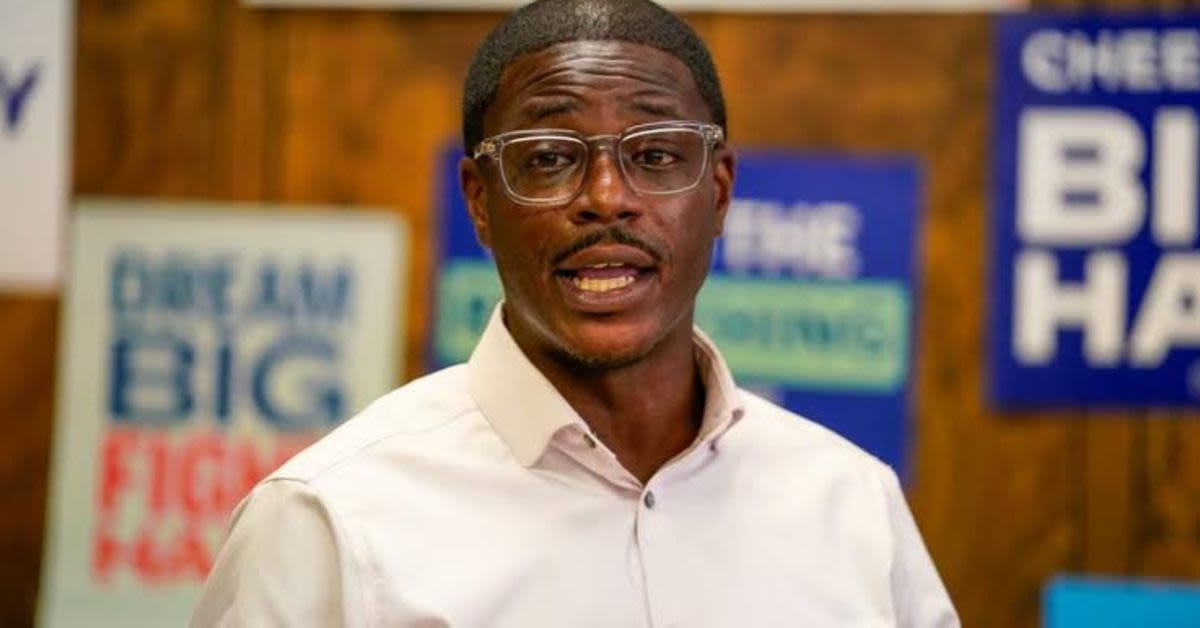
The Democratic frontrunner for Wisconsin governor is aligning himself with a Milwaukee nonprofit whose founder openly dreams of building a dedicated community for convicted sex offenders.
According to the Washington Free Beacon, It Takes a Village Foundationlaunched in 2020 by Milwaukee activist Shawna Whiteheadpromotes itself as a reentry program that has assisted nearly 4,000 former inmates through online courses, job training, and housing support. The groups public image as a rehabilitation hub, however, is colliding with Whiteheads own controversial statements and the organizations promotion of at least one sex offender who has repeatedly failed to comply with state registry requirements.
Whitehead laid out her ambitions during a 2022 appearance on the At The Roundtable podcast, where she lamented the lack of dedicated housing for sex offenders leaving prison. "It really bothers me that we have sex offenders that's coming out of the jail now and you mean to tell me they have nowhere to go," she said, adding, "So you got these people out here like leprosy. So my thing is that I'm trying to challengeand God showed me I want to get some partners together where we buy some land, and we start building houses and create a whole community for our sex offenders."
Her remarks were met with silence from the hosts, prompting Whitehead to acknowledge how radical her proposal sounded. "See, it's outside the box. I know everybody got quiet on that one," she said, underscoring just how far her vision strays from the publics expectation that the justice system prioritize victims and public safety over the comfort of violent offenders.
Two years later, in November 2024, Milwaukee County executive David Crowley appeared not at arms length from this agenda but as the featured speaker at It Takes a Villages annual gala. There, he offered effusive praise for Whitehead and her organization, signaling not caution but partnership with a group that openly seeks to normalize and concentrate sex offenders in residential communities.
"I want to tell you, Dr. Whitehead, that Milwaukee County, we share in your vision," Crowley declared at the gala. He went on: "So whether it's workforce development, whether it's investing in affordable housing, or creating easier pathways for mental health support or substance use treatment, we are standing beside you to foster a more equitable and compassionate Milwaukee County."
Crowley continued by explicitly tying his political agenda to Whiteheads ambitions and those of other activists in the room. "It's going to take all of us working together, and not just to move the vision of Milwaukee County forward, but to move the vision of Dr. Shawna and many of the community leaders that are in here today," he said, before adding, "So I want you all to know that I am here with you all. That we're going to continue to support and move this county forward. I dont care what the perceptions are. I don't care what the narrative is."
Those comments are now reverberating across Wisconsin as Crowley faces a tight gubernatorial contest against Republican Rep. Tom Tiffany, who has made crime and public safety central themes of his campaign. Tiffany and law enforcement allies argue that Crowleys record and rhetoric reflect a broader progressive tendency to prioritize offenders interests over the rights of victims and the safety of law-abiding citizens.
"For years, he has supported policies that would weaken criminal penalties," Tiffany said at a recent event where he received the endorsement of the Wisconsin Fraternal Order of Police. "David Crowley supported legislation to lower penalties for bail jumping. He voted against allowing judges to consider a defendant's criminal record, the seriousness of the crime and the threat to public safety when setting bail."
The concerns extend beyond rhetoric to the actual practices of It Takes a Village, which appears comfortable elevating sex offenders as model participants in its programs. The groups website features a video testimonial from Kevin Pettis, convicted in 2002 of first-degree sexual assault of a child, and presents him as a success story of its reentry efforts.
Yet Wisconsins sex offender registry lists Pettis as "non-compliant," meaning he is not "meeting registration requirements with the Sex Offender Registry Program," according to the Wisconsin Department of Corrections website. Court records show this is not an isolated lapse: Pettis was convicted in 2017 for a registry violation and faced the same charge again in 2024, with a warrant for his arrest issued the same day.
It Takes a Village did not respond to questions about whether it knew Pettis was "non-compliant" when it chose to highlight him as a testimonial. Archives of the foundations website indicate his video was posted around the start of this year, though it remains unclear when he actually completed the groups reentry program.
Whiteheads own writings further fuel doubts about her priorities and the culture she is fostering within the organization. In a book she coauthored, A Successful Way to Entrepreneurship and Obtaining Wealth, she advises readers to consider "opening an offshore account" to secure "asset protection from lawsuits" and "[d]ecrease vulnerability," language that critics say sounds more like a roadmap for shielding questionable behavior than a guide to responsible enterprise.
As Wisconsin voters weigh competing visions for law and order in 2026, Crowleys embrace of a foundation that dreams of building a "whole community for our sex offenders" and showcases a "non-compliant" child sex offender as a success story raises stark questions about judgment and priorities. For conservatives and many in law enforcement, the episode crystallizes a broader divide: whether the states next governor will stand firmly with victims and public safety, or with activists intent on softening the consequences for some of the most serious offenders in the criminal justice system.
Login