
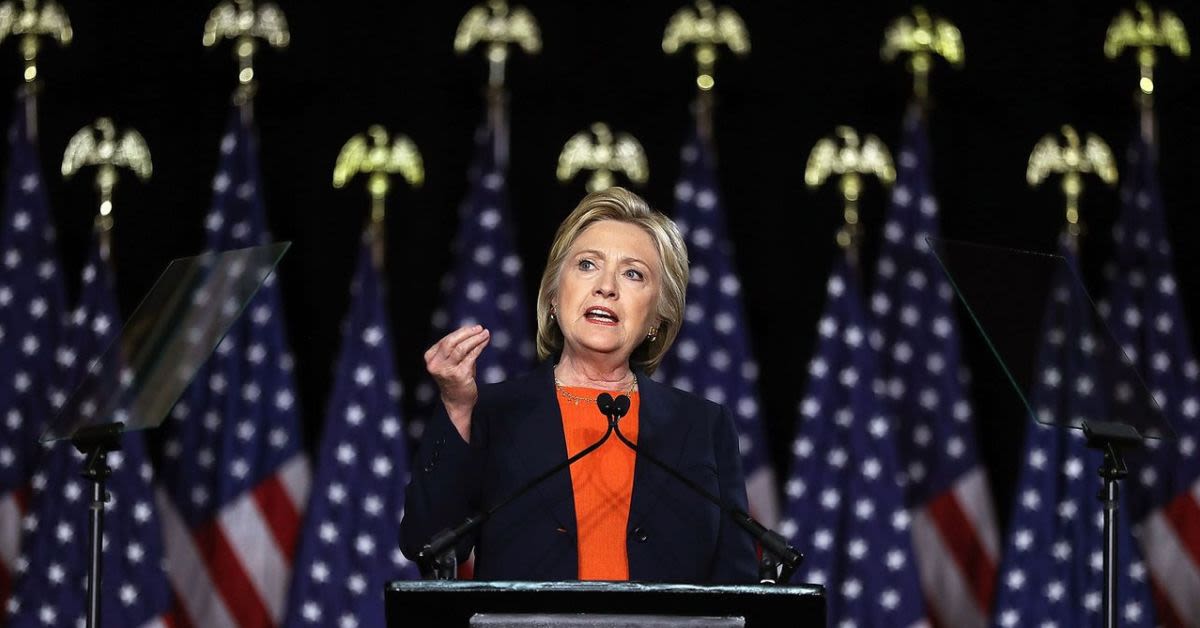
A decade after her stunning defeat to Donald Trump, Hillary Clinton is still treating her 2016 loss as a national catastrophe on par with 9/11, the 2008 financial crisis, and the COVID pandemic.
Speaking at a Nebraska Democrat Party event in Omaha on Saturday, Clinton again placed herself at the center of the nations story of suffering and resilience. According to RedState, the gathering, branded Pumpkins, Pies, and Politics, was billed as an effort to help Democrats mobilize for the final stretch of the 2026 Midterm Election in Nebraska, complete with the painfully on?brand reminder, Dont forget your pantsuit!
Clinton appeared on stage with state party chairwoman Jane Kleeb, but it did not take long for the conversation to drift from the candidates on the ballot to the one candidate she has never stopped campaigning for: herself. In Clintons telling, her personal political failure remains a wound for the entire country, not just a repudiation by voters who preferred a different direction.
In remarks that quickly drew criticism, Clinton strung together a list of national traumas and inserted her own loss into the sequence. You know, if you look back on the last, you know, 25 years in our country, you know, I was a senator from New York on 9/11. That was a trauma, she said, before adding, The terrible financial crisis of 2008 was horrific for people.
She then pivoted to the election that ended her presidential ambitions, casting it as a kind of unresolved national mystery rather than a straightforward democratic verdict. We had an election in 2016 that, you know, raised a lot of questions that were still trying to find answers for about what, you know, what kind of really went on, Clinton declared, later adding, And then we had COVID.
The implication was unmistakable: in Clintons view, the American people did not simply choose a different candidate; something darker and more inexplicable went on in 2016 that still demands investigation. Her comments were summarized bluntly by critics who noted that Hillary Clinton lumps her 2016 election loss in with a series of hard times the country has endured like 9/11 and Covid, and that The hubris here is next level. Shes never going to accept that loss. To her, its a national trauma.
For many conservatives, the performance underscored a familiar patternClintons inability to accept responsibility for her defeat and her instinct to elevate her own political fortunes to the level of national destiny. And you could kind of understand that for people who feel like, you know, theyve had a series of hard times, she said, as if her loss were simply another blow in a long chain of hardships inflicted on the American public.
The contrast with her public posture on the morning after the 2016 election could not be starker. Then, Clinton told her supporters, We must accept this result and then look to the future, and insisted that the country owed Trump an open mind and the chance to lead, even praising Americas long tradition of a peaceful transfer of power.
That rhetoric of acceptance and institutional respect has steadily given way to years of insinuations, investigations, and narratives suggesting that the 2016 outcome was somehow illegitimate. For a Democratic Party that has spent the better part of a decade accusing Trump and Republicans of election denialism, Clintons suggestion that the country is still trying to find answers about what kind of really went on in 2016 is a striking display of double standards.
The irony is heightened by the setting: an event ostensibly focused on the future and the upcoming midterm elections. Rather than encouraging Democrats to move on and make their case to voters on policy, Clinton once again dragged the conversation back to her own loss, reinforcing the impression that for many in the partys establishment, 2016 remains an open psychological wound.
Clinton also used the Omaha appearance to weigh in on this years Senate race, offering a carefully worded nod to independent candidate Dan Osborn, who is challenging Republican incumbent Sen. Pete Ricketts. Without naming Osborn directly, she told the crowd, I want to see you send an independent whos got common sense to the Senate, a line that conveniently advances Democrats ongoing effort to market a reliable liberal vote under an independent label.
For conservatives, that endorsement only reinforces suspicions that the independent branding is a political sleight of hand designed to peel off moderate and right?leaning voters who might balk at backing a Democrat outright. It is a familiar tactic from a party that increasingly relies on rhetorical maneuveringwhether about elections, democracy, or candidate labelswhen its agenda struggles to win majority support on the merits.
A decade on, Clintons remarks in Nebraska suggest that little has changed in the worldview of the former secretary of state or the party establishment she still represents. She is still relitigating 2016, still casting her defeat as a civic tragedy, and now lending her name to an effort to smuggle another Democrat?aligned vote into the Senate under the guise of independence. Some things, as conservatives are quick to note, never change.
Login