
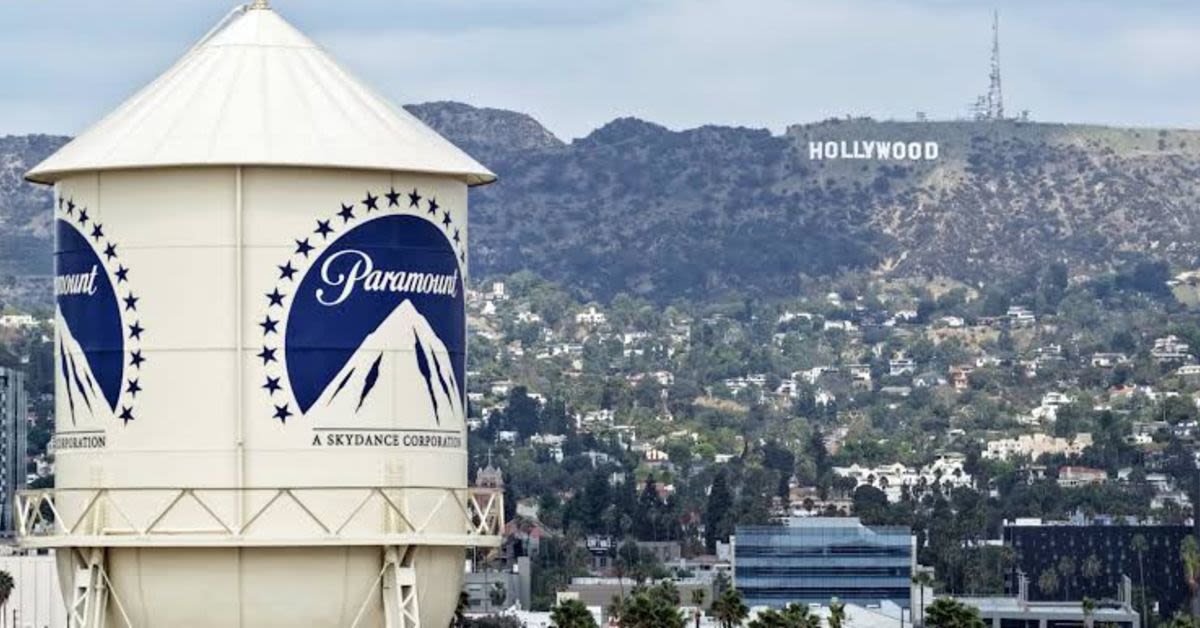
Paramount has finalized its $81 billion takeover of Warner Bros. Discovery, fusing some of the most powerful names in film, television and streaming into a single new entertainment behemoth called Skydance.
According to Western Journal, the newly formed conglomerate now places Warner Bros., HBO, CNN, CBS, Paramount Pictures, HBO Max and Paramount+ under one corporate umbrella, uniting marquee franchises such as Harry Potter, Game of Thrones, Top Gun and Mission: Impossible in a consolidation that would have been unthinkable a generation ago. Including assumed debt, the transactions value swelled to nearly $111 billion, underscoring both the scale of the deal and the high-stakes gamble on legacy medias future in a streaming-dominated marketplace. The merger closed only after a bruising political and legal fight, in which 12 Democratic state attorneys general sued to block the transaction in July and briefly secured a court order halting it, before ultimately settling with Paramount in September under terms that demanded more domestic film production, worker assistance programs and new editorial safeguards for CNN and CBS.
The political resistance from the left was mirrored by a wave of opposition from within Hollywoods own ranks, as thousands of actors, writers and filmmakers signed an April letter urging regulators to stop the deal, with high-profile performers such as Jane Fonda and Mark Ruffalo publicly campaigning against the merger. Their efforts failed to sway federal antitrust officials, however, as the Department of Justice cleared the transaction in June after concluding it was unlikely to harm competition or American consumers, a finding that undercut progressive claims that the consolidation would devastate the marketplace. Roughly a month later, the coalition of Democratic attorneys general pressed ahead with their lawsuit anyway, alleging that the combined company would weaken competition in theatrical film distribution and cable television, effectively second-guessing the DOJs judgment and signaling a more activist, ideologically driven approach to corporate oversight.
A federal judge initially sided with the states in July, issuing a temporary order blocking the merger and injecting fresh uncertainty into the already volatile media landscape. That judicial pause, however, proved short-lived, as Paramount and the states reached a settlement in September that allowed the deal to proceed while imposing a series of conditions that reflect the lefts regulatory priorities. Under the agreement, Paramount committed to spend an additional $1.5 billion on U.S. film production over five years, a pledge that Democrats framed as a win for domestic jobs but that also amounts to government-directed industrial policy in the entertainment sector. The company also agreed to release at least 30 films in theaters annually and to establish new editorial oversight mechanisms for CNN and CBS, a concession that raises questions about how independence will be defined when political actors have already dictated the guardrails.
At the helm of this new media colossus will be Skydance founder David Ellison, who will serve as chief executive alongside co-CEO Ynon Kreiz, further concentrating control of some of the nations largest entertainment and news properties in the hands of a small corporate leadership circle. Ellison, whose production company has been behind several recent blockbuster franchises, cast the moment as transformational for Hollywoods future. Today is a historic day, not just for Skydance but for our entire industry, Ellison said in a statement Tuesday. We couldnt be more excited to get to work. His ascent underscores a broader trend in which entrepreneurial, market-oriented executives are increasingly stepping in to rescue or realign legacy media brands that have struggled under decades of mismanagement and politicized decision-making.
Ellisons path to this point began in August 2025, when Skydance combined with Paramount through a complex transaction that saw the Ellison family and RedBird Capital Partners commit more than $8 billion to acquire Paramounts controlling shareholder and inject fresh capital into the new entity. That deal effectively gave Ellison a commanding position within Paramounts corporate structure, enabling him to move quickly on further expansion. With that foundation in place, he soon turned his attention to Warner Bros. Discovery, a company weighed down by debt and strategic drift but still rich in intellectual property and global brand recognition. The resulting acquisition bid set off a fierce contest that would reshape the media landscape and test the resolve of both regulators and investors.
Paramount ultimately agreed to pay Warner Bros. shareholders $31 per share after a months-long bidding war with Netflix, the streaming giant that had initially appeared poised to carve off key parts of Warners empire. Warner Bros. had first backed a competing Netflix proposal that focused on its studios and streaming operations, a narrower deal that would have left other assets on the table and preserved a more fragmented industry structure. Paramount, by contrast, launched a hostile bid for the entire company, signaling a belief that only full-scale integration could deliver the efficiencies and content synergies needed to compete with Big Tech platforms. Netflix eventually bowed out of the race, clearing the way for Paramount and Warner Bros. to reach a merger agreement in February and cementing Skydances emergence as a direct rival to Silicon Valleys streaming titans.
Despite the loud rhetoric from progressive officials, Democratic opposition to the transaction was far from unanimous, revealing fractures within the party over how aggressively to wield antitrust and regulatory power. A source close to Democratic New Jersey Gov. Mikie Sherrill previously told the Daily Caller News Foundation that the governors team was blindsided when Democratic New Jersey Attorney General Jennifer Davenport joined the multistate lawsuit. We didnt have a heads up, the source told the DCNF, calling New Jerseys participation a baffling move as the state sought jobs and investment from Paramount and Warner Bros. The same source questioned the wisdom of sacrificing economic opportunity on the altar of ideological posturing, asking pointedly, Did we really need to get involved when were negotiating such great things for our taxpayers with Paramount and Warner Brothers?
Beyond the courtroom, the legal battle risked accelerating a trend that should alarm policymakers in Sacramento: the ongoing exodus of entertainment jobs and production from California. Ellison reportedly told senior Paramount executives in August that he was prepared to begin moving the company out of California if Democratic Attorney General Rob Bonta refused to enter settlement negotiations, according to reports at the time. His stated goal was to keep the combined company and roughly 30,000 jobs anchored in Southern California, preserving the states historic role as the heart of the film and television industry. Yet he also warned that once multimillion-dollar daily fees tied to delays in closing the Warner Bros. deal began to accrue, Paramount would have little choice but to consider relocating operations to more business-friendly states.
Those warnings were not idle. Paramount was later reported to be shopping for roughly 400,000 square feet of office space in Nashville as it weighed shifting a significant portion of its operations away from Californias high-tax, high-regulation environment. Such a move would deliver another blow to a state already grappling with declining local production and entertainment jobs, a trend driven in part by aggressive tax incentives and pro-business policies in competing states. For conservatives, the episode illustrates a familiar pattern: progressive policymakers push punitive regulations and ideological litigation, only to watch employers and jobs flee to jurisdictions that respect market forces and economic freedom. Californias political leadership, long insulated by Hollywoods cultural clout, now faces the reality that even marquee studios will not remain indefinitely if the cost of doing business becomes unsustainable.
The takeover also carries major implications for the national news landscape, particularly with respect to CNN, a network that has become synonymous with liberal bias in the eyes of many conservatives. The acquisition hands Ellison control of CNN at a moment when President Donald Trump, who has maintained warm relations with Ellison and his father, Oracle founder Larry Ellison, has repeatedly lambasted the network for its coverage. Trump said in December that it was imperative that CNN be sold, a remark that now appears prescient given the networks new ownership structure. Defense Secretary Pete Hegseth echoed that sentiment in March, declaring that the sooner David Ellison takes over that network, the better, reflecting a broader hope on the right that new leadership might rein in the networks partisan excesses and restore some measure of balance.
Ellison has sought to reassure critics and staff alike by pledging that CNN will maintain editorial independence, a promise that will be closely scrutinized in the months ahead. Mark Thompson will remain the networks editor-in-chief, preserving continuity in day-to-day news operations even as corporate ownership shifts. At the same time, the settlement with the Democratic attorneys general requires the company to establish a News Editorial Independence Board covering both CNN and CBS, a structure ostensibly designed to insulate newsrooms from corporate or political interference. Yet the very fact that such a board was imposed as part of a political settlement raises legitimate questions about who will define independence and whether the arrangement will entrench existing ideological biases rather than correct them.
Financing for the Warner Bros. acquisition also highlights the increasingly global nature of media ownership and the complex trade-offs that come with it. Paramount relied on billions of dollars from investors tied to Saudi Arabia, Qatar and the United Arab Emirates to help fund the transaction, tapping sovereign wealth and regional capital that have become major players in international finance. Saudi Arabias Public Investment Fund, the Qatar Investment Authority and Abu Dhabi-based Limad Holding were among the outside financing partners disclosed by Paramount, underscoring how deeply Middle Eastern money is now embedded in Western cultural industries. The Federal Communications Commission reviewed and approved the foreign investors indirect ownership interests ahead of the merger, concluding that the arrangement did not pose unacceptable risks to U.S. communications infrastructure or national security.
To address concerns about foreign influence over American media content, the Gulf investors agreed to forgo voting and governance rights associated with their stakes, limiting their role to that of passive financial backers rather than active decision-makers. That safeguard may reassure some observers, but it also reflects a broader tension: as Washington pursues policies that make domestic capital more expensive and regulation more onerous, U.S. companies increasingly turn to foreign funding sources that raise their own strategic and cultural questions.
For conservatives, the Skydance-Paramount-Warner consolidation is a case study in competing prioritieseconomic growth and global competitiveness on one side, cultural sovereignty and media integrity on the other. Whether Ellisons stewardship can thread that needle, revitalizing iconic brands while resisting both progressive political pressure and foreign influence, will determine whether this historic day marks a genuine renaissance for American entertainment and news or merely the latest chapter in a long decline driven by bad policy and ideological capture.
Login