
Four international crew members have safely returned to Earth after spending 237 days conducting orbital research and maintaining critical systems aboard the International Space Station (ISS).
The four-person team was led by mission commander Jessica Meir and pilot Jack Hathaway of NASA, joined by European Space Agency (ESA) mission specialist Sophie Adenot, a French engineer and helicopter pilot, and Roscosmos cosmonaut Andrey Fedyaev. According to One America News, their homeward journey began roughly 45 minutes before splashdown as the capsule sped through orbit at 17,500 miles per hour, wrapping up a mission whose return had been postponed three weeks to allow for essential repairs to the spacecraft.
Once given the command to break orbit, the capsule fired its thrusters and dropped into the upper atmosphere, where its ablative heat shield absorbed searing temperatures reaching 3,500 degrees Fahrenheit during the blazing descent. Over the next half hour, atmospheric drag steadily stripped away velocity, reducing the spacecrafts speed from hypersonic levels to just a few hundred miles per hour.
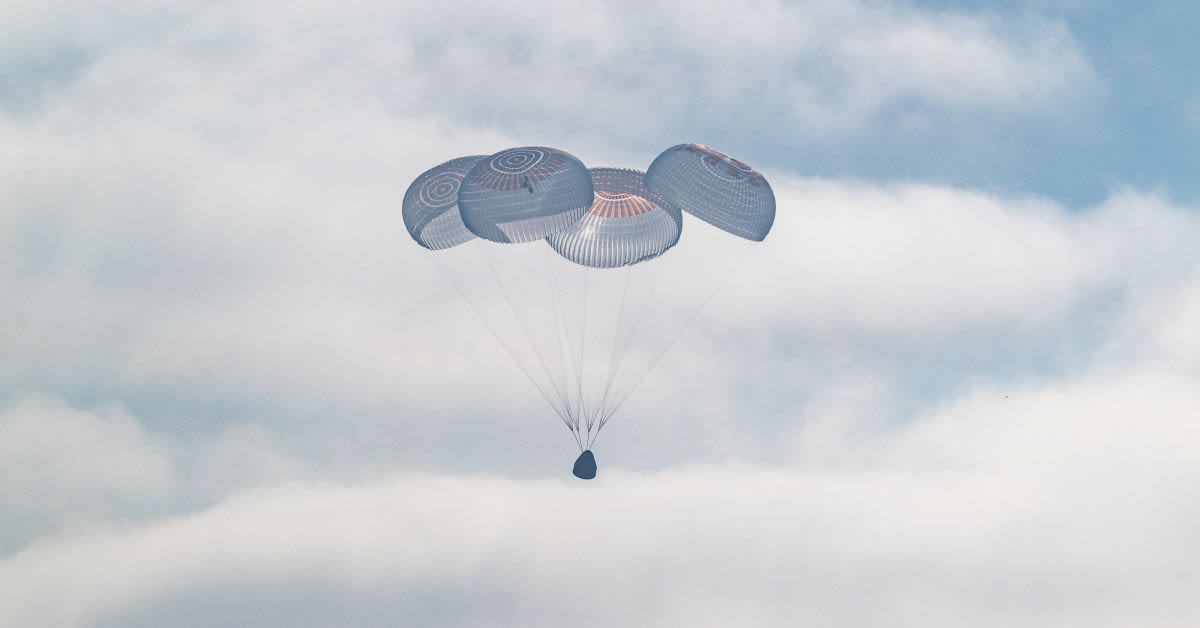
In the final phase of reentry, four main parachutes deployed overhead, slowing the capsule to a gentle 16 miles per hour before it splashed down softly in the Pacific Ocean. Before departing the ISS on Thursday, the Crew-12 astronauts formally transferred station operations to their Crew-13 replacements, a contingent of three astronauts and one cosmonaut who arrived last week to begin a six?month tour.
During their time in orbit, the crew completed dozens of experiments, including research on stem cells, microgravity-induced bone loss, and crystal growth in spacework that underscores the value of long-term human presence in orbit for medical and technological innovation. They also carried out extravehicular activities, highlighted by Adenots historic spacewalk, which made her the first French woman to perform an EVA while executing upgrades and maintenance on the aging but still vital orbital platform.
We are so excited to be back on planet Earth after an incredible mission on the International Space Station, Meir said over the radio moments before splashdown. Reflecting on the emotional weight of returning home, she acknowledged that the crew felt a lot of mixed, swirling emotions and would miss the extraordinary views of our home planet.
Launched from Cape Canaveral, Florida, on February 13th, the mission represented the 20th time SpaceX has carried humans into orbit, a milestone for private-sector leadership in spaceflight that aligns with a conservative preference for innovation driven by American enterprise rather than bloated government bureaucracy. As Washington debates spending priorities, missions like this demonstrate how publicprivate partnerships can advance science, strengthen national prestige, and inspire the next generationwithout sacrificing fiscal responsibility or American leadership in space.
Login