
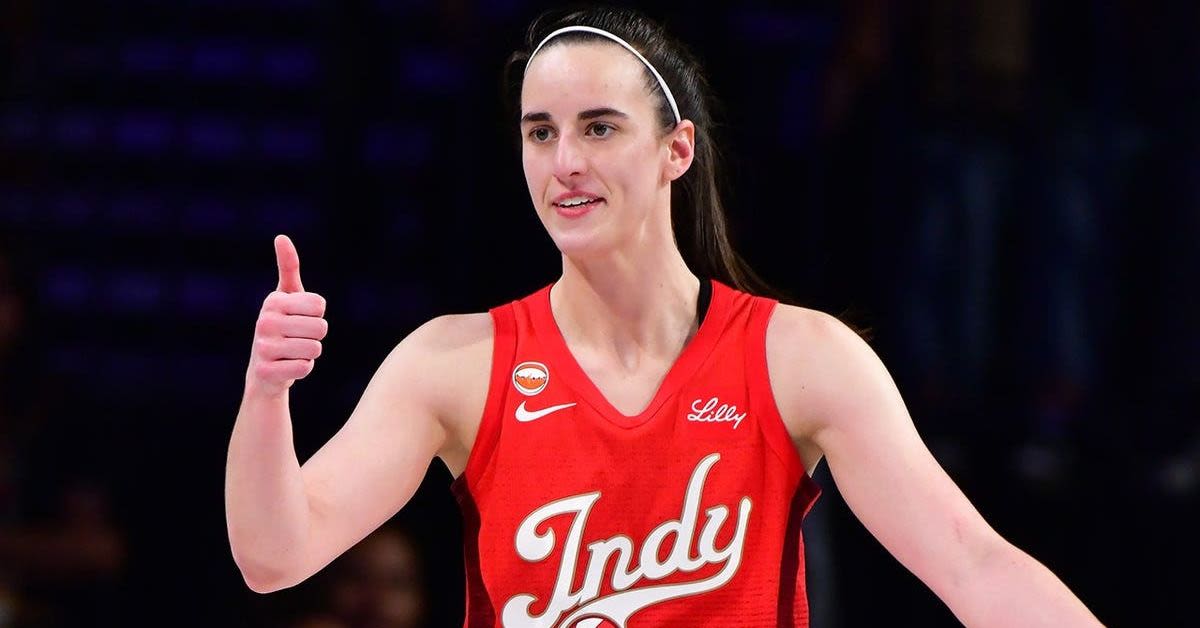
Caitlin Clark would almost certainly prefer to be on the court chasing a championship this October rather than watching the postseason from home.
According to RedState, the WNBA playoffs entered their semifinal round with fan interest suddenly cooling after the Indiana Fever and their rookie superstar were bounced from contention. Viewership for the opening games of the WNBA semifinals plunged roughly 44 to 47 percent compared with the audience for Indianas first-round opener against the Las Vegas Aces, a collapse that undercuts months of media hype about a supposed new era of sustainable popularity for the league.
The numbers, flagged by longtime sports journalist Christine Brennan, tell the story starkly. Brennan contrasted the 2.11 million viewers who tuned in for the FeverAces Game 1 on ABC with the 1.17 million who watched the New York LibertyAtlanta Dream semifinal on ABC and the 1.12 million who saw the AcesValkyries matchup on NBC/Peacock, all of which aired opposite NFL games on Sunday.
Brennan posted on X: A bit of good news for the WNBA: Instead of losing 55% of TV audience when Fever go out (info below), the drop for semis Game 1 vs Game 1 of Fever-Aces a week earlier is 44-47%: 2.11M Fever-Aces ABC 1.17M LibertyDream ABC 1.12M AcesValkyries NBC/Peacock All Sun vs NFL games. She had earlier warned, Theres joy among anti-CC WNBA fans but no joy among TV execs and sponsors. Sad reality hits the W with Fever now out: based on three seasons of viewership data, when Caitlin Clark leaves, half of Ws TV audience leaves as well. Maybe this month is different?
That sad reality is precisely what appears to be unfolding, and it is especially striking because playoff ratings are typically expected to rise as the stakes get higher. Instead, the league is confronting the uncomfortable truth that its biggest draw is not a brand, a franchise, or a long-established star, but a 22-year-old rookie whose presence almost single-handedly doubled television audiences.
Clarks appeal has been obvious to anyone paying attention over the past three seasons. Her deep three-point range, fiery competitiveness, and record-shattering college career at Iowa turned the Indiana Fever a franchise that had been largely irrelevant in recent years into one of the most closely watched teams in womens professional sports.
Yet her rise has been accompanied by a wave of ideological backlash that says more about the modern left than it does about basketball. Woke commentators have fixated on the fact that many of Clarks fans are white and have eagerly injected racial politics into discussions of her popularity, as if drawing a large, diverse audience to womens sports were somehow a problem to be solved rather than a success to be celebrated.
The Fevers first-round series against the defending champion Las Vegas Aces became a flashpoint for this broader cultural tension. The games were intensely physical, and in Game 2, Aja Wilson confronted a courtside fan, charging toward him and berating him, an outburst that earned her a technical foul but no suspension from the league.
One viral post captured the incident bluntly: WNBA player Aja Wilson lost her mind after a fan pointed at her, charged a fan in the stands and berated him. The WNBA is such a joke league. The fan did nothing at all wrong here. The episode fueled criticism that the league is far more interested in protecting its preferred narratives and stars than in enforcing consistent standards of conduct.
Complaints about officiating only intensified that perception. Commentator Brickcenter blasted the referees, writing, The Aces are pulling WWE moves on the Fever, and the refs call foul on INDIANA ?? The refs then REFUSED to let the Fever challenge it. They're not hiding it AT ALL anymore, and adding in another post, Caitlin Clark elbowed in the mouth and bleeding NO CALL Aja Wilson trips and falls FREE THROWS.
The decisive game of the series featured one of the most lopsided free-throw disparities in league history, prompting allegations that the contest was rigged. As one critic put it, The Indiana Fever vs. Aces series had a free throw differential of +31 for the Aces. This is the LARGEST FT differential in a 3-game series in WNBA history ?? In case you were looking for more evidence (as if we need it) that this thing was rigged.
Whatever one thinks of the officiating, the market verdict on Clarks value is unmistakable. When she and teammate Sophie Cunningham were on the floor, Indiana Fever games became must-see events, drawing millions of viewers who had never before bothered to watch a WNBA broadcast.
Once the Fever were eliminated, those fans largely disappeared with them, leaving the leagues playoff product exposed and half its television audience effectively gone Poof! in a single round. For many on the left, that is not a cause for concern but a reason to celebrate, as woke illiterati cheer Clarks exit and demand ideological conformity from those who remain.
A New York Times writer even targeted Cunningham, as RedStates Nick Arama has reported, effectively calling for her to be canceled. The columnist derided her as a 30-year-old unrestricted free agent who averages fewer than 8 points a game and suggested she was not worth the trouble, an argument that sounded less like sports analysis and more like political policing.
The offense, in this case, appears to be Cunninghams willingness to state obvious truths about womens sports and to push back against the culture of entitlement that has taken root among some players and commentators. Apparently, it's too turbulent to observe the basic reality that women should be the people playing women's sports. I guess it's wrong to tell prima donnas to grow up and appreciate the platform they're able to play on. Wouldn't want people doing that.
The WNBA now faces a choice that goes far beyond one playoff series or one ratings dip. It can continue down the path of identity politics, grievance, and selective enforcement the familiar go Woke and go broke trajectory or it can recognize that fans respond to excellence, fairness, and genuine competition, not lectures and double standards.
That would require the league to treat all of its players with respect, including those who do not fit neatly into progressive narratives, and to enforce an even playing field for all actual women, regardless of their race or political opinions. If the WNBA wants the millions who tuned in for Caitlin Clark to stick around, it will have to decide whether it is in the business of basketball or in the business of ideology.
Login