
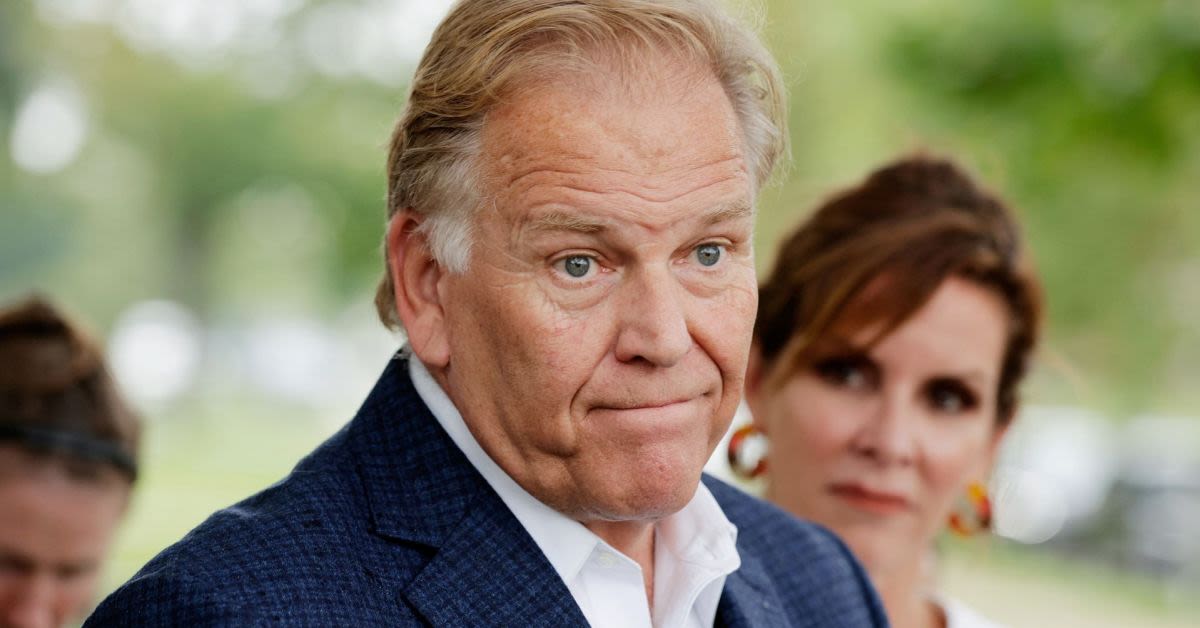
Republican Senate hopeful Mike Rogers is walking a careful line in Michigan, signaling support for lower prices and cross-border cooperation while avoiding a direct break with President Donald Trumps hard-line trade posture toward Canada.
According to Western Journal, Rogers released a new campaign advertisement on Wednesday that appears aimed squarely at swing voters weary of economic turbulence and partisan brinkmanship. The former congressman, who narrowly lost his 2024 Senate bid, posted the spot on social media with a pointed message: Prices are too high and Canada is not our enemy. We need to end the tariff war now. In the Senate, Ill bring both parties together to lower costs and put Michigan families first. For a Republican running in a blue-trending state, the ad underscores the challenge of embracing Trumps America First agenda while reassuring moderates and independents that he will prioritize economic stability over prolonged trade battles.
In the video, Rogers leans into Michigans cultural ties with its northern neighbor, noting that drinking beer and watching hockey are part of everyday life in the state. He then pledges to work across the aisle with Democrats to resolve the current tariff dispute, casting himself as a pragmatic problem-solver rather than a partisan bomb-thrower. We need to end this tariff war now, Rogers said. As Michigans senator, Ill bring both parties together to lower your prices. Thats job number one.
Rogers also uses the ad to draw a sharp contrast with his Democratic opponent, Abdul El-Sayed, framing the race as a choice between economic relief and higher taxes. He accuses El-Sayed of wanting to hit Michigan families with a $3,000 tax increase, calling it the biggest in history. That line of attack fits squarely within a conservative critique of progressive economic policy: that Democrats reflexively reach for tax hikes and government expansion, even as working families struggle with inflation and rising costs.
The backdrop to Rogers message is a high-stakes trade confrontation that began when Trump imposed punitive tariffs on Canada in August, accusing Ottawa of exploiting the United States through unfair trade practices. The presidents approach, consistent with his first term, has been to use tariffs as leverage to force trading partners to the table and to rebalance deals he argues have hollowed out American manufacturing. Canada, refusing to back down, quickly responded with its own slate of retaliatory measures, matching the United States tariffs, dollar for dollar, rate for rate.
That tit-for-tat escalation prompted Trump to look for alternative suppliers in other countries and to symbolically rebuke Canada in a way that grabbed headlines. He announced that Lake Ontario would be renamed Lake America, adding on social media that we dont expect to be doing much business with Ontario any longer. The move, while largely rhetorical, signaled Trumps willingness to use both policy and symbolism to underscore his displeasure with what he views as a lopsided relationship.
Trump then laid out a sweeping tariff plan that would dramatically raise the cost of doing business for Canadian exporters if they do not shift production to the United States. On January First, 2027, Tariffs on all Cars, Trucks, both large and small, Automotive Parts, and Steel, will be increased to 50%, he proclaimed. Build in the U.S. and there are ZERO TARIFFS. Canada will be treated like a State no longer! On Trade, and in other ways, also, they are among the worst Nations in the World to deal with. They feel entitled, and yet, WE DONT NEED CANADA, THEY NEED US! They do 95% of their business with the U.S., with us, the exact opposite!
Under the administrations plan, U.S. tariffs will apply to roughly $20 billion in Canadian goods, hitting products that resonate politically and culturally in both countries, including wine, hockey sticks, cement, and more. For many conservatives, such measures are justified as a necessary correction after decades of globalist trade policies that prioritized multinational interests and foreign partners over American workers and industries. For swing-state Republicans like Rogers, however, the political calculus is more complicated, as Michigans auto sector and cross-border supply chains could feel short-term pain even if the long-term goal is to restore domestic manufacturing strength.
Trump, for his part, did not appear angered by Rogers ad when asked about it by reporters in the Oval Office on Wednesday. Instead, he interpreted the spot as pressure on Canada rather than criticism of his own strategy. I viewed it as though he wanted Canada to make a deal, Trump replied. I viewed him as saying that he thinks Canada should make a deal.
The trade dispute has also drawn in the European Union, which last month signaled it was considering a closer alignment with Canada. European Commission President Ursula von der Leyen floated the idea of adding Canada as an associate member, a move that would deepen ties between Brussels and Ottawa at a moment when Washington is demanding concessions. Trump dismissed the notion with characteristic bluntness, calling it laughable and warning Europe against what he might perceive as a hostile maneuver.
If they do that, if I think its at all a hostile act, I will put very serious tariffs or stop trading with Europe, on many things, he said, making clear that he is prepared to extend his tariff strategy beyond North America if necessary. He added, If its a good intention, thats fine. If its a bad intention, well put very heavy tariffs on Europe, which is a possibility. That stance reflects a broader conservative skepticism toward supranational institutions and transnational elites who often seek to sideline U.S. sovereignty in favor of multilateral arrangements that dilute American leverage.
For Michigan voters, the debate now unfolding is not an abstract exercise in trade theory but a real-world test of which candidate can best protect their livelihoods while defending American interests. Rogers is betting that he can support Trumps overarching goal of fairer trade and stronger domestic industry while promising to lower your prices and put Michigan families first, a message tailored to a state that has endured plant closures, job losses, and economic dislocation under previous globalist regimes. El-Sayed, by contrast, faces the burden of explaining why his tax-and-spend agenda would not further squeeze families already grappling with inflation and uncertainty.
As the campaign intensifies, the question for conservatives is whether a calibrated approach like Rogers can hold together a coalition that includes both staunch Trump supporters and more cautious suburban voters. The tariff fight with Canada, the EUs flirtation with closer ties to Ottawa, and the broader clash between nationalist and globalist visions of trade will all shape that answer, even as candidates on the right insist that any path forward must keep American workers, American sovereignty, and American prosperity at the center of the debate.
Login