
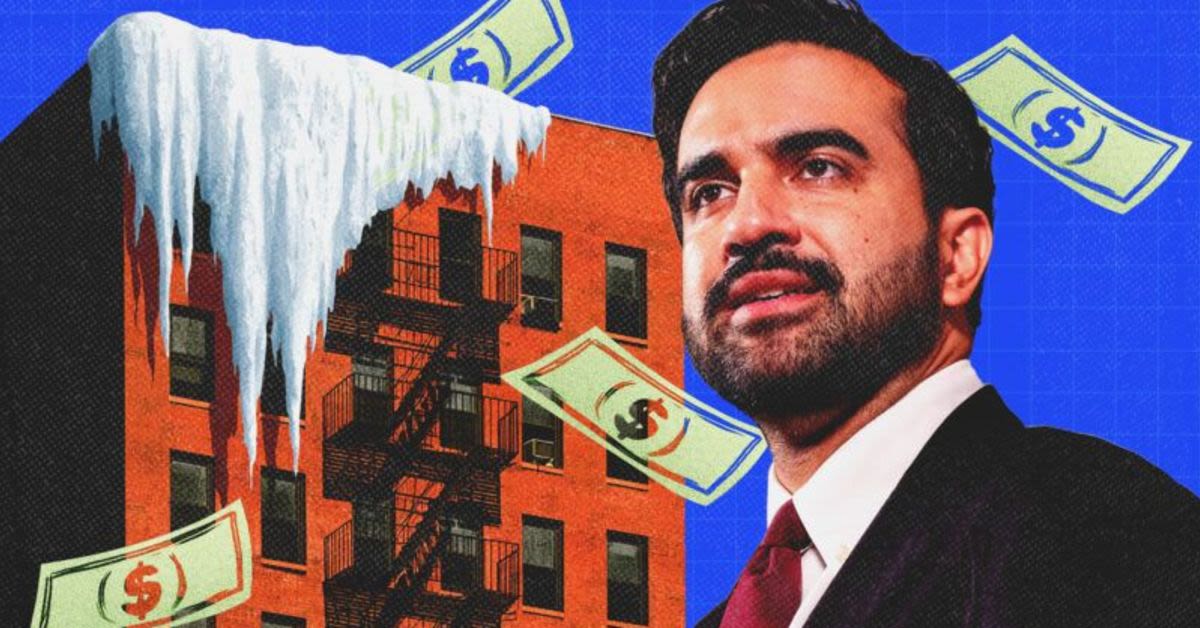
New York Citys controversial pied--terre tax, championed by Democratic Mayor Zohran Mamdani as a way to squeeze more revenue from affluent property owners, has been dealt a serious legal blow after a state judge branded its rollout arbitrary and capricious."
According to Western Journal, the measure targeted high-value properties that are not primary residences, imposing a surcharge on homes valued at $5 million or more and on co-ops and condominiums worth at least $1 million if they are used as occasional or secondary dwellings. The policy, rooted in the lefts broader push to tax the rich, was quickly challenged in court by homeowners who argued that the citys implementation trampled basic due-process protections and treated law-abiding property owners as presumptive tax cheats.
Staten Island Supreme Court Justice Wayne Ozzi agreed with those concerns, finding that the city had improperly mailed tax notices to more than 1,000 New Yorkers who were never actually subject to the surcharge in the first place, as reported by the New York Post. The judge wrote that these homeowners were substantially harmed and penalized needlessly when they were forced to prove to city officials that they did not owe the tax, effectively reversing the presumption of innocence that should govern any fair enforcement regime.
In a sweeping remedy, Ozzi ordered that all 17,000 notices sent out under the program must be voided and reissued on an individualized basis, a rebuke to the citys one-size-fits-all approach. His ruling underscores a recurring problem with progressive tax schemes: the bureaucratic impulse to cast a wide net first and sort out the collateral damage later, with ordinary citizens bearing the cost of government overreach.
Mamdanis office reacted with defiance rather than reflection, signaling that the administration remains committed to the surcharge despite the courts findings. Matt Rauschenbach, a spokesman for the mayor, declared, Todays decision is wrong, and we will invoke a stay of the injunction, according to the Associated Press.
Rauschenbach insisted that the city would press ahead with the policy if allowed, saying, With a stay, we will continue implementing the surcharge fairly, efficiently and in full compliance with the law, as we have since day one. That assertion sits uneasily beside the judges conclusion that the rollout was anything but fair or lawful, highlighting the gulf between progressive rhetoric about equity and the reality of heavy-handed governance.
On the other side of the courtroom, property owners and their advocates welcomed the decision as a vindication of their concerns about government abuse. Randy Mastro, who brought the lawsuit on behalf of affected residents, said, Were gratified that the court has recognized we were right all along.
Mastro argued that the city had flipped legal norms on their head by forcing homeowners to prove their innocence before being spared a new tax burden. The fact is that this administration failed to follow state law when it burdened New York City homeowners with proving they live in their own homes or be on the hook for paying a new surcharge, he continued.
He added that the ruling forces City Hall to adopt a more targeted and lawful approach instead of treating every high-value property owner as a suspect. Now the administration must go back and do what it should have done from the start: use all the information at its disposal to make an individualized initial determination about who truly owes this surcharge before demanding that they pay it.
The legal fight has drawn national attention in part because of the high-profile figures who have joined the challenge, underscoring how New Yorks tax-and-spend policies can drive away investment and philanthropy. Casino magnate Steve Wynn and former Trump administration Secretary of Commerce Wilbur Ross, both of whom maintain primary residences in Florida, have argued in court that they already shoulder substantial property tax burdens and contribute generously to New York City charities, according to the Associated Press.
Their involvement has infuriated Democratic Gov. Kathy Hochul, who signed off on the pied--terre tax and has framed it as a matter of fair share politics rather than economic competitiveness or property rights. When Steve Wynn and Wilbur Ross try to cast themselves as sympathetic figures in a fight over paying their fair share on multimillion-dollar second homes, theyre making the case for the pied--terre tax as well as anyone could, she said, dismissing concerns that punitive taxation will further erode New Yorks tax base.
Mamdani, a self-described socialist, has claimed the surcharge could generate an additional $500 million for the city, money that progressives argue is needed to sustain ever-expanding public programs. Yet the courts ruling highlights a deeper question that New Yorks political class seems unwilling to confront: whether constant efforts to soak the wealthy, coupled with sloppy and coercive implementation, will ultimately drive out the very taxpayers and donors who keep the city afloat.
Login