
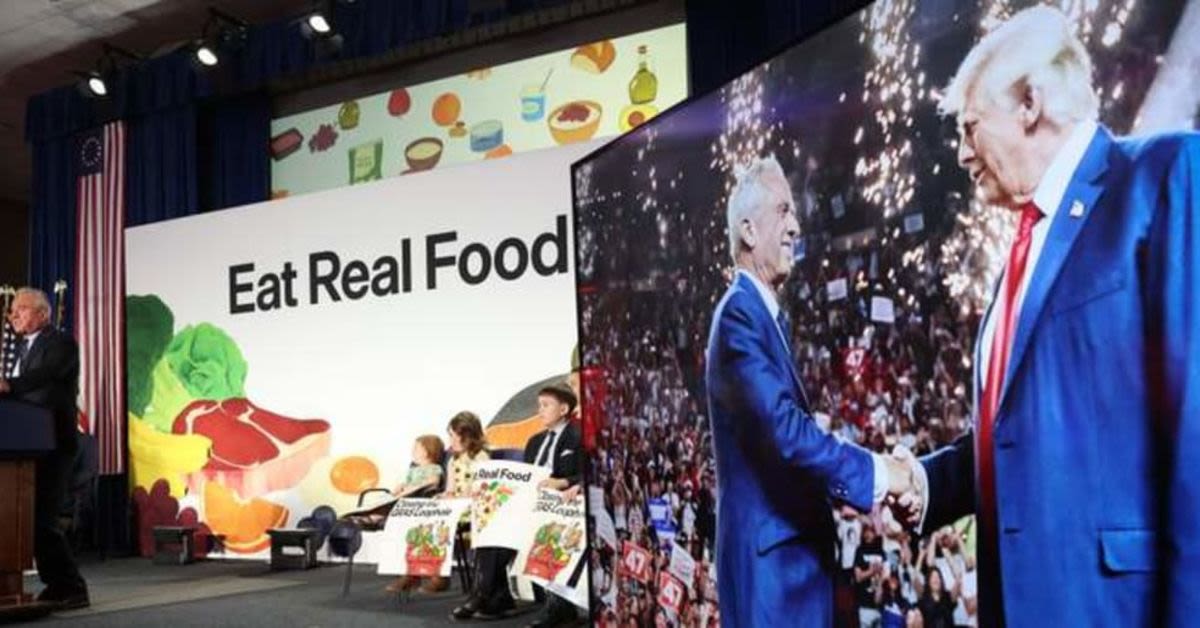
Most rural supporters of the Make America Healthy Again (MAHA) movement say they are not yet seeing the benefits of the Trump administrations health agenda in their own communities, even as the White House touts major investments and reforms aimed squarely at rural America.
According to the Daily Caller, a new KFF-Associated Press poll indicates that roughly eight in ten rural voters believe the administrations health policies have either harmed or had no effect on the health of people in their local areas. Notably, 68 percent of rural voters who identify with the MAHA movement expressed the same skepticism, underscoring a disconnect between the administrations stated priorities and the perceptions of many of its intended beneficiaries.
The survey also highlights a sharp partisan divide in trust toward key administration figures shaping health policy. The poll found that just 10 percent of rural Democratic voters said they had a great deal or fair amount of trust in Department of Health and Human Services (HHS) Secretary Robert F. Kennedy Jr., while 74 percent of rural Republicans said the same.
A similar split emerged in views of President Donald Trump as a source of reliable health information. Roughly 5 percent of rural Democrats and 69 percent of rural Republican voters reported trusting President Donald Trump a great deal or fair amount for trustworthy health information, according to the survey.
The administration, however, is pushing back on the narrative that its efforts are missing the mark in rural communities. This poll takes the views of a small subset of voters and attempts to draw sweeping conclusions about the impact of the Make America Healthy Again agenda in rural communities nationwide. The reality is that President Trump and Secretary Kennedy have made rural America a central focus of MAHA, an HHS spokesperson told the Daily Caller News Foundation in a statement.
As part of that focus, the Trump administration on Wednesday announced a $20 million investment aimed at strengthening healthcare technology and expanding patient access in rural North Carolina through the federal Rural Health Transformation Program. The initiative is designed to modernize care delivery in underserved regions, reflecting a broader conservative emphasis on targeted investment and local control rather than sweeping federal mandates.
President Trump understands that every American deserves high-quality healthcare, no matter where they live, Kennedy said in a statement. We are putting resources directly into rural communities to strengthen the health workforce, modernize infrastructure, expand access, and bring care closer to home.
Kennedy framed the administrations approach as one that empowers states and communities rather than Washington bureaucrats. We are giving states the flexibility to build solutions around the people they serve, while demanding accountability for results, he continued. That is how we strengthen rural health, improve the lives of patients and families, and Make America Healthy Again.
The KFF-AP survey, which sampled 2,241 U.S. adults registered to vote in rural areas, was conducted Aug. 12-24 using the probability-based SSRS Opinion Panel. The poll carries a margin of sampling error of plus or minus three percentage points, leaving room for debate over how fully it captures the views of the broader rural electorate.
HHS officials argue that, beyond polling snapshots, the data on service expansion and funding tell a different story about the administrations record. Under the Trump Administration, HRSA-funded health centers served 308,000 morerural patients last year than in 2024, and HHS is building on that progress with $50 billion to transform rural health care across all 50 states and $11.2 million to develop 15 new physician residency programs in rural communities across 14 states, the HHS spokesperson added. In just 19 months, President Trump and Secretary Kennedy have delivered historic reforms that are fundamentally changing how the federal government approaches food, nutrition, and chronic disease.
Those reforms, the spokesperson stressed, are aimed at long-neglected structural problems in health and nutrition policy that conservatives have long criticized as captive to special interests and bureaucratic inertia. From putting real food back at the center of the Dietary Guidelines to investing in next-generation agricultural technologies that reduce chemical exposure and developing the first federal definition of ultra-processed food, this Administration is taking action where Washington failed to act for decades, the spokesperson concluded.
Login