
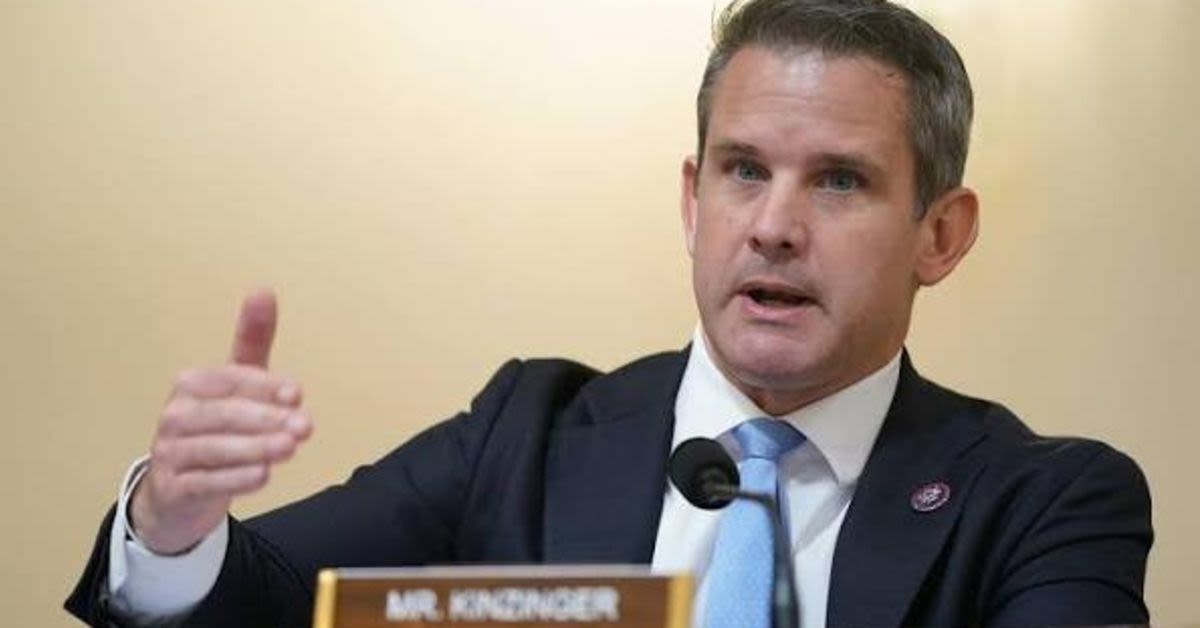
Former Illinois congressman Adam Kinzinger, a long-time Republican critic of President Donald Trump, reportedly made $823 by wagering on then-President Joe Bidens pardon decisions including a bet on whether Biden would pardon him.
According to RedState, federal regulators are now probing how Kinzinger placed those trades on the prediction market platform Kalshi in December 2024 and January 2025, just before Biden left office. Three individuals familiar with the matter told POLITICO that the Commodity Futures Trading Commission (CFTC) is examining the transactions, while Kalshi has launched its own internal review.
Kinzinger has already acknowledged placing the bets but insists he did nothing improper and had no special access to nonpublic information. At the same time he was speculating on Bidens pardons, he was appearing on CNN in January 2025, denouncing President Trump and theatrically insisting he wanted no pardon from Biden.
Pressed by POLITICO about the trades, Kinzinger said he had carefully read Kalshis rules and believed he complied with them. He claimed the restrictions only barred people who worked for the relevant agency, possessed inside information, or could influence the outcome, and he argued he fit none of those categories, declaring, I was not a congressman or candidate, and had been out of office for two years, and had no inside information.
He further maintained that he had no back-channel discussions about pardons that could give him an unfair edge over ordinary traders. I felt confident in this because I had never had a conversation with anyone about [the pardons], much less anyone anywhere near the White House, he said, portraying himself as just another citizen speculating on public events.
Kalshis own rules, however, explicitly prohibit users from betting on events in which they are directly named and from trading on inside information or any ability to sway the result. One of Kinzingers wagers reportedly involved a contract that specifically referenced his own potential pardon, a detail now central to what CFTC and Kalshi investigators are trying to determine.
Kinzinger says that, to date, neither Kalshi nor the CFTC has contacted him about any formal inquiry, and both entities declined to comment to POLITICO. He estimated that he made roughly 25 trades on the platform overall and claimed that, aside from the pardon contracts, he mostly lost money.
The $823 profit, he admitted, came from the pardon-related bets, even as he was publicly posturing on cable news about rejecting any such clemency. On January 6, 2025, CNN host Anderson Cooper asked him directly about the possibility of a pardon, and Kinzinger used the moment to attack President Trump and cast himself as a persecuted truth-teller.
Kinzinger warned Cooper that Trumps allies would use investigations to drain his opponents resources, then pivoted to a self-serving defense of his own record. But the second you take a pardon and it looks like youre guilty of something Im guilty of nothing besides bringing the truth to the American people, and in the process, embarrassing Donald Trump, because for 187 minutes, he sat there and did absolutely nothing and showed how weak and scared he truly was, he said, before adding emphatically, So no, I dont want it.
Despite that televised moralizing, Biden went on to issue sweeping preemptive pardons for members of the January 6 committee in his final hours in office, a move RedState previously highlighted as an extraordinary shield for a partisan, anti-Trump panel. Kinzinger, one of the committees most vocal Republicans, thus found himself both publicly disdaining a pardon and privately speculating on its political value.
Adding to the irony, Kinzinger had spent November 2024 on Substack blasting Kalshi as a corruption time bomb, warning that political betting markets could be abused. Yet when questioned this week about his own activity on the platform, he softened his tone, saying he was generally satisfied with Kalshis screening and compliance efforts.
The wager on his own pardon was not uncovered by regulators but volunteered by Kinzinger himself, who appeared eager to frame it as a misunderstanding rather than a breach of ethics. For a politician who built a media brand on condemning supposed corruption and threats to democracy, the spectacle of privately cashing in on Bidens last-minute pardons while President Trump now leads a second administration committed to restoring accountability raises serious questions about who was really profiting from the old order in Washington.
Login