
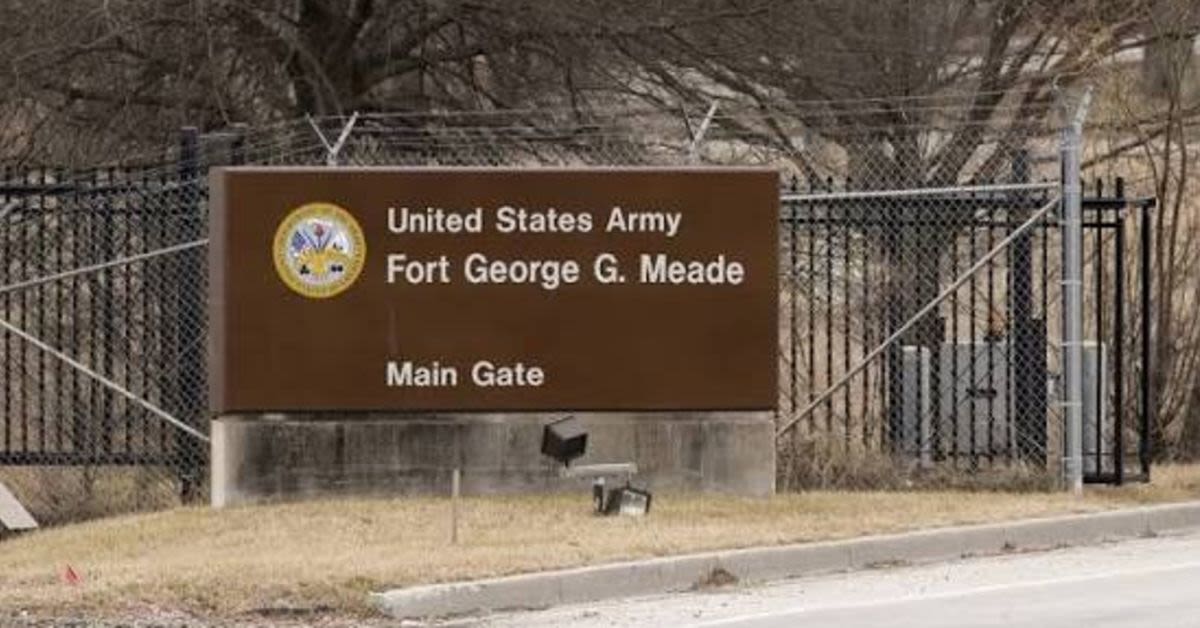
The U.S. militarys elite cyberwarfare community at Fort Meade is facing a disturbing mental health crisis after a sudden cluster of suicides among its ranks last summer.
According to Gateway Pundit, citing local and national reporting, five individuals assigned to or closely supporting U.S. Cyber Command at Fort George G. Meade died by suicide in a span of just five weeks between June and July. The deaths, which included both military and civilian personnel tied to missions at U.S. Cyber Command and the National Security Agency, have prompted renewed scrutiny of the pressures placed on Americas cyber warriors and the adequacy of the Pentagons response.
The Baltimore Banner reported that Five people whose work supported missions at U.S. Cyber Command and the National Security Agency at Fort George G. Meade died by suicide within a month of each other this summer. The outlet noted that this unusual cluster of suicides in June and July follows efforts by the agencies and the Anne Arundel County military installation, where the countrys top cyber warfare units are based, to address the mental health of the 18,000 service members and 41,000 civilian employees there.
Rep. Sarah Elfreth, a Democrat whose Maryland district borders Fort Meade, acknowledged the mounting strain on personnel. This is something that, unfortunately, I think a lot of people wouldnt say saw coming but knew was going to be a possibility based on the work that goes on at Fort Meade, Elfreth said, as lawmakers including both of Marylands U.S. senators now demand answers and preventive measures.
The cyber specialists at Fort Meade work long, high-stress shifts in secure, windowless facilities known as SCIFs, tracking and countering cyberattacks in real time. Their workload has intensified with escalating conflict involving Iran and the global race to develop and defend against new artificial intelligence models, leaving many isolated from friends and family despite serving on the front lines of national defense.
Bloomberg identified one of the fallen as Technical Sgt. Kevin Stallings, an Air Force digital network intelligence analyst stationed at U.S. Cyber Commands headquarters. Stallings family agreed to make his name public, telling the outlet they hoped the disclosure would draw greater attention to the suicides and the unseen burdens borne by cyber operators.
In response, the House Appropriations Committee has proposed $11 million for High Performance Team Training in its fiscal 2027 defense spending bill to bolster morale and resilience at U.S. Cyber Command. The Record reported that the training includes cognitive, psychological, physiological, and spiritual sustainment for high-tempo cyber operations. Without funding, burnout and force degradation will continue.
For a military already stretched by global commitments and political leadership often more focused on social engineering than mission readiness, the crisis at Fort Meade underscores the cost of neglecting the human element of national security. As Washington debates budgets and priorities, the suicides of these five cyber warriors raise a stark question: will policymakers finally prioritize the mental and spiritual well-being of those defending the nation in the digital battlespace, or allow burnout and isolation to claim more lives in silence?
Login