
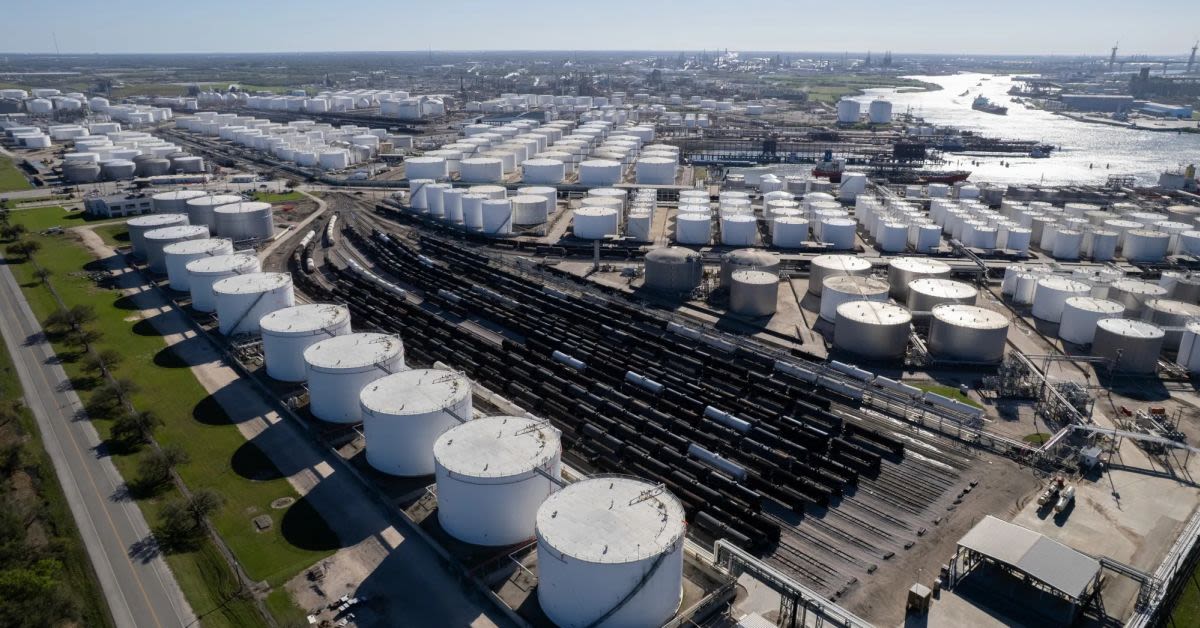
Americas emergency oil buffer has shrunk to 284.6 million barrels, leaving the nation with what energy experts warn is a dangerously thin margin at a time of mounting global instability and rising fuel costs.
According to Western Journal, the Strategic Petroleum Reserve (SPR) shed roughly 405,000 barrels in the week ending Sept. 18 and now holds about 121 million barrels less than it did a year earlier, based on preliminary data from the Energy Information Administration (EIA). The drawdown has pushed the reserve to levels not seen in more than four decades, dropping below 300 million barrels in August for the first time since the SPR was created in the wake of the 1970s oil shocks.
CNBC reported that an Energy Department spokesperson has acknowledged the systems vulnerability, stating that the reserve requires about 70 million additional barrels simply to operate safely. That operational minimum underscores how little true emergency capacity remains once basic functioning needs are accounted for.
Most of the 172 million barrels President Donald Trump authorized for release in March were structured not as outright sales but as exchanges, effectively loans to oil companies that must be repaid with extra premium barrels, according to an April statement from the Department of Energy (DOE). The department further asserted in a March 11 release that it had arranged to return about 200 million barrels to the SPR within the next year and at no cost to the taxpayer.
When those exchanges began in mid-March, the SPR held about 415 million barrels, as noted in a March 15 DOE announcement. Since then, the combination of exchanges, mandated sales, and policy-driven releases has steadily eroded the stockpile, even as geopolitical risks have multiplied.
The DOE did not immediately respond to questions from the Daily Caller News Foundation (DCNF) about how many of the borrowed barrels have actually been returned. That silence leaves open a critical question: whether the promised replenishment schedule is being met or whether the United States is drifting into winter with a partially empty safety net.
Its time to stop drawing down the Strategic Petroleum Reserve and begin a measured refill as previous loans are returned and prices ease, Jason Hayes, a senior research fellow in the Heritage Foundations Center for Energy, Climate and Environment, told the DCNF. From his perspective, the SPR has been treated less as a strategic asset and more as a political tool, undermining its core mission.
A reserve hovering near 285 million barrels is a very thin emergency cushion, not a working strategic stockpile, Hayes said. He stressed that the SPR exists for wars, embargoes, and real supply shocks and should not be used as an ATM for price management, because using it that way leaves taxpayers buying the oil back later at a premium.
As we head into winter, the stress on the system will become even more pronounced, Hayes added. He pointed to a confluence of pressurestight global supplies, infrastructure constraints, and policy headwindsthat could magnify any disruption into a full-blown crisis.
Hayes highlighted limits on Russian exports, ongoing production and transportation problems in the Middle East, and U.S. refineries already running near full capacity, warning that even more serious disruptions are increasingly likely. In such an environment, a depleted SPR offers little reassurance if a major conflict, embargo, or natural disaster suddenly chokes off supply.
Diesel prices are high globally because global refining for diesel is highly constrained. The U.S. produces far more diesel than we can use. We export the rest, J.D. Foster, an economist who previously served as a senior fellow in the economics of fiscal policy at the Heritage Foundation, told the DCNF. His comments underscore that the bottleneck is not simply crude oil availability but the ability to turn that crude into usable fuels.
Because the SPR holds crude oil, Foster noted, releases from the reserve cannot directly increase supplies of diesel, which is a refined product. That reality limits the effectiveness of tapping the SPR as a tool to address surging diesel and heating oil prices, despite political pressure to do something about fuel costs.
The SPR [Strategic Petroleum Reserve] arguably made sense at conception, and if were going to have an SPR, then it should be used, but now that the United States is energy independent, the justification for the SPR has largely evaporated, he said. Foster added that he had not yet reached a firm conclusion on whether the reserve should ultimately be refilled or phased out altogether.
High diesel and heating oil prices are primarily caused by problems with refining capacity, Steve Hanke, a professor of applied economics at Johns Hopkins University, told the DCNF. In his view, the core issue is not a shortage of crude but a shortage of functioning refineries able to process that crude into distillates.
Because refining capacity has been knocked out or constrained, the supply of refined products cannot meet demand at lower prices, Hanke said, adding that prices are forced to rise in order to destroy demand. None of this has much to do with the price of crude oil or releases from the SPR, he added, pushing back on the notion that draining the reserve is a meaningful solution to the current price spike.
The governments record of managing prices is a catastrophe in which it buys high and sells low, Hanke said. Like all socialistic operations, government price controls and price-management systems fail to deliver what is promised, he continued, offering a blunt indictment of central planning in energy markets.
Most people, including so-called experts, underestimate just how much the price of diesel affects everything we do and everything we buy, E.J. Antoni, chief economist at the Heritage Foundations Institute for Economic Policy Studies, told the DCNF. From shipping food and consumer goods to running farm equipment and construction machinery, diesel is the circulatory system of the real economy.
When you go to the grocery store or the hardware store, anything you grab off a shelf got there on a truck fueled by diesel, he said. Since the bottleneck is increasing in refining and not just crude, additional SPR releases might not even impact heating oil prices, Antoni noted, reinforcing the argument that Washingtons preferred lever is largely symbolic.
Distillate inventories, which include diesel and heating oil, stood at 107.4 million barrels in the week ending Sept. 18, 12% below the five-year average, according to the EIA. That shortfall, combined with high demand and limited refining capacity, has helped push diesel to an average of $6.52 a gallon as of Wednesday, according to the American Automobile Association (AAA).
There is also a Northeast Heating Oil reserve that can be tapped, Mark Wolfe, executive director of the National Energy Assistance Directors Association, told the DCNF. The Northeast Home Heating Oil Reserve holds about one million barrels, or 42 million gallons, of heating oilroughly five days of supply for the region, according to Wolfe.
Its relatively small and designed to address severe supply disruptions, he said. Wolfe noted that a sharp rise in prices does not automatically trigger a release and that one provision allows it when the heating oil price spread over crude runs more than 60% above its five-year average for seven straight days and keeps widening.
Unlike the SPRs crude oil, the Northeast reserve holds refined fuel that can be delivered directly to heating oil markets, Wolfe said. Its possible that the current situation meets the requirement to release the oil from the reserve, he added, saying the key question is whether rising heating oil prices reflect a market dislocation or supply shortage that meets the statutory standard for releasing the reserve.
Complicating matters further, Congress has directed the DOE to sell about 170 million barrels from the SPR to raise revenue, with another 90 million barrels planned, according to a June blog post from the Government Accountability Office (GAO). Those legislated sales, driven by budgetary priorities rather than strategic necessity, further erode the reserves capacity just as global risks intensify.
Addressing the SPRs backlog of maintenance and repairs would cost hundreds of millions of dollars, but if left undone could undermine the reserves ability to safely and reliably release and receive oil, the GAO warned. The system can pump oil at a maximum rate of 4.4 million barrels per day for up to 90 days, after which the rate declines as the underground salt caverns empty, according to DOE data.
The SPRs authorized storage capacity is 714 million barrels, far above current levels, according to the DOEs SPR Quick Facts page. That gap between capacity and actual inventory illustrates just how far the reserve has been drawn down and how much would be required to restore it to a robust strategic posture.
Policymakers should restore the reserve and increase domestic production by streamlining permitting, building more pipelines, and growing refining capacity, Hayes, the Heritage fellow, said. His prescription reflects a broader conservative view that the path to energy security runs through deregulation, infrastructure expansion, and unleashing American producersnot through short-term political maneuvers with the SPR.
Trump said in March that after tapping the reserve, well fill it up, CNBC reported. Whether the current administration will follow through on that pledge, or continue to treat the SPR as a convenient lever for short-term price optics, may determine how prepared the United States is for the next genuine energy emergencyone that cannot be papered over by draining a stockpile that was never meant to be a political slush fund.
Login