
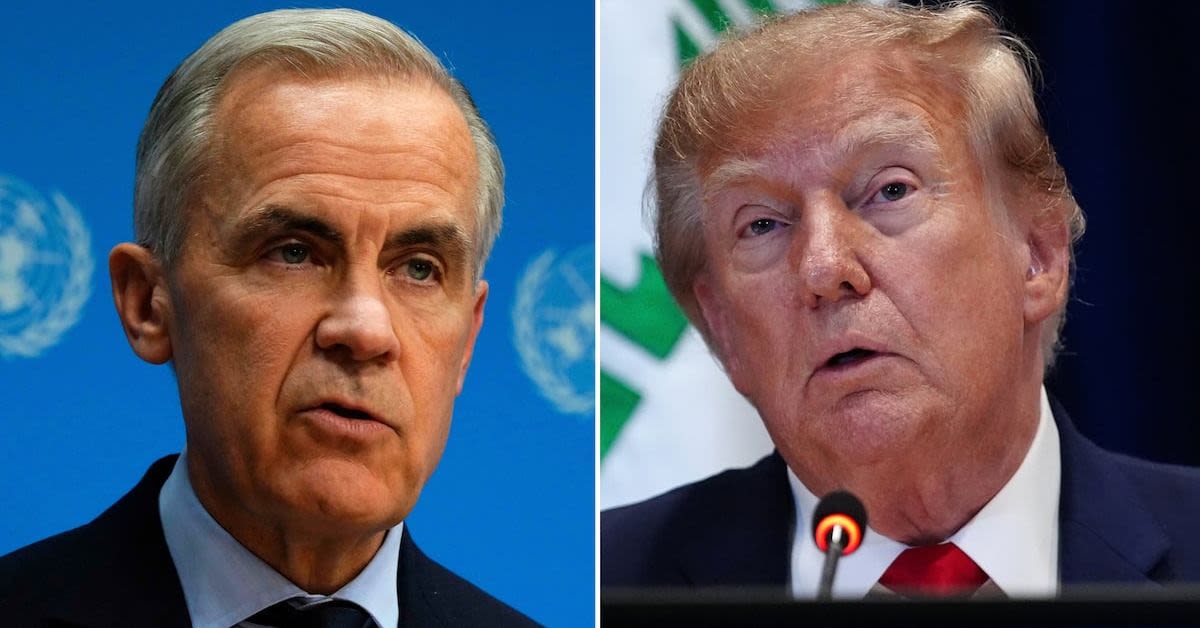
Canadian Prime Minister Mark Carney has acknowledged that he has reviewed military contingency plans to respond to a hypothetical U.S. invasion, citing President Donald Trumps lighthearted talk of making Canada the 51st state as the trigger for his concern.
In a recent interview, Carney said he felt compelled to examine worst-case scenarios after President Trumps comments about potentially adding Canada to the Union. According to Western Journal, Carney told The New York Times, I think you have a responsibility in these roles to look at extreme tail risk, framing his actions as a matter of prudence rather than panic.
The Times reported that Carney indicated he had carefully examined the possibility of U.S.-led military action, but declined to discuss in detail what that involved. He defended the review as standard practice, saying, Thats just risk management. Thats not a base case, but it would be irresponsible not to prepare.
Despite entertaining such dramatic scenarios, Carney insisted that his personal dealings with President Trump remain cordial and pragmatic. He said he speaks frequently with the President and that they had spoken a number of times since this summers trade talks stalled without a breakthrough.
From my perspective, we have a good relationship in the sense of we can pick up the phone and talk to each other about issues, Carney said, emphasizing the value of direct communication between leaders even amid political friction. Hes direct. Im direct in terms of where positions are. Its much more efficient that way, and so you know that exists and that will continue to exist, he added, suggesting that clear, no-nonsense dialogue helps prevent misunderstandings.
As reported by the BBC, Carney signaled from the outset of his tenure that he intended to keep Washington at arms length and resist deeper political integration. We will never, in any shape or form, be part of the U.S., Carney said in March 2025, a declaration that played well with nationalist sentiment in Canada but underscored his ideological distance from President Trumps America First agenda.
President Trump, for his part, has framed the 51st-state idea more as political theater and economic aspiration than a literal annexation plan. In February 2025, he posted on Truth Social that Canada should become our Cherished 51st State, a line consistent with his long-standing view that closer alignment could benefit both nations through stronger trade and shared prosperity.
The President had been using that phrase months earlier in a tongue-in-cheek manner, without any hint of military intent. It was a pleasure to have dinner the other night with Governor Justin Trudeau of the Great State of Canada, Trump wrote on Truth Social in December 2024, pointedly downgrading the liberal former prime minister to Governor in a jab at Canadas political class.
I look forward to seeing the Governor again soon so that we may continue our in depth talks on Tariffs and Trade, the results of which will be truly spectacular for all! Trump wrote, underscoring his focus on trade deals and economic leverage rather than territorial conquest. That posture aligns with a conservative preference for using negotiation and market power, not military force, to advance national interests.
As noted by The Hill, the Trump administration has also met with members of the Alberta Prosperity Project, a group advocating the separation of western, rural Canada from the more liberal, urbanized eastern provinces. The White House, however, downplayed any suggestion of interference in Canadian sovereignty, stating that administration officials meet with a number of civil society groups, but that no support or commitments were conveyed.
Carneys decision to float the specter of a U.S. invasion, even as he admits to a good relationship with President Trump, reflects a broader tension between nationalist posturing and the practical reality of deep economic and security ties. While the Canadian leader talks of extreme tail risk, the record shows a U.S. administration far more interested in trade, regional realignment, and engagement with grassroots movements than in any armed incursion against a close ally.
Login