
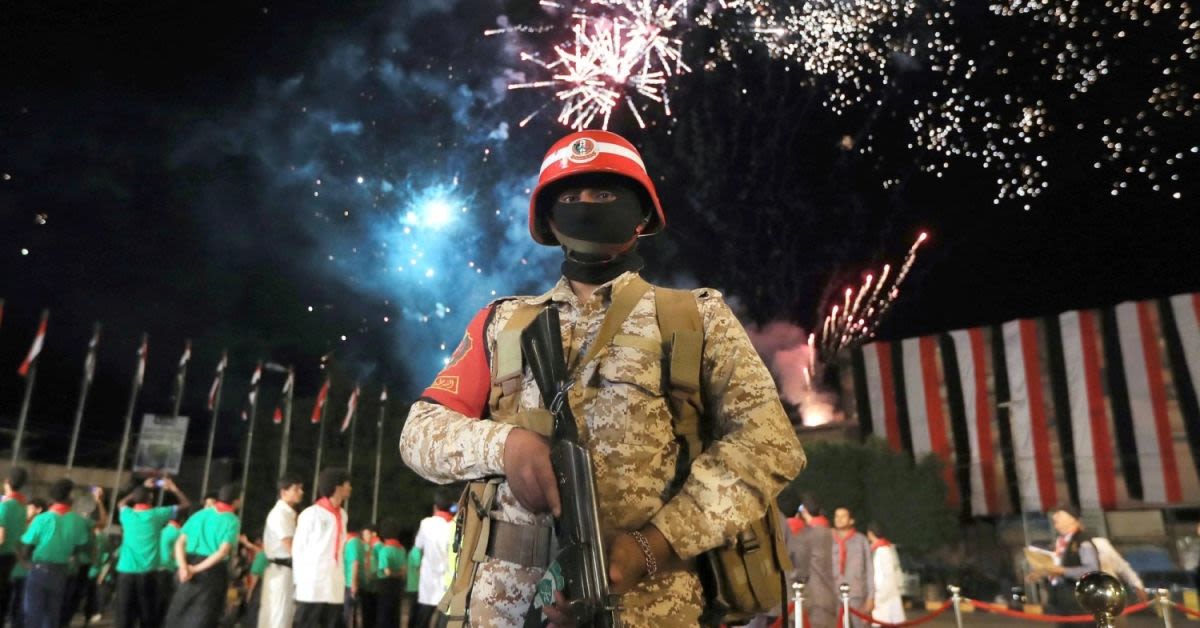
Iran-backed Houthi militants have seized control of Perim Island in the Bab el-Mandeb Strait, tightening their grip on a vital global shipping chokepoint even as a former Pentagon official warned the fighters have effectively stepped into a kill box."
The takeover of the barren volcanic outpost on Sept. 11 followed a grinding, month-long offensive along Yemens western coastline that left more than 1,500 soldiers dead and forced the internationally recognized Yemeni government to concede a painful defeat, according to Fox News. The advance marks a significant escalation in Tehrans proxy campaign against Western and Gulf interests, placing a key maritime gateway under the control of an Iran-backed militia that has repeatedly targeted commercial shipping and energy infrastructure.
With Perim, they have gained what we could call the cork in the Red Sea bottle, Morgan Murphy, a former Pentagon press secretary and Navy Reserve captain, told Fox News Digital. Yet in the same breath, he underscored the vulnerability of the Houthi position, warning, But they've put themselves into a kill box. They're nowhere near the capability of the United States and if the president so chooses, he can wipe them off the face of that rock pretty easily.
Perim Island, also known as Mayun, sits squarely in the middle of the Bab el-Mandeb, the narrow maritime passage that links the Red Sea to the Gulf of Aden and, by extension, the Suez Canal to the broader Indian Ocean trade routes. Despite the islands apparent tactical value for any force seeking to threaten or control shipping, Murphy stressed that the Houthis have effectively concentrated their fighters in a confined, exposed battlespace that could be subjected to overwhelming, precision firepower.
Perim cuts that chokepoint right in half, and it's only 18 miles wide there, Murphy said. For centuries, that geography has made the island a coveted prize for maritime powers, with French forces once vying for influence there and the British Empire holding it for more than a hundred years as part of its strategy to safeguard imperial sea lanes.
The islands location also places it within reach of significant U.S. military assets. Perim lies roughly 20 miles off the Horn of Africa, not far from Camp Lemonnier in Djibouti, one of the largest and most strategically important American installations on the African continent, used for counterterrorism, surveillance and rapid-response operations across the region.
We have incredible firepower in that region, and that's a little rock in the middle of that strait. It's a volcanic rock. It doesn't have any water. It's uninhabitable, Murphy warned, underscoring the logistical and defensive challenges the Houthis now face. There's no vegetation to speak of. And the Houthis have just massed their troops on that rock. So what that is, what we would call that in the Navy, is a kill box.
Satellite imagery of Perim reveals a 1.85-kilometer (6,070-foot) runway and three military hangars, infrastructure that regional intelligence sources attribute to earlier construction efforts by the United Arab Emirates during a previous phase of the Yemen conflict. That airstrip, while potentially useful, does not come close to offsetting the Houthis technological and operational disadvantages against a modern Western military.
There's a 6,000-foot airstrip on that island. I think that Emiratis built it, Murphy said. It's nice to have an airstrip, and especially a long runway, but we don't know the condition of that runway. We don't know how they could possibly use that runway, and they certainly don't have the sophisticated air power that the United States and its allies have to project power from that runway.
Murphy emphasized that, should American leaders decide the Houthis presence on Perim poses an unacceptable threat to global commerce or U.S. forces, the options available to the Pentagon are decisive and overwhelming. We could wipe that rock into glass, just blast it into a smooth glass surface, put skates back on our feet, and skate all over it, Murphy said.
That's why the Houthis have kind of played coy with the president, and they know that even if they fortify that rock they're not going to be able to hold it in the face of the United States Navy. His comments reflect a broader conservative view that American military strength, when clearly signaled and credibly backed, remains the ultimate deterrent against rogue actors and their state sponsors.
The seizure of Perim comes amid intense diplomatic maneuvering involving Washington, Riyadh and the Houthi leadership. Sources confirmed to Fox News Digital that Saudi Crown Prince Mohammed bin Salman called President Donald Trump twice on Sept. 10, urging him to authorize U.S. strikes against Houthi positions as the offensive on Yemens western coast intensified.
Trump declined to launch direct U.S. military action, with American officials indicating the administration had no immediate plans for direct combat involvement while continuing to provide intelligence and support to regional partners. Speaking to reporters in Dublin on Sept. 12, Trump signaled that the Houthis themselves appeared wary of provoking a direct clash with the United States.
The Houthis called us, and they dont want to fight with us. They let us know, they dont want to fight with us... they dont want us to go after them, Trump said. The presidents stance reflects a familiar approach: avoid entangling the United States in another open-ended Middle Eastern war while keeping the threat of overwhelming force on the table.
Murphy argued that such restraint should not be misread as weakness or indecision. I can't speak for the president. But this administration has not shown a lack of resolve to use force, Murphy said.
I wouldn't doubt at all if the president took steps to pound some of these folks into the sand if they continue to really disrupt the global energy supply. That warning goes to the heart of conservative concerns about energy security, global markets and the destabilizing role of Irans proxy network across the region.
Yemeni government officials, regional sources and Iranian insiders told Reuters that the Houthi advance has been underpinned by Iranian weaponry and tactical guidance from the Islamic Revolutionary Guard Corps (IRGC), with U.S. officials estimating that hundreds of IRGC officers remain active in Yemen. Murphy suggested that Tehrans broader strategy is to weaponize global trade routes, driving up fuel prices and exerting pressure on Western economies already grappling with inflation and energy volatility.
Comparing the current standoff to historic naval rivalries, Murphy underscored the yawning gap between the Houthis capabilities and those of modern great powers. We're in a different era. They are nowhere near the sophistication of the world's major powers. The Houthis are using a 19th-century playbook. They are not using 21st-century warfare, he said.
So, yes, they've caught a critical cork in the Red Sea bottle, but how they use it remains to be seen, Murphy concluded. This is an example of why great powers really have to have a strong Navy. This is why Great Britain had a strong navy. This is why the United States has a strong navy, because there's so many regional powers who want to try to bottle up shipping, whether it is in the Strait of Malacca, whether it is in the Strait of Hormuz, and here, in this case, in the Red Sea.
For Washington and its allies, the coming days will test whether diplomacy, deterrence and allied coordination can keep one of the worlds most critical waterways open in the face of Iranian-backed adventurism. I think what we're going to see in the next several days and weeks is a coordinated effort by the Trump administration to make sure our allies are on board in helping us keep these critical waterways open, free, and clear for freedom of navigation, Murphy said, capturing a central conservative conviction: that American leadership, backed by naval strength and a coalition of willing partners, remains indispensable to safeguarding global commerce and confronting regimes that thrive on chaos and coercion.
Login