
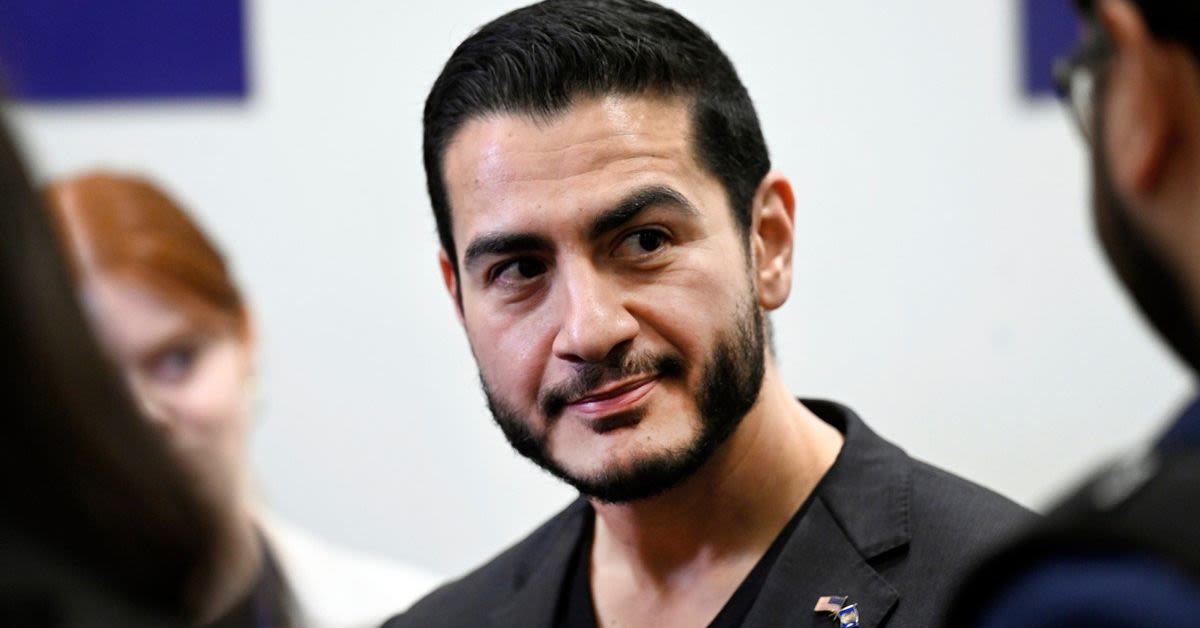
Democratic U.S. Senate candidate Abdul El-Sayed is facing new scrutiny after a young Iranian-American student publicly challenged him over his refusal to condemn Irans brutal regime and its terror apparatus during a town hall at the University of Michigan.
The exchange, which unfolded in front of students and cameras, has since drawn national attention, according to RedState, after the student, Iman Dashti, later recounted the encounter on Fox News The Will Cain Show. Dashti, who has family in Iran, confronted El-Sayed with deeply personal testimony about the suffering his relatives endured under the Islamic Republic, including persecution by the Islamic Revolutionary Guard Corps (IRGC). He then pressed the candidate on two straightforward points: El-Sayeds prior suggestion that he would refrain from criticizing Ayatollah Ali Khamenei out of concern it might upset some residents of Dearborn, and whether he would clearly and unequivocally condemn the IRGC.
Do you stand with us? Dashti asked, describing how his family had been tormented at the hands of the Iranian regime, including a cousin hunted by the IRGC and an uncle sentenced to death and lashed, before demanding of El-Sayed: Do you stand with the Persian people. The question, as one viral social media post put it, was THE EASIEST QUESTION IN POLITICS, noting that the student had asked El-Sayed point blank if he stands against the IRGC and whether he renounces the people in Dearborn who held vigils for Khamenei.
El-Sayed, however, declined to do either, offering instead a polished, generalized response that conspicuously avoided the specific condemnations Dashti requested. Reflecting on the moment later, Dashti admitted that in the moment, he initially thought El-Sayed had handled the question well, a reaction he now attributes to the candidates rhetorical skill and smoothness.
That initial impression did not last long once Dashti replayed the exchange and realized El-Sayed had never actually answered the core questions, calling it a terrible answer. He told host Will Cain that El-Sayed never condemned the IRGC, never addressed his past comments about Khamenei, and never explicitly affirmed that he stood with the Persian peoplethe one thing I asked him to say.
It's unbelievable. You know, you can be charismatic. You can say the right things. You can weave and duck. But he didn't answer the question. And I think it's a huge mask-off moment for Abdul, Dashti said, arguing that the non-answer revealed more about El-Sayeds priorities than any campaign talking point. Cain underscored the contradiction, noting that El-Sayed claims to support democracy-seeking people around the world, yet refused to confront the specific, real-world example placed directly before him.
Dashti did not hold back in his broader assessment of the missed opportunity. I could not have given him an easier layup. I mean, it's so simple. Just say it. Just say you're against the world's largest sponsor of terror. Just say you're against the government that has killed hundreds of thousands of Persians. And Americans. But he didn't, he said, emphasizing how minimal the political risk should be for any candidate who truly opposes terrorism and supports human rights.
Pressed on why El-Sayed might dodge such an obvious moral stance, Dashti suggested the candidate was constrained by his own political coalition. He argued that many of El-Sayeds supporters are sympathetic to the Iranian regime or its affiliated institutions, and that he doesn't want to alienate them by openly denouncing the IRGC or criticizing Khamenei.
Cain went a step further, suggesting that Dashti might actually be giving El-Sayed too much credit by chalking it up merely to political calculation. The Fox host floated a more troubling possibilitythat El-Sayeds refusal to denounce the IRGC might reflect something deeper than electoral caution, raising questions about where he truly stands on one of the worlds most notorious state sponsors of terrorism.
For voters who still believe the United States Senate should be a bulwark against terror regimes and a defender of those who risk their lives for freedom, the episode is telling. In a single, pointed question from a young man whose family has suffered under Tehrans tyranny, Dashti managed to expose what the broader media has largely failed to probe, and El-Sayeds evasive answer is, for many, not just disappointing but disqualifying for anyone seeking to represent America on the world stage.
Login