
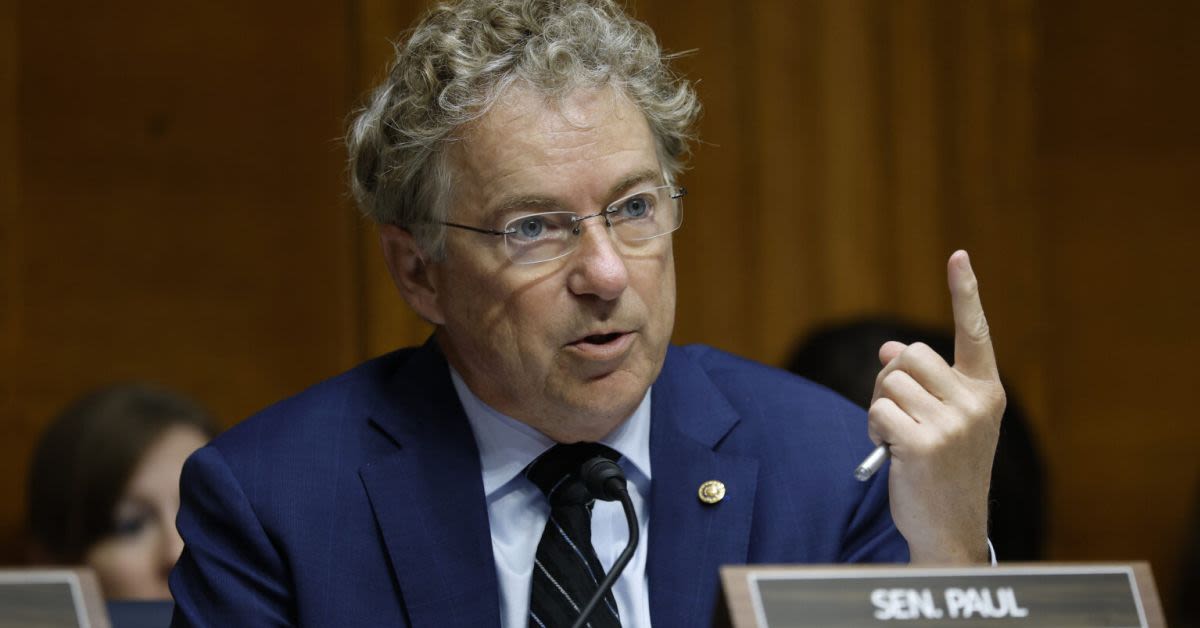
Kentucky Sen. Rand Paul is again signaling interest in a 2028 presidential run, but says his decision hinges on whether Republicans stand firm in this Novembers elections.
In an appearance on Newsmaxs Finnerty, Paul said he has not yet reached a decision and will wait to see how the midterms unfold before committing. According to Gateway Pundit, the Kentucky senator made clear that the outcome of this cycle will heavily influence whether he steps forward as a standard-bearer for the partys shrinking free-market wing.
I havent decided, but were going to look thoroughly at it as we see the results coming in for the midterms, Paul said. The senator, who sought the Republican nomination in 2016 before exiting after a fifth-place finish in Iowa, argued that the GOP still needs a free-market conservative willing to challenge the partys increasingly populist economic tilt.
I think there needs to be a candidate that is a free-market conservative, somebody who believes that the debt is wrong, Big Government is bad, but also that we get richer through international trade and that capitalism on an international scale is a good thing, not a bad thing, Paul said. He warned that the partys current economic messaging risks abandoning the principles of limited government and open markets that long defined conservative policy.
Then he went further, directly criticizing the new economic orthodoxy on the right. I think the populism of the party now is teaching something thats an economic fallacy, he said.
And so I think it would be a robust debate to have a free market, libertarian-leaning conservative like myself, who doesnt think the government should own businesses, shouldnt be involved, that capitalism should reign. Capitalism made America great, Paul added. So, well see what happens.
Back in March, Gateway Pundit reported that Paul told CBS he was 50-50 on a 2028 run and would decide after the 2026 midterms. He complained then that the partys old free-market, libertarian wing had been hollowed out and that on many days he was the only one left for free trade in the Senate.
Six months later, his warning shot at the partys economic drift remains unchanged. Paul is still pressing the case that tariffs, industrial policy, and government equity stakes in private companies represent a dangerous departure from conservative orthodoxy.
He is openly calling for a primary showdown over whether Republicans remain a limited-government, free-trade party or continue along the path President Trump has charted. For Paul, the coming elections will determine not only his own political future, but whether there is still room in the GOP for a robust defense of capitalism without government picking winners and losers.
Login