
An unsolved mass poisoning that terrified the nation in 1982 may now be tied to a troubled chemist who died by suicide in an Idaho church that same year.
According to Western Journal, the Ada County Sheriffs Office in Idaho now believes that the man who killed himself inside a Boise Catholic church in December 1982 was Dr. Mathew Betkouski, a figure who may be connected to the infamous Tylenol murders. When his body was discovered more than four decades ago, he carried no identification, only a large amount of cash and a typed letter bearing a false name, leaving investigators with more questions than answers.
Cold case Detective Tim Cooper reopened the file in 2019 and began piecing together the mystery using modern investigative tools. He ultimately determined, through photographs and DNA analysis, that the unidentified man in Boise and a Florida man who vanished in 1982 were in fact the same person: Dr. Mathew Betkouski.
Betkouskis background has only deepened investigators suspicions about his potential role in the Tylenol case. The doctor had worked in two drugstores while in college and had openly discussed the use of cyanide as a way to kill without detection, a chilling detail given what would unfold in Chicago that same year.
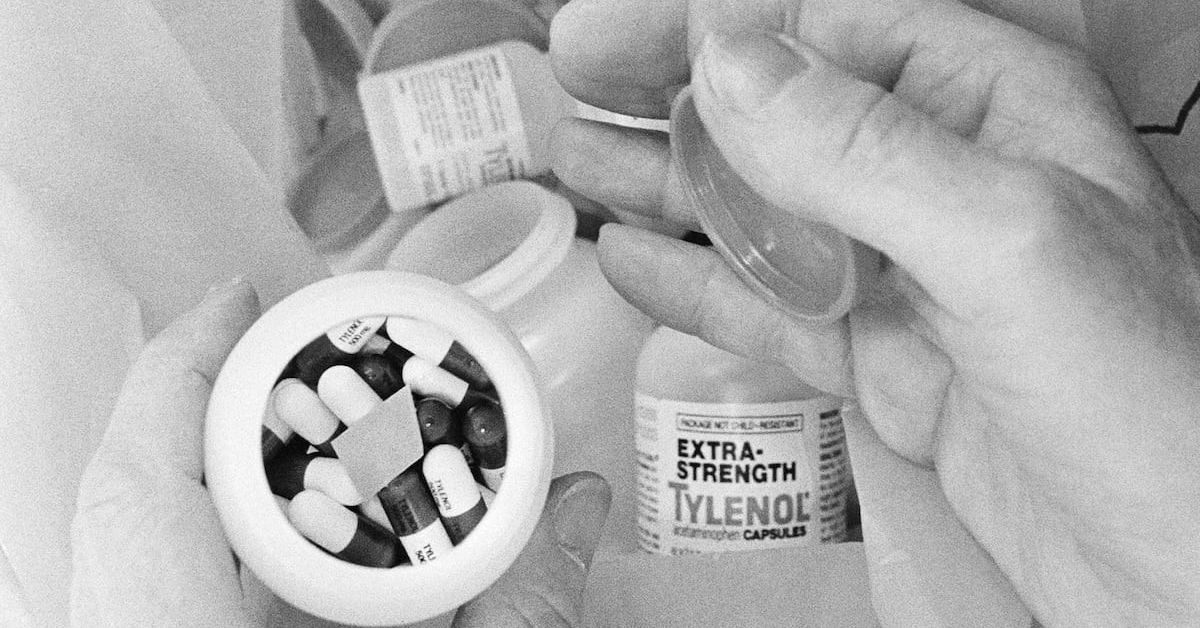
The 1982 Tylenol killings involved cyanide being substituted for the medicine in several Tylenol capsules, turning a trusted household product into a lethal weapon. Seven people in the Chicago area died after ingesting the tainted capsules, prompting a nationwide panic and forcing the product to be pulled from store shelves.
Dr. Park Dietz, a prominent forensic psychiatrist, said that by 2021 he believed Cooper was drawing credible lines between Betkouski and the Tylenol murders. Dietz concluded that the detective was making connections that linked Betkouski to the Tylenol case, suggesting that the long-dormant investigation may finally have a viable suspect.
More information about the theory will be presented to the public through popular culture rather than government transparency. More details will be released on the Unsolved Mysteries TV series episode titled Unmasking the Tylenol Killer, which is scheduled to stream Oct. 9 on The Roku Channel.
Terry Dunn-Meurer, the director of the series, said the episode will go beyond what has been publicly known for decades. He promised it includes never-before-seen evidence about this new possible suspect in the Tylenol murder case.
While the case remains under the jurisdiction of Illinois authorities, Idaho investigators have not kept their findings to themselves. The Ada County Sheriffs Office has shared what it knows with the Chicago Police Department, hoping that cooperation across state lines might finally crack one of Americas most notorious unsolved crimes.
Cooper has also appealed directly to the public, emphasizing the breadth of Betkouskis travels and the possibility of other unknown offenses. Mathew Betkouski lived in five states over the course of his life California, Texas, New Mexico, Ohio and Florida, Cooper said. Were hoping that getting his story out generates new leads, not just for this case, but for others we may not even know about yet. Im especially interested in learning more about his movements between Oct. 15 and Dec. 4, 1982.
The detective described Betkouski as a man of considerable intellect whose personal life was marked by isolation and disturbing behavior. Cooper said Betkouski was a brilliant man, but he struggled to connect with people in life, according to the Hollywood Reporter.
Those social difficulties were paired with a longstanding and dangerous obsession with chemistry and explosives. Dr. Betkouski had a documented fascination with chemistry and the use of explosives from a young age, and did put others at risk on more than one occasion, he said.
Cooper also pointed to a serious injury that may have exacerbated Betkouskis darker tendencies. In 1974, Dr. Betkouski sustained a traumatic brain injury, which caused some of his problems to manifest in more concerning ways than they had before, Cooper said.
By the mid-1970s, Betkouskis professional life was already raising red flags for those around him. In 1975, Dr. Betkouski worked for a flavors and fragrances company in the Jacksonville area, and after about three years, concerns mounted after co-workers reported Dr. Betkouski discussing the perfect crime and how cyanide could be used as a less messy means of taking ones life, he said.
His employment troubles continued into the very year of the Tylenol murders, when he was working in the defense industry. Betkouski was fired by Lockheed in 1982 following an incident at a local pharmacy, Cooper said, in which Betkouski attempted to obtain some type of pills or capsules for an experiment.
The pattern of behavior fits uncomfortably well with the known facts of the Chicago poisonings, which remain officially unsolved. As noted by Chicago History, seven deaths were reported in the Chicago area in a short time in the fall of 1982, all from taking Tylenol in which potassium cyanide had replaced the medicine in the capsules.
Despite intense public pressure and a massive investigation, no suspect has ever been formally identified or charged in the case. One man who tried to insert himself into the story was later exposed as a fraud and jailed for attempting to extort money from Tylenols parent company, underscoring how high-profile tragedies can attract opportunists rather than deliver justice.
The Tylenol murders did, however, reshape consumer protection and corporate responsibility in the United States. The case led to widespread recalls of the medication, as well as regulations requiring over-the-counter medications to have tamper-evident seals, a regulatory response that conservatives often note came only after a private company and the public had already begun adapting their own safety practices.
For families of the victims and for Americans who remember the fear of that era, the emerging portrait of Betkouski offers a potential, if unsettling, path toward closure. Whether the new evidence and public attention will finally produce definitive answers remains to be seen, but investigators are clearly betting that renewed scrutiny of a reclusive chemists life and movements in 1982 could at last bring accountability in a case that has haunted the country for more than forty years.
Login