
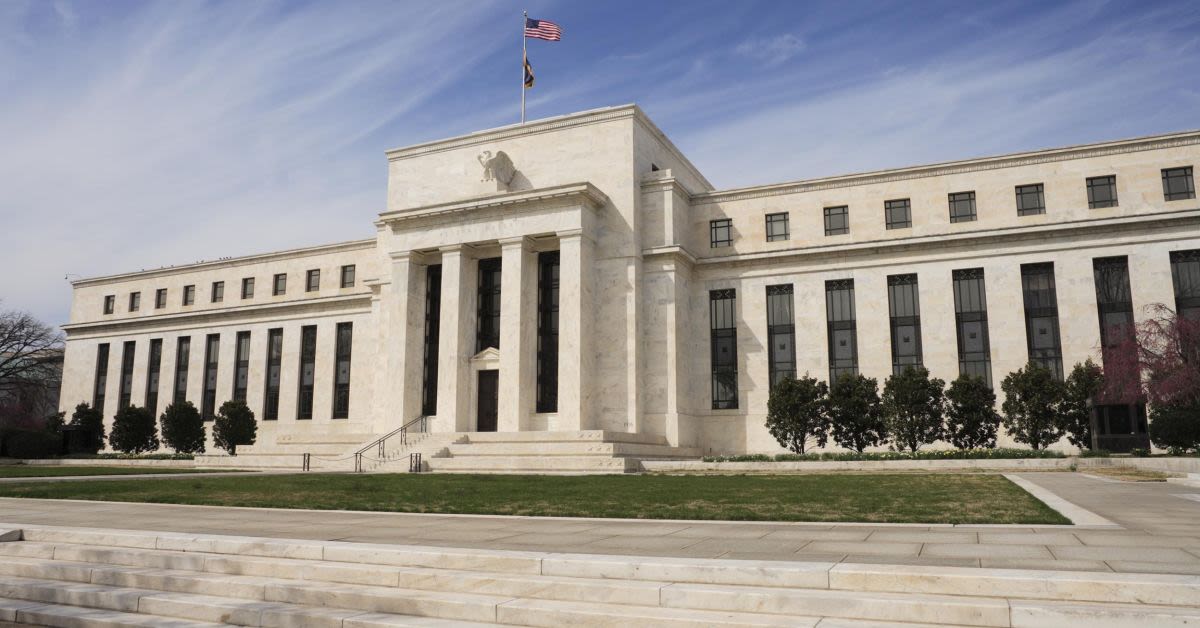
The Federal Reserve has launched its first interest rate hike in more than three years, tightening monetary policy even as President Donald Trump has continued to call for cheaper credit to spur growth.
According to Western Journal, the Federal Open Market Committee (FOMC) voted last week to lift its benchmark federal funds rate by a quarter percentage point, setting a new target range of 3.75 percent to 4 percent and partially reversing the rate-cutting cycle that concluded in 2025. The move followed a renewed burst of inflation, an oil-price spike linked to the Iran war and a steep selloff in long-term Treasury securities, all of which underscored the risks of prolonged easy money and unchecked federal spending.
The decision represents the first rate increase since July 2023 and the first policy shift under Federal Reserve Chairman Kevin Warsh, who assumed the post in May after being selected by Trump. While the president has pressed publicly for lower borrowing costs, the central bank is now signaling that inflation, not political pressure, will dictate its course.
Financial markets had largely priced in the shift before the announcement, reflecting Wall Streets expectation that the era of ultra-loose policy was ending. Traders saw roughly a 93 percent probability of a quarter-point hike, and economists surveyed by Reuters overwhelmingly expected the Fed to raise rates, according to Reuters.
Just a few months earlier, the Fed had opted to hold its target range at 3.5 percent to 3.75 percent at its July meeting, a pause that already drew internal dissent. Three policymakers broke ranks at that time, arguing for the same quarter-point increase that the committee ultimately delivered last week, a sign that concern over inflation had been building inside the institution.
Inflation remained stubbornly above the Feds 2 percent target heading into the latest meeting, undermining the narrative that price pressures were merely transitory. Consumer prices rose 0.4 percent in August, and gasoline costs climbed over the month as well, according to the Bureau of Labor Statistics.
The Iran war has further complicated the picture by disrupting energy supplies and shipping lanes in the Middle East, driving oil prices higher and feeding through to energy and food costs for American families. Fed officials warned in July that a drawn-out conflict could prolong supply-chain disruptions and keep upward pressure on inflation, including by affecting consumers and businesses expectations of future price increases.
Whether the Feds belated tightening can offset war-driven supply shocks remains an open question, particularly given the scale of Washingtons spending and debt. Monetary policy can cool demand, but it cannot pump oil, secure shipping routes or reverse the consequences of foreign-policy failures that destabilize global markets.
The Feds July monetary policy report underscored the seriousness of the inflation problem, noting that headline personal consumption expenditures inflation reached 4.1 percent in May and core inflation reached 3.4 percent, with the central bank pointing to energy supply disruptions and other shocks. Yet even as prices surged, policymakers nevertheless described economic activity as expanding at a solid pace and the labor market as stable in their previous statement, suggesting they see room to tighten without immediately triggering a recession.
The rate hike also unfolded against mounting turmoil in the Treasury market, where long-term yields have jumped as investors confront persistent inflation and the federal governments voracious borrowing needs. Treasury Secretary Scott Bessent attempted to shore up confidence by doubling the size of long-dated Treasury buybacks, raising the cap from $2 billion to at least $4 billion per operation beginning Sept. 9 in an effort to stabilize a market rattled by Washingtons fiscal excess.
That intervention failed to stop the selloff, highlighting the limits of financial engineering when underlying fundamentals remain weak. Treasury later executed a $6 billion long-dated buyback, but yields kept climbing, with the benchmark 10-year Treasury yield climbing above 5 percent and reaching levels not seen since 2007, according to Reuters.
For ordinary Americans, the Feds move will likely mean higher borrowing costs on credit cards, home-equity lines and other variable-rate loans, adding pressure to household budgets already squeezed by inflation. At the same time, savers may finally see somewhat better returns on certain deposit and savings products, though longer-term rates such as mortgages and Treasury yields still hinge on inflation expectations and investors views of the Feds future path rather than any single policy decision.
Trumps selection of Warsh was widely viewed as an effort to install a chairman more attuned to growth and market signals, and the president has not been shy about urging the central bank to keep money cheap. Now, a sustained series of hikes could widen the gap between the White Houses preferred policy and the Feds effort to contain prices, setting up a familiar clash between an elected leader focused on short-term economic performance and a central bank claiming independence in pursuit of long-term stability.
For conservatives, the episode underscores a broader lesson: years of expansive government, aggressive regulation and deficit spending cannot be papered over indefinitely by low interest rates and central-bank activism. As inflation bites, markets revolt and borrowing costs rise, the bill for Washingtons choices comes due, and the Fed is left to choose between protecting the dollars value or accommodating yet another round of political demands for easy money.
Login