
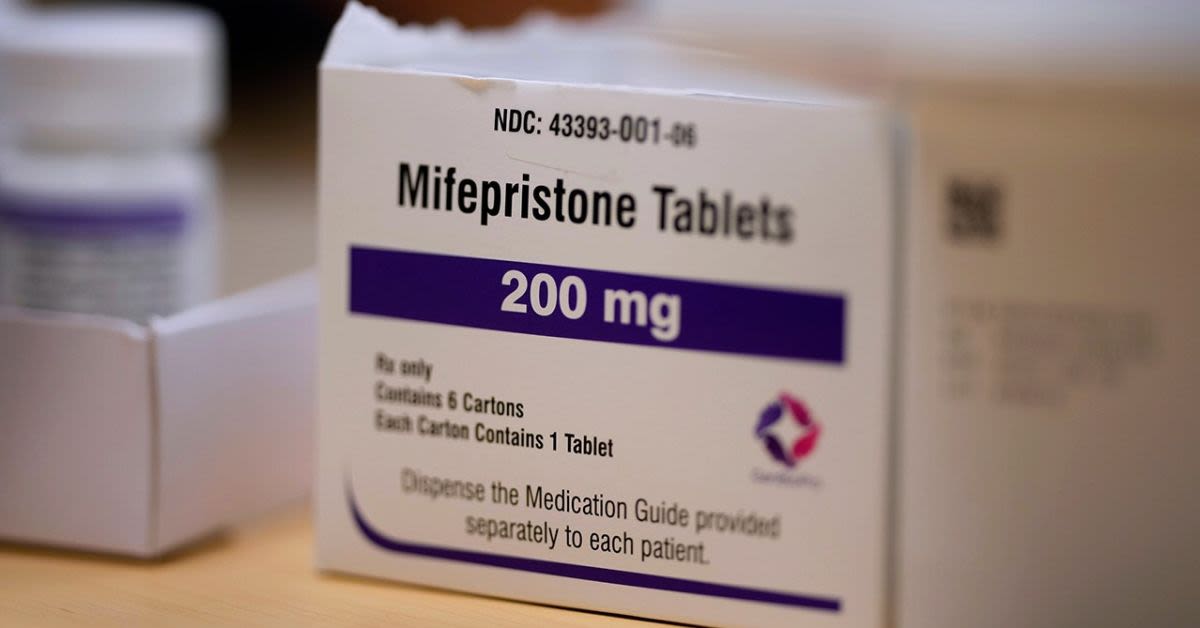
A prominent pro-life organization is preparing to take the Food and Drug Administration (FDA) to court, alleging the agency ignored federal environmental law when it approved and later expanded access to the abortion pill mifepristone.
Students for Life of America (SFLA) on Thursday filed a formal notice of intent to sue, escalating a long-running dispute over the FDAs handling of the drug just hours before Dr. Heidi Overton faces a Senate confirmation hearing to become the agencys next commissioner.
According to Fox News, the group contends that for nearly a quarter-century the FDA has sidestepped its obligations under the Endangered Species Act by failing to consult with federal wildlife agencies about the potential impact of mifepristone on protected species and ecosystems.
The notice argues that after mifepristone was first approved in 2000, the FDA never sought input from either the U.S. Fish and Wildlife Service or the National Marine Fisheries Service, as required when a federal action may affect threatened or endangered species.
SFLA maintains that this omission is not a mere technicality but a substantive violation of law that could have serious consequences for waterways, wildlife, and ultimately human health.
"We expect these environmental concerns to be taken seriously. I know Dr. Overton is aware of these concerns. Or we expect to see the Trump FDA in court. That's where this will end," SFLA President Kristan Hawkins told Fox News Digital in an interview on Wednesday.
Hawkins said the FDA now has 60 days to respond to the notice before SFLA proceeds with litigation, noting that the group has already filed 11 citizen petitions pressing the agency to address the environmental risks of chemical abortion drugs.
In a January 15, 2025, response to one of those petitionsjust five days before President Donald Trump began his second termthe FDA rejected SFLAs legal claims and insisted it had no duty to consult wildlife agencies before approving mifepristone.
That position, SFLA argues, reflects a broader pattern in which federal regulators have prioritized abortion access over environmental stewardship and statutory compliance.
The new legal notice cites six scientific studies to support the claim that mifepristone may pose environmental hazards, though four of those studies did not directly test for the drug in water samples.
Among the research highlighted is a recent paper in the journal Issues in Law & Medicine, which reported anti-progesterone activity in water samples collected from three U.S. cities.
Because mifepristone works by blocking progesterone receptors and preventing the hormone from sustaining pregnancy, SFLA contends that such anti-progesterone activity suggests the drug has entered the water supply.
"Where do all the babies go in chemical abortions?" Hawkins said. "If we're talking 600,000 to 700,000 abortions a year being induced with chemical abortion pills, where are they happening? She doesn't go to a facility to complete the abortion. The abortion often takes weeks at home. She is told to go and sit on a toilet to flush."
The study itself did not conclusively detect mifepristone; instead, it measured biological signals consistent with the presence of substances that block progesterone, leaving open the possibility that another compound was responsible.
Confirming the presence of mifepristone in water would typically require sophisticated analytical chemistry techniques capable of identifying the specific molecule, a step SFLA says federal regulators should have demanded before expanding the drugs use.
Hawkins emphasized to Fox News Digital that the organizations legal strategy does not hinge on a single study but on what she calls a fundamental procedural failure by the FDA.
The case, she argued, "rests on the failure of the FDA in 2000 to literally follow the law," a failure conservatives say typifies a bureaucracy too often insulated from accountability.
"This should be something that unites all Americans, regardless of how you feel about the violence of abortion. I certainly am pro-life, I wanna see abortion ended. But we all want clean drinking water," she said.
Hawkins added that this environmental message has resonated even with students who disagree with SFLAs pro-life stance, underscoring how concerns about water quality can bridge ideological divides.
SFLA now boasts 1,575 active student groups across nearly half of Americas traditional four-year universities, giving the organization a sizable grassroots network as it presses its case.
That campus presence has allowed the group to frame chemical abortion not only as a moral and medical issue but also as a question of environmental justice and regulatory integrity.
With new leadership poised to take the helm at the FDA, Hawkins said her organization intends to ensure that Dr. Overton cannot ignore these concerns once in office.
"Today, Dr. Heidi Overton will be at the U.S. Senate," Hawkins said. "And we want to be very clear that when she gets to her desk, when she get confirmed and she sits down, the first thing she sees on her desk is our notice to intent to sue."
"It is high time to hold the abortion industry accountable and to hold our government accountable for upholding our own laws that have been enacted to protect all of us as well as the animals within our country," she added.
For pro-life advocates, the coming legal battle is about more than one drug: it is a test of whether a powerful federal agency can be compelled to respect both the sanctity of life and the environmental safeguards that protect American families and the natural world they depend on.
Login