
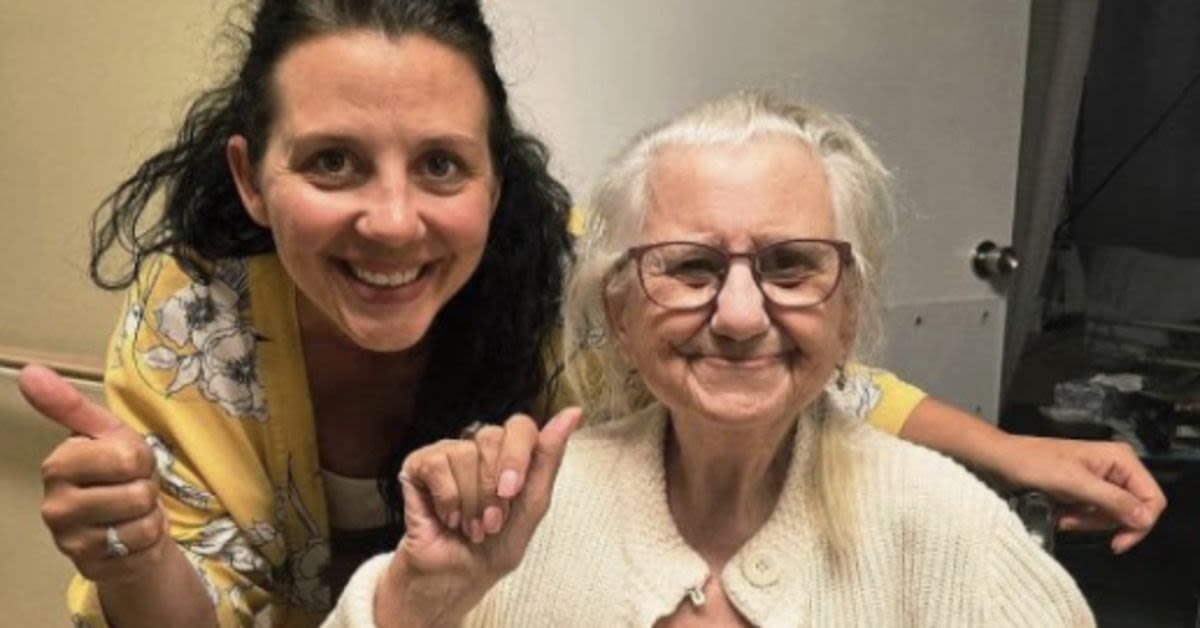
An Ontario family is accusing Canadas assisted-suicide regime of killing an 83-year-old grandmother who neither fully understood nor truly wanted to die.
According to The Post Millennial, the case of Brigitte Stegemann, an elderly woman living at The Pearl care home in Cannifton, Ontario, is raising fresh alarms about the countrys Medical Assistance in Dying (MAID) program and the ease with which vulnerable seniors can be ushered toward death. Her granddaughter and longtime caregiver, Brigitte Kranendonk, told the Daily Mail she met with Stegemann just two days before the scheduled procedure to ensure her grandmother understood what was about to happen. I used very frank terms. I said: Do you know that youre going to die on Friday? she recalled.
The reaction, Kranendonk said, was immediate and devastating. Her grandmother, who had not grasped the finality of what had been arranged, broke down in tears. Ive made a mistake, Kranendonk remembered her grandmother saying. She was bawling. Inconsolable. For critics of Canadas rapidly expanding euthanasia regime, that moment of panic and regret underscores the moral hazard of normalizing state-sanctioned death for the elderly, the sick, and the confused.
Kranendonk said that during a cognitive test meant to determine whether Stegemann was mentally competent to consent to MAID, her grandmother got every question wrong, believing that her two living siblings were dead. Despite this, the process moved forward. Forty-eight hours after that anguished conversation, Stegemann was dead, her final moments marked not by peace and dignity, but by blood and apparent medical incompetence.
Stegemann reportedly died with her hands clasped in prayer, her body and bedding smeared with blood after the first attempt to connect the IV was botched. The IV was allegedly inserted by a nurse who was not even wearing gloves. The procedure took place on July 10 at The Pearl, where, according to Kranendonk, staff had never before carried out a MAID death. The care home has maintained that Stegemann had legally consented to the procedure.
Kranendonk alleges that MAID practitioners exploited her grandmothers frailty and confusion. She was a vulnerable human being, and they saw an opportunity. She added, No one had ever done MAiD at this residential home before: this was their very first MAiD procedure. So I dont know if they just dropped the ball, because they didnt know what they were doing. For many Canadians already uneasy with MAIDs rapid expansion, the idea of inexperienced staff learning on an 83-year-old woman will only deepen concerns.
Describing the morning of the procedure, Kranendonk said the scene in her grandmothers room was horrific. There was a phenomenal amount of blood. She said a nurse failed to find a vein in Stegemanns right arm, then switched to the left after having poked her about three or four times with the needle.
It is all over my Oma's arm, it is all over her nightie, soaking through her pillow, all over the sheets, there is so much blood. And throughout all this time, mind you, the nurse is not wearing gloves. For a program that is routinely sold to the public as medical assistance in dying, the account sounds less like compassionate care and more like a grim experiment carried out on a defenseless patient.
Kranendonk also recalled a disturbing incident months earlier, when her grandmother was fitted with a medical port. Stegemann repeatedly tore it off, shouting, I dont want the death shot! That outburst, Kranendonk suggested, reflected her grandmothers deep-seated fear of being pushed toward an early death rather than being allowed to live out her remaining time naturally.
For 12 years, Kranendonk had been her grandmothers caregiver, and for six years she held medical power of attorney. As Stegemanns cognitive and physical health declined, the family decided about a year and a half before her death to move her into The Pearl. In February 2026, she was diagnosed with stage 4 stomach cancer, but doctors were uncertain how long she had left, with some estimates stretching as high as two years.
After the diagnosis, Kranendonk said she carefully discussed all end-of-life options with her grandmother, including MAID. The answer, she recalled, was unequivocal. No, I don't want that. Her grandmothers Christian faith, she said, was a major reason she rejected the idea of a state-facilitated death.
Yet on July 3, Kranendonk was informed that the care home was booking a MAID assessment for Stegemann. She had been away on a 10-day trip, and earlier in the trip no one had indicated that her grandmothers condition had suddenly deteriorated to the point of requiring an urgent euthanasia assessment. The timing, she suggested, felt less like a response to a medical crisis and more like a decision made without proper family involvement.
I truly believe that one nurse really saw us as an obstacle, Kranendonk said. We were getting in the way of her doing MAID on my grandmother. I think she really, truly believes that MAID is the best for people, and shame on me for trying to stop that. Her account raises the specter of ideological zeal within parts of the healthcare system, where some practitioners appear more eager to facilitate death than to support life.
Kranendonk said she was present for her grandmothers second MAID assessment and was alarmed by how the doctor framed the procedure. She said the physician spoke in really loose terms, never using the words death or dying. Instead of plain language, the doctor resorted to euphemism.
She explains MAID to my grandmother by saying: Were going to give you medicine, youre going to feel at peace. And I just want you to know that you wont have a bowel movement. Shes saying it in these strange terms, that arent literal. She added, My Omas just kind of nodding. Her first language is not English, she is 83-years old and severely hearing-impaired. For a conservative view that values informed consent and personal responsibility, such vague phrasing and linguistic barriers are the opposite of ethical medical practice.
Kranendonk said she has still not been allowed to see the MAID paperwork that a nurse claimed her grandmother signed. She maintains that Stegemann answered questions incorrectly during her assessment and remained confused in the days before her death. She described feeling cornered and rushed as the date approached, with little room to challenge the process or slow it down.
On the day of the procedure, when the doctor arrived to administer the lethal drugs, Kranendonk said he asked Stegemann if proceeding was acceptable. Her grandmother did not respond. The doctor went ahead anyway, ending the life of a woman who had once cried, Ive made a mistake, and who had shouted, I dont want the death shot!a sequence of events that will only intensify calls from critics to rein in a MAID system that appears increasingly willing to err on the side of death rather than protect the vulnerable.
Login