
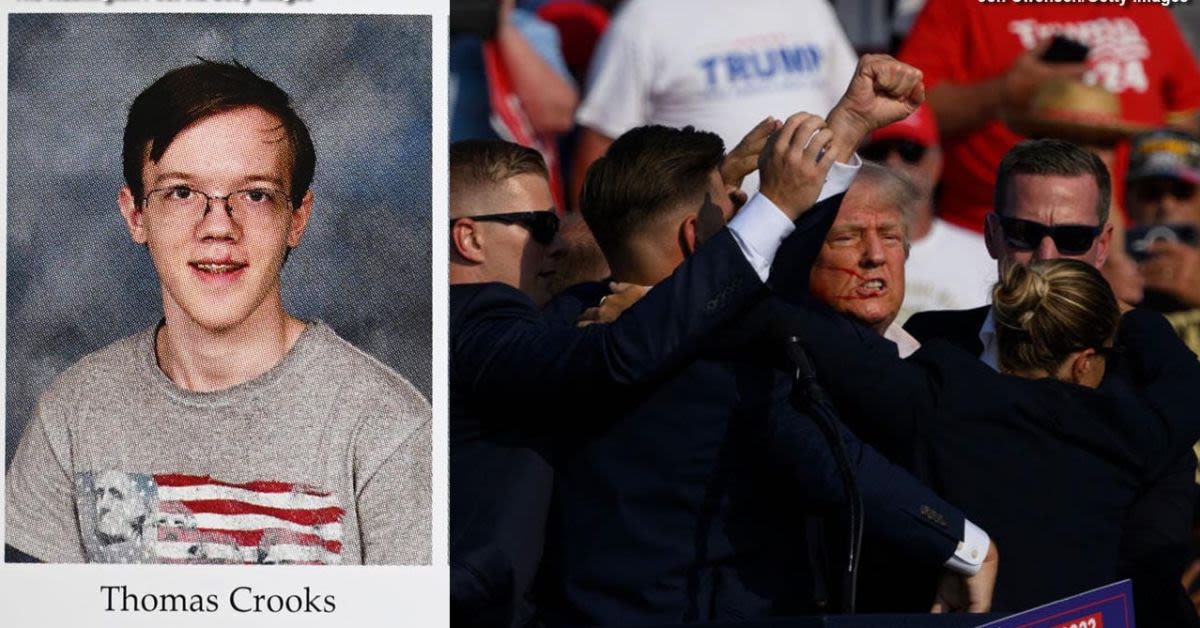
The would-be assassin who opened fire on President Donald Trump at a Pennsylvania rally led an isolated, secretive life marked by social withdrawal, academic pressure, and a bizarre alias used to receive suspicious packages before an anonymous donor quietly paid to have his body destroyed.
According to Fox News, newly released federal records reviewed by Fox News Digital shed further light on 20-year-old Thomas Matthew Crooks, the gunman who killed a bystander and seriously wounded two others in the failed July 2024 attempt on the Presidents life in Butler, Pennsylvania. The documents, turned over to the Senate as part of the ongoing investigation, portray a young man whose actions stunned his own family and whose motive remains unexplained despite intensive federal scrutiny.
Crooks, described as a high-achieving but increasingly withdrawn student, never identified anyone as a friend throughout middle school and high school, his father told FBI agents, according to the records. Although he interacted with classmates, his father said that when asked, the gunman insisted those peers were not his friends, underscoring a deep social isolation that went unnoticed by institutions supposedly tasked with spotting warning signs.
The documents reveal that Crooks used the alias Bob Dole to order and receive suspicious packages at the family home, typically collecting them before his father, who worked late, returned. Crooks adopted the Dole pseudonym after his fathers checking account had been hacked and fraudulent gambling charges appeared, a detail that raises further questions about how easily such activity can evade law enforcement and financial safeguards.
He was shot and killed by security after opening fire at the Trump rally, ending the immediate threat but leaving a trail of unanswered questions about how a 20-year-old from a quiet Pennsylvania community came so close to assassinating a sitting President. A family attorney told investigators that he had been cremated shortly thereafter paid for by an anonymous donor, according to the documents, an extraordinary twist that will likely fuel further scrutiny from lawmakers and the public.
In the aftermath of the attack, Crooks father, Matthew Crooks, took an early retirement, while his mother, Mary Crooks, went on leave from work to process the shock and fallout. The records indicate that the family had no prior indication their son was plotting violence, a claim that, if accurate, highlights the limits of current mental health and threat-detection systems even as political tensions run high.
In the months leading up to the shooting, Crookss father observed him talking to himself but, despite his own experience working in the mental health field, said he did not see other signs of a potential mental illness. He described his son as a straight-A student who scored a 1400 on his first SAT attempt, without studying, yet the young man reportedly feared he might not get into college and became noticeably quieter between his freshman and sophomore years of high school, struggling to speak with teachers.
At one point, Crooks floated the idea of joining the military to work on nuclear submarines, though it was unclear how serious he was about that ambition, suggesting a young man searching for identity and purpose. After further studying, he retook the SATs and scored over 1500, according to the documents, reinforcing the picture of a gifted but troubled youth whose academic success masked deeper turmoil.
The investigation into the Butler rally shooting continues to raise troubling issues about political violence, security around conservative leaders, and the cultural forces that can radicalize or destabilize young men in isolation. This is a breaking news story, and as more details emerge about Crooks background, his anonymous cremation, and the failures that allowed him to come within range of President Trump, the questions facing federal authorities, mental health professionals, and political leaders will only grow more urgent. Fox News' Jon Street contributed to this report.
Login