
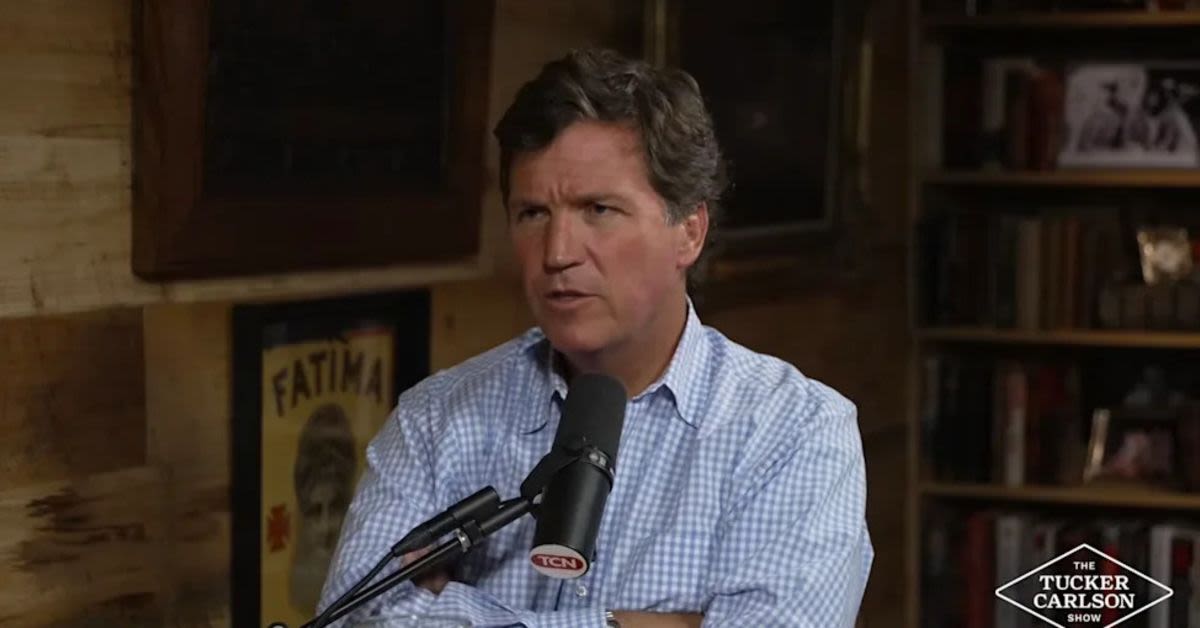
The New York Posts decision to introduce Tucker Carlson not as a leading conservative voice but as a nicotine-pouch salesman and onetime conservative pundit speaks volumes about how the establishment right now chooses to treat one of its most influential dissidents.
According to Western Journal, that pointed description appeared not on the opinion page but in a straight news article by staff writer Ryan King, who used it while covering Carlsons apparent near-endorsement of Michigan Democrat Abdul El-Sayed and his agreement that El-Sayed was obviously right about 9/11, as the New York Post reported. Carlsons Friday newsletter, which triggered the coverage, argued that El-Sayed did not celebrate airplane hijackings or cheerlead Al-Qaeda and insisted the Democrat merely objected to how the United States responded to the attacks.
El-Sayeds own 2021 formulation was that 9/11 scarred our country in profound ways, but what we did after 9/11 scarred millions of other people, adding that Americans often fail to center them. For Republican Senate candidate Mike Rogers, that posture was disqualifying, but Carlson instead portrayed Rogers as emblematic of the problem inside the GOP.
Western Journal has already dissected the same Carlson newsletter, including his jab at the Fox News audience he once commanded as the dominant prime-time conservative voice. None of that, however, logically required the New York Post to strip him of his political identity and rebrand him primarily by his side business.
The nicotine-pouch label is technically accurate: Carlson co-owns ALP, a nicotine brand that Reuters reported is expanding across Europe. He is, in that sense, a businessman, but he is also the man who for years defined the nightly conversation for millions of conservatives.
The Post chose which half of that biography to spotlight, and that editorial choice is not neutral. That is how institutions mark an exile: they stop saying former Fox host first, and instead say salesman, tacking on onetime the way a paper casually appends disgraced.
Carlsons defenders will see the phrasing as a calculated smear from the same Murdoch empire that once profited from his ratings dominance. They will argue he is guilty only of attacking endless war and a Republican Party he believes has betrayed its voters.
His critics, by contrast, will claim the pattern goes far beyond one Senate race, pointing to Israel as the central grievance, Democrats as occasional tactical allies, and 9/11 recast as a morality tale about American guilt. Both readings can coexist: a man can despise foolish foreign interventions and still spend the 25th anniversary of a massacre telling voters that the Democrat who wants to center foreign dead over American dead is the serious one.
What the New York Posts news desk effectively decided is that Carlson no longer belongs inside the conservative tent they recognize. Many of his former viewers hoped his recent trajectory was a temporary detour, but the El-Sayed note looks less like a phase and more like a deliberate choice about which coalition he intends to bolster in November.
He still commands an audience, still owns a company, and still controls a camera. What he no longer enjoys is the automatic presumption that a right-of-center paper will introduce him as one of their own.
Nicotine-pouch salesman and onetime conservative pundit is undeniably rude, yet it is also the bluntest distillation of how a significant segment of the conservative movement now files him away: not as a leader shaping the future of President Trumps America, but as a cautionary tale about what happens when a once-powerful voice drifts toward a coalition that often fail[s] to center American lives first.
Login