
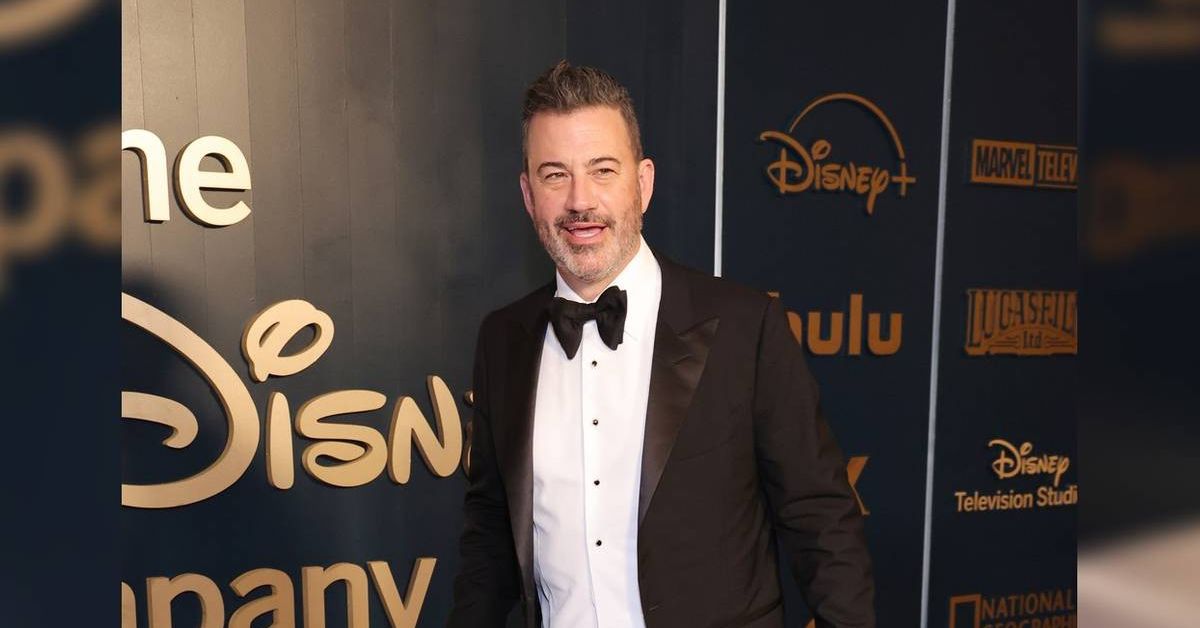
Jimmy Kimmels future on ABC appears to hinge not on ratings or relevance, but on whether he is willing to slash the cost of producing his late-night show.
According to Western Journal, Kimmel is in negotiations with Disney-owned ABC to extend his contract beyond its May expiration, but the talks are reportedly conditioned on a significant budget reduction for Jimmy Kimmel Live! or the show could face the same fate as Stephen Colberts program. CBS pulled the plug on The Late Show with Stephen Colbert last fall after the production, believed to cost about $100 million annually, was reportedly losing around $40 million a year.
Similarly, Puck News reported Friday that Jimmy Kimmel Live! carries a comparable price tag, costing about $100 million per year to produce, raising questions about whether the network can justify such an expense in a shrinking late-night market. But while Kimmels show is said to generate more overall revenue than the older-skewing and less digitally savvy Colbert, the numbers still arent great. The late night shows on ABC, CBS, and NBC together lured just $221 million in ad revenue in 2024, about half the $439 million generated in 2018, Puck said.
Kimmels audience numbers, while solid by todays diminished standards, are hardly overwhelming given the cost structure attached to his show. He averaged 2.51 million viewers per night last season, compared to Colberts 2.88 million, according to The Hollywood Reporter, underscoring that even the top-tier late-night brands are no longer the cultural juggernauts they once were.
Deadline reported on Friday that Kimmel and Disney are actively discussing a contract renewal, but the networks financial priorities are clearly shifting. The wrinkle? ABC is reportedly keen to cut the budget of Jimmy Kimmel Live!, a move that is becoming increasingly commonplace in late-night television.
The pressure on Kimmel is part of a broader cost-cutting drive at Disney, which has been trimming staff and expenses across multiple divisions while still pushing a progressive cultural agenda on air. Disney is keen to make cuts across the board. In August, Deadline broke the news that Disney was offering longtime executives early retirement. This came after it started rounds of layoffs, first announced in April, with the elimination of 1,000 jobs with more cuts coming in July, particularly on the Pixar and Nat Geo fronts, the outlet said.
Puck suggested that Kimmels show could be forced to scale back its footprint in ways that would be noticeable to viewers and staff alike. Possible measures include eliminating weeks of production or go to full reruns for the summer, eliminating two months of guest-hosted shows.
The outlet further outlined more drastic options that would hit the shows creative core and signature spectacles. He could cut writers, producers, or other staff. Or nix the more costly stunts, like taping a week of shows in Brooklyn, which ABC okayed again for this fall. Kimmel could also shave more off his own fee, which has been reported at $15 million a year.
Colbert, whose show was ultimately canceled, was also reportedly making $15 million per year, highlighting how top-tier talent salaries have become a glaring line item in an era of declining ad revenue. Puck added, Or, if they cant make a deal, Jimmy Kimmel Live! could end after 24 years. Kalshi, the prediction market, has it as a 9 percent chance Kimmel will be fired before the end of the year.
Beyond the financial pressures, politics appears to be a major factor in Kimmels desire to stay on the air, as his show has become a reliable platform for left-wing commentary and anti-Trump rhetoric. Puck speculated that Kimmel does not want to leave before the end of Trumps presidency in 2028.
And now that Colbert is off TV, sources say that Kimmel feels a bit of a responsibility to carry the torch as late nights thorn in the presidents side, the news outlet said, underscoring how openly partisan late-night television has become. That posture has increasingly put Kimmel and ABC on a collision course with federal broadcast rules that were written to prevent exactly this kind of one-sided political use of the public airwaves.
In January, Federal Communications Commission Chairman Brendan Carr reminded ABC that programs like Jimmy Kimmel Live! and The View are subject to equal time rules when they feature political candidates, because broadcast networks such as ABC, CBS, and NBC operate under a different legal framework than cable or streaming platforms. For years, legacy TV networks assumed that their late-night & daytime talk shows qualify as bona fide news programs even when motivated by purely partisan political purposes, Carr posted in January on social media.
Today, the FCC reminded them of their obligation to provide all candidates with equal opportunities. The networks traditional news broadcasts are exempt from equal time laws, but entertainment-style political programming is not, which complicates efforts by liberal hosts to use these shows as campaign platforms while shutting out opposing voices.
Kimmel himself recently demonstrated how little appetite he has for that kind of balance when he used his Wednesday opening monologue to complain that he could not air his interview with Texas Democrat U.S. Senate candidate James Talarico on ABC this week because of Trump. Instead, he would be posting it to YouTube, a platform not bound by the same equal time requirements that govern broadcast television.
The late-night host apparently does not want to comply with the networks legal obligation by offering Republican Ken Paxton an equivalent opportunity to appear on the show. Rather than adjust his partisan format to meet the law, Kimmel appears more inclined to shift political content off the regulated airwaves and onto digital platforms where he can continue attacking conservatives without the inconvenience of equal access.
Last month, Disney escalated the confrontation by filing a lawsuit against the FCC, claiming that the Trump administration is infringing on ABCs freedom of speech, a familiar tactic from media corporations that want the benefits of public broadcast licenses without the corresponding responsibilities. Carr has countered that he is merely enforcing the law regarding broadcast stations, insisting that the rules apply regardless of which party occupies the White House.
As Kimmel weighs a pay cut, staff reductions, and scaled-back production against his desire to remain late nights thorn in the presidents side, the broader question is whether viewers and advertisers will continue to subsidize a highly partisan show at a nine-figure annual cost. With ad revenue collapsing, Disney tightening its belt, and federal regulators finally pressing legacy networks to play fair when they dabble in electoral politics, Jimmy Kimmel Live! now stands at the intersection of economics, law, and ideologyand the host may soon discover that the marketplace and the rule of law are less forgiving than his studio audience.
Login