
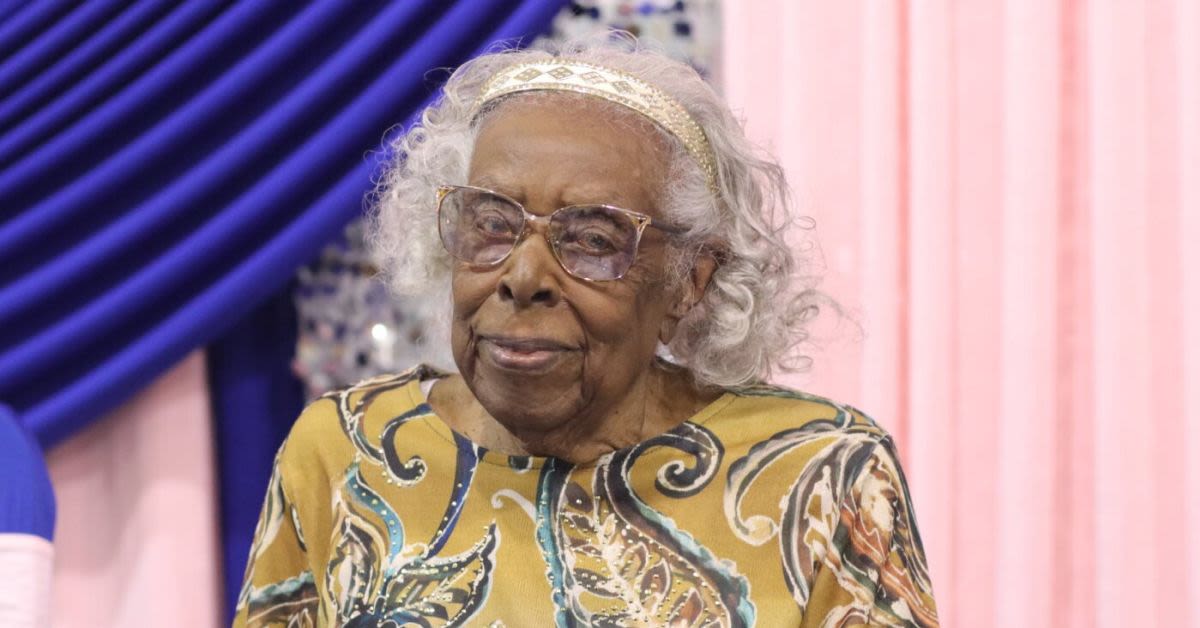
Marking an extraordinary milestone in an extraordinary life, a small Alabama town is preparing to honor one of its most remarkable citizens.
The celebration centers on Mrs. Lillie Cunningham of Florence, Alabama, the states oldest living resident, who will turn 112 on September 26 and stands among the rare ranks of the worlds Supercentenarians. According to RedState, her story is not merely a curiosity of longevity but a testament to faith, perseverance, and the enduring strength of traditional American values that once defined the culture of small-town life and still quietly sustain it today.
Born on September 26, 1914, on the banks of the Tennessee River in Lauderdale County, Mrs. Cunningham has spent her entire life in the same community, a rootedness that is increasingly rare in an age of constant mobility and cultural upheaval. She has lived through World War I and World War II, the Korean and Vietnam wars, the conflicts in Iraq and Afghanistan, and now the Iran conflict, surviving both the 1918 Spanish Flu and the COVID pandemic.
Her life has unfolded against the backdrop of the Deep South under Jim Crow, when Black Americans were denied their God-given liberties by unjust laws and heavy-handed government intrusion. Like many of her generation, she endured those restrictions and now lives to see those liberties restored, a transformation that underscores both the moral progress of the nation and the resilience of those who refused to surrender their dignity.
Mrs. Cunningham has lived under 20 U.S. presidents and was old enough to vote in 15 of those elections, a civic privilege she does not take lightly. In an interview with NPR marking her 110th birthday, she said she was eagerly anticipating casting her ballot in the November 2024 election and offered a pointed admonition to those who treat that right casually.
"I tell them to make sure to vote because at one time I couldn't vote or do anything. So, those that don't vote now, I ask them why they don't vote, because they have a chance to do things now that I didn't do when I was coming up," she says. Her words carry the weight of lived experience, a reminder that rights once denied and then won at great cost should never be squandered by apathy or indifference, especially among younger generations who have known only the freedoms others fought to secure.
For those who value limited government and individual responsibility, her message is unmistakable: liberty is preserved not by bureaucrats or political elites but by engaged citizens who exercise their duties with seriousness and gratitude. There is a profound depth to anyone who has witnessed so much history firsthand, and each additional year of Mrs. Cunninghams life is not just a personal triumph but a living archive of the American story.
Her journey also highlights the enduring beauty of small-town life, where neighbors know one another and community ties remain strong despite the pressures of modernity. In such places, extraordinary people often live quietly, without fanfare or expectation of recognition, yet their lives embody the virtuesfaith, hard work, family, and servicethat once formed the backbone of the nation.
According to Longeviquest, the oldest living person in the United States is Naomi Whitehead of Greenville, Pennsylvania, who is currently 115 years old and still counting. At 112, Mrs. Cunningham is not far behind, and when she turned 110, she received more than 200 birthday cards from across the country, a number friends and supporters hope to surpass for this years celebration.
Her early years were spent on a farm, where church and family formed the center of daily life, and where work was not an option but an expectation. Cunningham recalls those days with characteristic plainspoken clarity: "I've been working ever since I was able to put a flour sack around my neck and pick cotton, chop cotton," she says.
"So, that's just about almost all I did growing up. Was in a field chopping cotton, picking cotton ... go to school, go to Sunday school and on to church." That rhythmlabor, learning, worshipreflects a worldview that prized discipline, faith, and community over government dependency or cultural grievance, and it shaped a generation that weathered hardships modern Americans can scarcely imagine.
Faith remains the cornerstone of Mrs. Cunninghams life, and she has never drifted from the church that nurtured her as a child. She is still an active member of Rock Primitive Baptist Church, where she attends services every Sunday and reads her Bible every morning and every night, a spiritual discipline that many believers today aspire to but struggle to maintain.
Her example suggests that such habits are not merely pious rituals but a source of mental clarity and emotional steadiness, especially in turbulent times. Mrs. Cunningham herself insists that her long life and sound mind are not accidents of genetics or luck but the fruit of divine protection and providence.
"I just always had faith and trust in God that he was going to carry us through regardless of what other people said," Cunningham says. In an era when secular culture often dismisses religious conviction as outdated or irrelevant, her testimony stands as a quiet rebuke and a powerful affirmation of the sustaining power of faith.
Her work ethic is equally striking, reflecting a traditional American belief that purposeful labor is both a duty and a blessing. Mrs. Cunningham worked well into her 80s, and according to her grand-nephew, she underwent hip surgery at 102 and was walking again within a week, a recovery that would be impressive for someone half her age.
She continued to drive herself until just two years ago, maintaining a level of independence that many younger adults struggle to match. When she is not at church, she still enjoys cooking, watching game shows, and working crossword puzzles, simple pleasures that keep her engaged and mentally active without the constant distraction of modern digital noise.
Her story has also drawn the admiration of local leaders who recognize that true community leadership often comes not from city halls or state capitals but from citizens whose lives quietly inspire others. Kaytrina P. Simmons, the Florence city councilwoman representing Cunninghams district, has been closely involved in honoring her and provided photographs of Mrs. Cunningham for this tribute.
"She's great," Simmons said. "This is wonderful, and I am honored to be her councilwoman." That sentiment reflects a broader sense of gratitude in Florence, where residents understand that they are not merely celebrating a birthday but acknowledging a living link to more than a century of American history.
Supporters are inviting people from across the country to join in honoring Mrs. Cunningham as she continues to make history one year at a time. Well-wishers are encouraged to send birthday cards to Mrs. Lillie Cunningham, c/o Kaytrina Simmons, P.O. Box 44, Florence, AL 35631, with Simmons asking that all cards arrive by September 21 so they can be presented to her on her September 26 birthday.
At a time when national discourse is often dominated by anger, division, and a relentless focus on what is wrong with America, stories like Mrs. Cunninghams offer a necessary corrective and a reminder of what remains right. Her life embodies the virtues conservatives have long championedfaith in God, devotion to family, respect for hard work, love of country, and gratitude for the freedoms secured over generationsand her 112th birthday is not only a personal milestone but a call to cherish and preserve those values for the future.
Login