
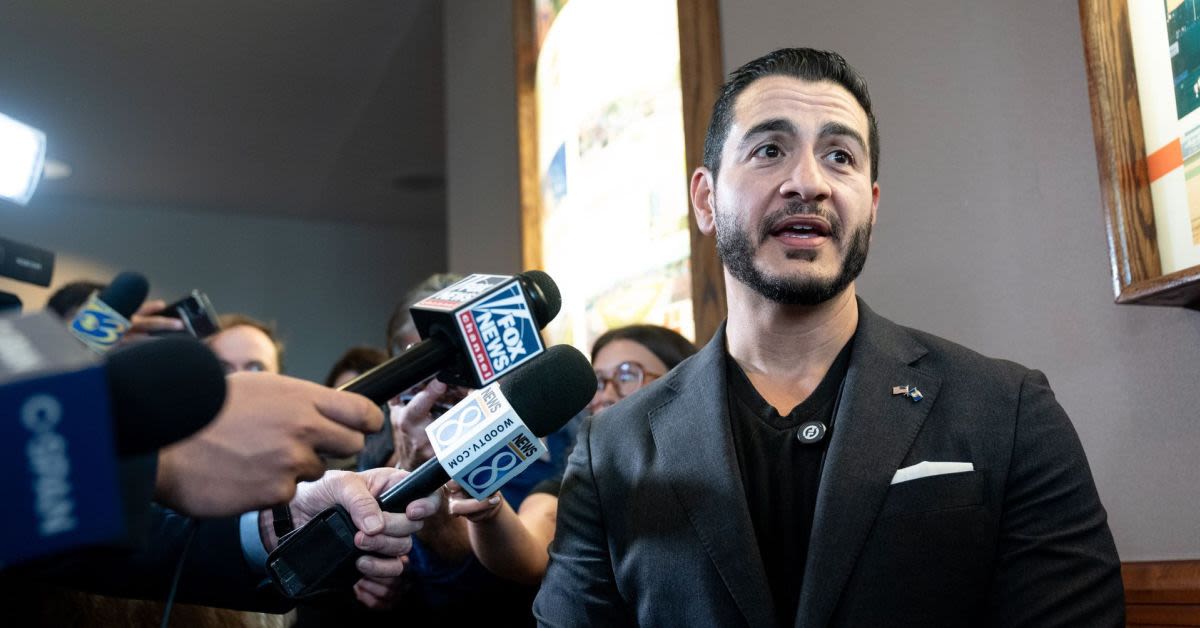
A former Democratic lawmaker in Michigan is urging black voters to reject far-left Democrat Abdul El-Sayeds bid for the US Senate, warning that his brand of progressive politics is more racist than the KKK.
.
According to The Post Millennial, Michigan state Rep. Karen Whitsett, who left the Democratic Party in March, is sounding the alarm over what she describes as a radical, condescending attitude among party elites toward black voters, particularly those who dare to break ranks. Speaking with Fox News about Democrat leaders who insist that black Americans must support left-wing candidates, Whitsett declared, It doesn't change, it's just different slave owners. She argued that the increasingly dominant far-left faction of her former party is more racist than the KKK.
Whitsett specifically criticized prominent black activists and media figures who, in her view, help enforce ideological conformity rather than empower their own communities. She called out Al Sharpton and Detroit pastor Horace Sheffield III by name, accusing them of working to keep the knee on [black voters'] necks. At the same time, she insisted that the political landscape is shifting, saying that black voters are "waking up" and are "realizing the power of our vote."
Her sharpest criticism was reserved for the progressive, largely white activist class that dominates the modern left and that has rallied behind candidates like El-Sayed. Whitsett said, You can see the serious divide of the crazy socialist far-left and especially the White women. They are the worst and the most racist that there possibly ever could be. They're, I think, they're more racist than the KKK. She then pressed the broader moral question she believes Democrats must answer: Are you trying to help the black community or are you trying to kill it? Are you trying to keep people stupid and ill-informed or what? Because right now I can't tell, right? Is this voter education or are you just trying to make sure you count your slaves on the plantation.
Whitsett made clear that she does not believe El-Sayed represents the interests or values of the black community she serves. She stated that his priorities and worldview are fundamentally at odds with her own, and she has no confidence that he has black voters best interests in mind. Whitsett, whose term in the Michigan House runs through the end of 2026, has already announced that she will retire from elected office once it expires. Her decision, she emphasized, reflects a deeper spiritual and moral break with the Democratic Party rather than a tactical political move.
Her critique of El-Sayed is rooted in a broader rejection of the partys ideological drift away from faith, family, and local community. I'm going to stand on Bible first, and I'm going to stand on community first. I don't care about moving up within the Democratic Party. I don't care about making sure my pockets are better. She described herself as someone who refuses to simply follow party orders: "I always try to be a voice of reason, and I'm not a go along, get along. So, my whole thing is it has to make sense, and I am definitely family over party. God over party is of the utmost importance," she said.
From that perspective, Whitsett argued that El-Sayeds candidacy fails both moral and practical tests. "So for me, when you point that out to people, it's just common sense that to people, that's just common sense that El-Sayed is not the candidate. There's just no way. It doesn't line up. It doesn't line up Biblically, and it doesn't line up with common sense." Her concerns extend beyond rhetoric to what she sees as theological overreach by the candidate himself. Whitsett has taken particular offense at El-Sayed likening himself to Jesus, writing in one post, ridiculous! and adding in another, He compared himself to my Lord and Savior!
Policy is another fault line, especially on health care, where El-Sayed has campaigned on a sweeping Medicare for All platform. Whitsett said that while she supports the goal of universal coverage, she believes El-Sayed has failed to explain how his plan would function in practice or what it would mean for ordinary patients. "This Medicare for All, it's not for all. It's not going to change the dynamics of how many doctors there are, or nurses or blood draws or anything else. You're now going to put the government in your health system, and they're going to decide for you." From her vantage point, such a scheme would expand federal control while doing little to improve actual care, a concern long voiced by conservatives wary of socialized medicine.
Whitsetts departure from the Democratic Party was framed explicitly as an act of conscience rooted in her Christian faith. In March, she announced, "I will not be seeking re-election for this office, and I will not be running for any office ever again. This is not a political calculationits a spiritual decision," underscoring that she sees a fundamental clash between the partys current platform and biblical teaching. She was even more direct about that conflict, stating, For me, it is impossible to be a faithful follower of Jesus Christ while remaining a member of the Democratic Party as it exists today.
Login