
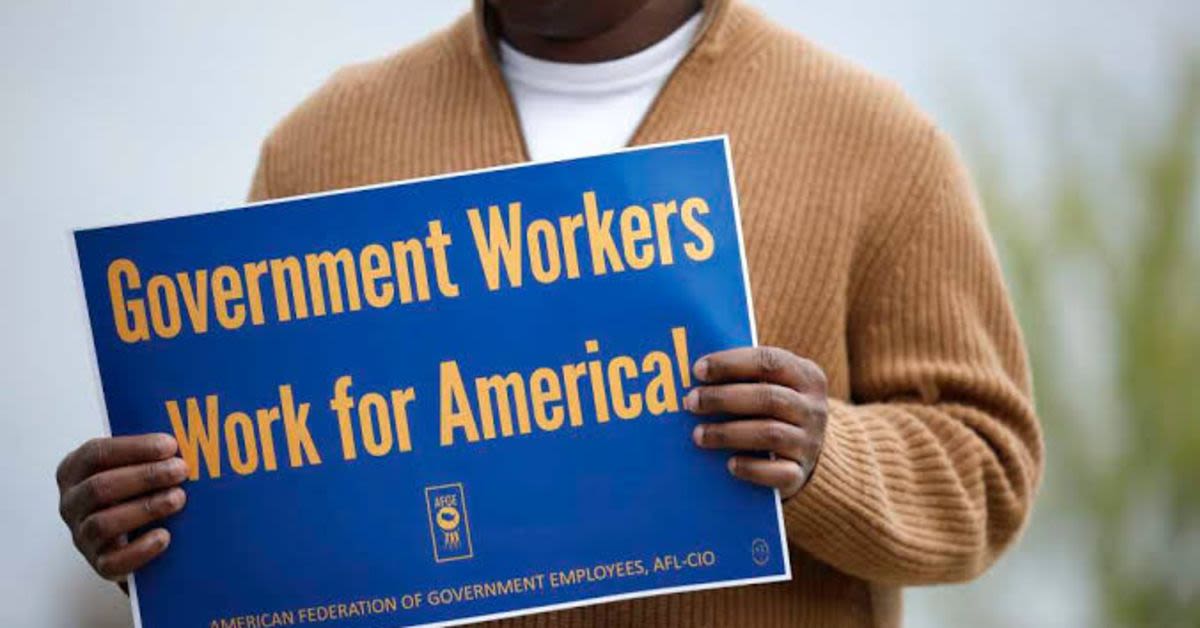
The escalating legal war between the Trump administration and powerful federal employee unions is forcing a fundamental question back into the spotlight: who truly controls the executive branchthe president elected by the people, or the entrenched bureaucracy and its union allies?.
According to WND, the American Federation of Government Employees, the largest union representing federal workers, filed yet another lawsuit last month, this time targeting the White Houses Office of Personnel Management over new rules governing how federal employees are evaluated, disciplined, and removed. The case is only the latest salvo in a sustained campaign of litigation that has pitted career bureaucrats and their advocates against an administration elected on a promise to rein in the federal leviathan.
The unions complaint is part of a broader pattern. As reported by WND, AFGE has launched a barrage of legal challenges since January 2025, filing at least 18 lawsuits against the Trump administration before this latest case, according to a July roundup. These suits have not been limited to narrow workplace grievances, but have instead gone after core elements of the presidents reform agenda.
The targets have ranged from government-wide reorganizations and workforce reductions to restrictions on collective bargaining, reforms to employee classification, and changes to federal personnel rules. In each instance, the administration has sought to assert greater presidential control over the executive branch, while unions and their allies have turned to the courts to preserve the status quo.
AFGE has not been fighting alone. Democracy Forward, a left-leaning legal advocacy group that has represented plaintiffs in numerous high-profile challenges to conservative policies, has repeatedly appeared alongside AFGE or other plaintiffs in these cases. The litigation has drawn in a broad coalition of progressive advocacy groups, labor organizations, and even local governments, all aligned against the administrations efforts to reshape the bureaucracy.
Critics contend that this is no ordinary labor dispute, but a coordinated campaign of institutional resistance by the permanent bureaucracy and its ideological partners. They argue that federal employees and their allies are using the courts to thwart the policy choices of an elected president, effectively turning the civil service into a political counterweight to the voters will.
AFGE rejects that charge and insists it is simply defending the rule of law and the rights of workers. A union spokesman said that issues involving politicization of government, corruption, and the refusal to recognize legally valid union contracts are inseparable from the everyday experience of federal workers. The spokesman further accused the administration of engaging in illegal and retaliatory union-busting and broader efforts to rig the system.
Yet the stakes in these cases go well beyond pay scales, benefits, or traditional workplace conditions. The lawsuits strike at the heart of the administrations attempts to reorganize agencies, overhaul personnel systems, and change how the federal workforce is managed and held accountable.
Michael Watson, research director for the conservative-leaning Capital Research Center, told the Daily Signal that it should not be surprising that the professional Left and the AFGE are working hand-in-glove, given the ideological bent of the modern labor movement. In his view, the litigation reflects a broader political alignment between public-sector unions and progressive advocacy groups that see the federal bureaucracy as a vehicle for advancing their agenda.
Watson argued that AFGEs legal strategy amounts to the representative organ of the federal civil service attempting to enact its own policy preferences through litigation. At the same time, he noted that the Trump administration is attempting to weaken the power of unions like AFGE to carry out their own policy preferences against the policies laid out by the peoples elected representatives and the executive officers who have been chosen to carry out the laws made by Congress.
Four major cases illustrate how far this struggle has gone. In April 2025, AFGE led a large coalition in suing to block Trumps executive initiative that created the Department of Government Efficiency and sought to reduce the federal workforce in the name of streamlining the executive branch.
AFGE and its fellow plaintiffs argued that the president lacks authority to reorganize, downsize, or transform federal agencies on his own, because they are creatures of statute, created by Congress. A federal judge refused to dismiss the case, allowing the challenge to proceed and leaving a major plank of the administrations reform agenda in legal limbo.
The coalition arrayed against the administration in that case was extensive. A large bloc of labor unionsincluding the American Federation of State, County, and Municipal Employees and the Service Employees Industrial Unionjoined AFGE, alongside the environmental group Natural Resources Defense Council, the Democrat-aligned advocacy group Vote Vets, and the left-leaning small-business group Main Street Alliance.
Democracy Forward and the union-side law firm Altshuler Berzon represented AFGE in the litigation. While the Department of Government Efficiency initiative clearly had implications for federal employees, the lawsuit went far beyond workplace conditions, with unions and their progressive allies seeking to invalidate a sweeping policy decision about the size and structure of government.
Another April 2025 lawsuit saw AFGE challenge a Trump order that exempted certain agencies from collective bargaining rules because their primary function involved intelligence, countertintelligence, investigative, or national security work. AFSCME, SEIU, and other unions joined the suit, underscoring organized labors determination to preserve its reach even in sensitive national security contexts.
Altshuler Berzon again represented AFGE, while Democracy Forward appeared on behalf of parties filing amicus briefs in support of the unions position. Although collective bargaining rights are a core union concern, this case placed federal employee unions in direct opposition to a presidential determination about how best to protect national security.
AFGE has emphasized the breadth of the stakes, asserting that the order affects bargaining rights for more than 950,000 employees. That scale underscores how union power over the federal workforce has grownand why any attempt to limit that power, even in the name of security, triggers an aggressive legal response.
In January 2025, AFGE, AFSCME, the AFL-CIO, and other unions led by Public Employees for Environmental Responsibility sued to block another Trump order that created a new category of federal workers known as Schedule Policy/Career. The order reclassified career civil servants in policy-making or policy-advocating roles and made it easier to remove employees who refuse to carry out administration priorities.
Trump defended the reform by pointing to the difficulty of disciplining or removing insubordinate bureaucrats, noting that only 41% of civil service supervisors believed they could fire such employees. AFGE and its allies, represented by Democracy Forward, the left-leaning Citizens for Responsibility and Ethics in Washington, and others, rushed to court to stop the change.
Unlike a dispute over pay or benefits, this fight goes directly to the question of who controls the administrative state: elected leaders or career officials. By resisting efforts to make policy-focused civil servants more accountable to the president, unions are effectively asserting that bureaucratic continuity should trump electoral mandates.
The most recent flashpoint involves new rules issued this summer by the Office of Personnel Management on how federal employees are evaluated and disciplined. The regulations are designed to standardize and strengthen performance management, making it easier to address misconduct and poor performance within the civil service.
Last month, AFGE and other unions, including AFSCME, sued to block the rules, again represented by Altshuler Berzon and Democracy Forward. The unions contend that the changes improperly expand OPMs authority over employee suitability determinations and performance ratings, thereby making it easier to discipline or remove workers.
OPM Director Scott Kupor defended the reforms, arguing they are necessary to correct a glaring imbalance in federal personnel practices. He said they aim to fix a problem where the federal government has had stronger tools to prevent someone with serious misconduct from entering public service than to address the same misconduct once that individual is already employed.
While these rules will undoubtedly affect federal workers, the lawsuit appears to be less about narrow workplace protections and more about preserving a system that makes it extraordinarily difficult to hold government employees accountable. For conservatives who believe in limited government and democratic accountability, the spectacle of unions and progressive groups repeatedly suing to block reforms raises a troubling prospect: a bureaucracy that answers more to its own institutions and ideological allies than to the citizens who pay its salaries.
OPM declined to comment on the pending litigation, maintaining the agencys standard practice in active cases. The Daily Signal also reached out to Altshuler Berzon, Democracy Forward, and AFSCME for comment, but they did not respond by publication time, leaving the public to weigh for itself whether this wave of lawsuits reflects legitimate worker advocacy or an entrenched administrative state determined to outlast the voters choice.
Login