
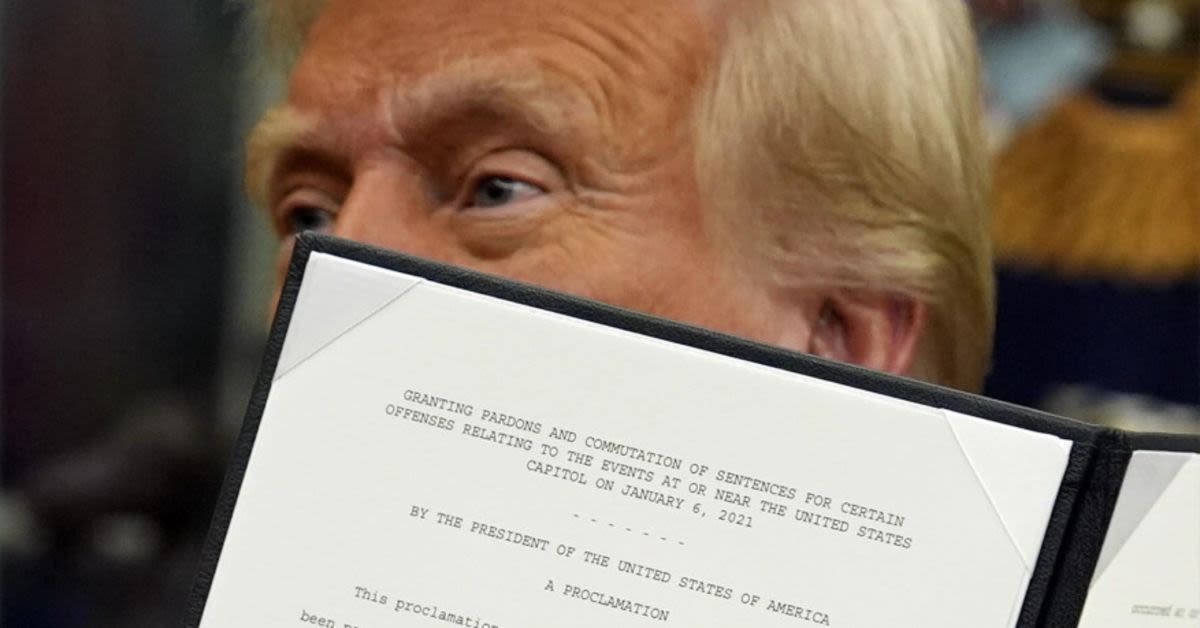
President Donald Trump has extended clemency to 30 individuals, deploying one of the Constitutions most consequential executive powers to grant pardons and commutations to a cross-section of offenders ranging from a former drug trafficker turned corporate executive to a powerful union boss and a Navy veteran ensnared in federal firearms laws.
The White House and representatives for several beneficiaries confirmed the actions, which include both full pardons and sentence commutations, according to The New York Times. The latest round underscores Trumps willingness to use clemency not only in high-profile political cases but also in matters that touch on criminal justice reform, prosecutorial overreach, and the excesses of federal regulation.
Among the most notable recipients is Holly Leanne Frantzen, who had already served more than a decade of a nearly 17-year sentence on drug-related charges. The White House did not clarify whether Frantzen received a full pardon or a commutation of her sentence, the Times reported, but her case has been cited by advocates as emblematic of harsh penalties imposed during the height of the drug war.
Frantzen, in a clemency petition posted on a prisoners rights organizations website, acknowledged her history of addiction and described efforts to rebuild her life while behind bars. She explained that she was working toward completing a plumbing apprenticeship in prison, a detail that resonated with reformers who argue that offenders who demonstrate rehabilitation deserve a second chance.
Alice Marie Johnson, the former federal inmate who became a symbol of criminal justice reform and now serves as the White Houses pardon czar, singled out Frantzen in her public remarks on the new clemency list. My prayer is that each of these 30 people makes the most of this extraordinary second chance and becomes a greater blessing to their families, communities and the world, Johnson said in a social media post, framing the move as both an act of mercy and a call to personal responsibility.
Trump also granted a pardon to Emory Clash Jones, whose life story reflects both the devastation of the crack era and the possibility of redemption. Jones served more than a decade in federal prison after a conviction tied to the sale of crack cocaine, but he has been out of custody since 2010, according to Bureau of Prisons records.
Following his release, Jones transitioned into the entertainment industry, eventually becoming an executive at Roc Nation, the company founded by rapper and businessman Shawn Jay-Z Carter. In 2009, Carter personally appealed to the judge overseeing Jones case, urging leniency and praising Jones intelligence, interpersonal skills, and work ethic, according to the Times, a rare instance of a major cultural figure intervening directly in a federal criminal matter.
Jones longstanding association with Carter and his subsequent corporate role have been cited by supporters as evidence that he used his time after prison to build a productive life. Jones and Roc Nation did not respond to requests for comment on the pardon, the Times reported, but the decision fits within Trumps broader pattern of rewarding individuals who have demonstrated post-conviction rehabilitation and economic contribution.
Another high-profile beneficiary is John Johnny Doc Dougherty, the once-dominant leader of the International Brotherhood of Electrical Workers Local 98 in Philadelphia. Dougherty, who ran the powerful union for nearly three decades, resigned in 2021 after being convicted of bribing a member of the Philadelphia City Council, a case that highlighted the entrenched ties between organized labor and Democratic machine politics in the city.
Trump commuted the remainder of Doughertys six-year federal sentence after he had served less than two years in custody, a move that sharply reduces the punishment imposed by the court. A White House official told the Times that the commutation was driven in part by humanitarian concerns, noting that the decision would allow Dougherty to care for his terminally ill wife.
Doughertys attorney, George Bochetto, confirmed that his client had been released from prison and was returning to Philadelphia to be with his family. For conservatives who have long criticized the political clout and corruption of big-city unions, the case is a reminder that accountability for public corruption can coexist with compassion in extraordinary personal circumstances.
Trump also issued a full pardon to Patrick Adamiak, a former Navy sailor who, according to the Justice Department, was sentenced in 2023 to 20 years in prison for possessing and selling illegal machine guns and for possessing unregistered destructive devices. Adamiaks prosecution drew intense scrutiny from gun-rights advocates, who argued that his case illustrated the murky and often confusing web of federal firearms regulations that can turn technical violations into draconian prison terms.
Supporters contended that a confidential informant had improperly targeted Adamiak and that the legal standards governing certain firearms classifications were unclear and inconsistently applied. Adam Kraut, executive director of the Second Amendment Foundation, said the organization welcomed the presidents decision, noting that the group was pleased that Adamiak had received a pardon and viewing the action as a corrective to what they saw as regulatory overreach.
For many on the right, Adamiaks case has become a touchstone in the broader debate over the federal governments role in policing firearms ownership and the potential for abuse when complex rules are enforced with maximum severity. The pardon signals that the administration is willing to intervene when it believes the justice system has strayed from punishing genuine criminal intent and veered into criminalizing technical noncompliance.
These 30 clemency grants add to Trumps growing record of using presidential mercy as a tool to revisit long sentences, questionable prosecutions, and cases where rehabilitation appears clear. Presidential clemency, which includes both pardons and commutations, remains one of the few unilateral powers available to the executive branch to correct or mitigate federal convictions and sentences.
A pardon wipes away the legal consequences of a federal offense, restoring certain civil rights and often removing barriers to employment and civic participation. A commutation, by contrast, leaves the underlying conviction intact but reduces or ends the sentence, allowing the individual to return home while still bearing the formal mark of a federal crime.
Trumps latest actions will likely fuel ongoing debates over criminal justice, prosecutorial discretion, and the appropriate reach of federal power, particularly in areas such as drug enforcement and firearms regulation. For conservatives who emphasize redemption, limited government, and skepticism of bureaucratic excess, these clemency decisions will be seen as a reaffirmation that justice must be tempered by mercy and that individuals who have paid a heavy priceand demonstrated changedeserve the opportunity to rebuild their lives.
Login