
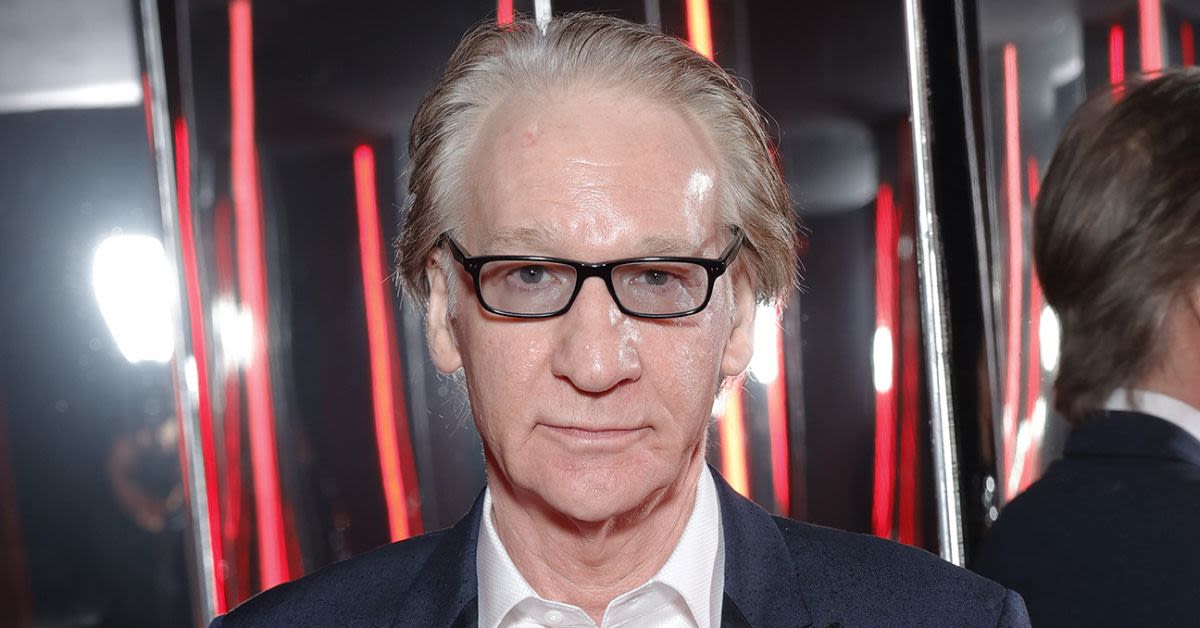
Americas academic elite, long accustomed to presenting themselves as the nations moral and intellectual vanguard, now stand exposed as custodians of an insular ideological hothouse that enforces left-wing orthodoxy rather than cultivating genuine inquiry.
The latest and perhaps most revealing admission of this reality came from within the ivory tower itself. During a recent appearance on HBOs Real Time, Wesleyan University President Michael Roth effectively conceded that political bias is pervasive on campus, only to insist that the very professors who overwhelmingly lean left are self-policing when it comes to their own ideological excesses, a claim host Bill Maher immediately challenged as implausible. According to RedState, the exchange quickly evolved into a broader indictment of the ideological conformity that now dominates American higher education.
Maher, who has never been a conservative and has long been a reliable ally of the Democratic Party, pressed Roth on what happens when one political worldview becomes nearly absolute within an institution. He argued that the problem is not merely that professors tend to vote Democratic, but that hiring, promotion, curriculum design and classroom instruction are all shaped by people who approach political questions from essentially the same direction. When one party, when one point of view controls everything, they are not checked, Maher said. And that's what's happened on campus.
Roth did not deny that bias exists, but he expressed a striking confidence in the academys ability to correct itself. I believe when we convince the faculty and show the faculty there is this bias, they will correct, Roth said, as if the same ideological monoculture that created the problem could be trusted to remedy it. That was apparently a bridge too far for Maher, who has watched the campus Left grow more intolerant and more radical over the past decade.
Do you think your professors are just saying to the kids, I'm not going to put my thumb on the scale of who you should vote for? Maher responded. I think that's ridiculous. He contrasted the current climate with his own experience at Cornell University decades ago, when political leanings were not worn as a badge of professional legitimacy. When I went to Cornell, I could not tell you...I'm trying to think of any professor who I could tell you what their the politics was, he said.
Maher then identified what he sees as the fundamental shift in academic culture. You couldn't even get a job if you couldn't demonstrate what your politics were, and it's very much in the classroom. In other words, ideological conformity is no longer an incidental feature of campus life; it has become a de facto hiring criterion and a constant presence in instruction, especially in the humanities and social sciences.
The data on faculty partisanship overwhelmingly support Mahers contention that American academia is not merely left-leaning but structurally dominated by the Left. A 2018 study by Brooklyn College professor Mitchell Langbert examined the voter registrations of 8,688 tenure-track, Ph.D.-holding professors at 51 highly ranked liberal-arts colleges, revealing a staggering imbalance between Democrats and Republicans. At 39 percent of the colleges studied, the proportion of Republican professors was statistically indistinguishable from zero, and across the institutions examined, 78.2 percent of academic departments employed no registered Republicans at all.
The skew was particularly severe in humanities and interdisciplinary fields, where ideological activism has increasingly displaced traditional scholarship. Engineering and some STEM disciplines were closer to the political composition of the general population, but even there, the tilt was unmistakably leftward. Wesleyan the institution Roth leads was no outlier: Langberts data showed an astounding Democratic-to-Republican faculty registration ratio of roughly the same order as the most lopsided campuses in the study, underscoring that Roth presides over precisely the kind of monoculture Maher was criticizing.
This is not remotely close to a natural reflection of the American population or even of the educated professional class. It is evidence of an ideological gatekeeping system in which conservatives and even moderate dissenters are quietly filtered out long before they can achieve tenure, shape curricula or influence institutional culture. That makes Roths faith in academic self-policing deeply problematic, because the core danger of ideological conformity is that people living inside the group think bubble cease to recognize their own assumptions as ideological at all.
Within such an environment, left-wing premises are treated not as contested political positions but as axioms that all educated and respectable people supposedly know. These assumptions generate the watch words of a closed system terms like equity, decolonization, anti-racism and social justice that function as markers of belonging and tools for enforcing conformity. Those who question the prevailing dogma quickly discover that these words are not merely descriptive but prescriptive, used to confer privileges on the compliant and marginalize the dissenters.
Heterodox Academy, an organization dedicated to promoting viewpoint diversity in higher education, published a major review this year examining roughly two dozen studies of faculty political diversity conducted between 2012 and 2025. The research consistently finds that left-leaning professors outnumber right-leaning professors by enormous margins, especially in the disciplines that most directly shape students views of history, politics and culture. Heterodox Academy identified the intellectual problem created by such homogeneity rather succinctly: without competing viewpoints, scholars become more vulnerable to confirmation bias, motivated reasoning, and conformity.
The question, then, is not whether there is leftward pressure in academia, but how powerful and pervasive that pressure has become. A 2026 working paper titled Do Faculty Affect Student Partisanship? suggests that the influence is both measurable and significant, particularly at large public institutions that educate a substantial share of the nations young adults. The study links voter-registration data to faculty records across 33 state flagship universities and finds that the average faculty is 41 percent Democratic and just 12 percent Republican, with the imbalance especially pronounced in the humanities and social sciences.
At the one flagship university where the authors could track students over time, 61 percent of students identified as liberal early in college, rising to 69 percent by later in college. That leftward shift appeared across every major and demographic group they examined, indicating that the ideological tilt of the faculty is not merely incidental but exerts a directional pull on students political identities. When nearly all of the authority figures students encounter in the classroom share the same worldview, it is hardly surprising that students move in that direction.
The 2024 Inside Higher Ed/Hanover Research survey of 1,133 faculty respondents from a broad range of public and private colleges paints a similar picture of partisan imbalance. The survey found that an overwhelming share of professors identified as Democrats, with only a tiny fraction calling themselves Republicans, and a modest number describing themselves as independents. In the presidential race, 78 percent backed Kamala Harris and Tim Walz, compared with only 8 percent for Donald Trump and JD Vance, a margin that would be unthinkable in almost any other major American institution outside of Hollywood and legacy media.
Moreover, Democratic professors were substantially more politically active than their colleagues on the right or in the center. Two-thirds planned to donate to a candidate, party or political organization, and 29 percent planned to campaign or organize, suggesting that the campus Left is not merely ideologically dominant but also highly mobilized. When the people who control grading, recommendations, hiring committees and tenure decisions are overwhelmingly aligned with one party and actively engaged in its political project, the notion that the classroom is a neutral space becomes impossible to sustain.
This pattern is not new; it is the culmination of a long-term trend. A 2005 KleinStern study surveyed members of six major scholarly associations anthropology, economics, history, legal/political philosophy, political science and sociology and found overwhelming Democratic voting patterns among academic social scientists, with the Democratic advantage having grown substantially since 1970. The voting numbers are the standout: the related analysis of the same 2003 survey found Democratic-to-Republican voting ratios of 30.2-to-1 in anthropology, 28-to-1 in sociology, 6.7-to-1 in political science and 3-to-1 even in economics.
Averaged across the six disciplines, the ratio was roughly 15 Democrats for every Republican, a level of imbalance that would trigger immediate scrutiny and demands for reform if it appeared in any other context where diversity is treated as a moral imperative. Yet in academia, this lopsidedness is either ignored or defended as a natural byproduct of enlightened thinking, as though conservative scholars simply lack the intelligence or moral seriousness to compete. The result is an intellectual ecosystem in which progressive assumptions go unchallenged and conservative ideas are caricatured, if they are mentioned at all.
During the same Real Time discussion, Maher turned his attention to the academic Lefts increasingly hostile posture toward Western civilization, particularly in the context of Israel and the broader Middle East conflict. Western civilization they talk about it like it's a bad thing, instead of saying Western civilization is what gave everyone who's a progressive the things they should be most proud of, Maher said, pointing out the irony that the very freedoms progressives champion free speech, womens rights, gay rights, religious liberty are products of the Western tradition they now denounce. Roth acknowledged that many students at Wesleyan hold precisely that negative view of the West.
Maher then jokingly asked whether he would even be welcome at Wesleyan, given his increasingly vocal criticism of the campus Left. Welcome maybe not, Roth replied, before adding that Maher certainly could appear, a quip that drew laughs but also underscored the social cost of dissent in elite academic circles. Maher reminded Roth that he had twice donated $1 million to Democrats, underscoring that his critique of the Left comes from within the liberal camp, not from the Republican Party.
Someone who twice gave the Democrats a million dollars that's not enough credentials to come up? Maher asked, highlighting how far the goalposts have shifted on the Left. Roth joked that if Maher brought $1 million for Wesleyan, he would be welcomed with open arms, a line that captured the transactional nature of modern higher education, where ideological purity and financial contributions often matter more than intellectual courage. The humor masks a major transformation: Mahers politics, once comfortably situated on the American cultural Left, now place him closer to the center or even to the right in the eyes of radicalized progressives.
Maher is an atheist, a longtime Democrat donor, a supporter of abortion rights, marijuana legalization and gay marriage, and he spent years mercilessly attacking Republicans. Yet he increasingly finds himself attacking institutions of the Left because the definition of acceptable progressive opinion has shifted underneath him, leaving little room for classical liberalism, free speech or skepticism about identity politics. College campuses may be the clearest example of this shift, as universities grow increasingly socialist in orientation, embracing an ends-justify-the-means mentality that treats dissent as a threat to be neutralized rather than a viewpoint to be debated.
When socialists and hard-left activists dominate an institution, intellectual dishonesty, cancel culture and censorship are not aberrations; they are logical outcomes of a worldview that subordinates truth to power and politics. That is not merely a personal opinion; it is what the track record of history says, from the illiberal campus speech codes of the 1990s to the safe spaces and deplatforming campaigns of the present. Once the pursuit of truth is replaced by the pursuit of ideological victory, universities cease to be universities in any meaningful sense and become training grounds for activists.
Scale matters in assessing the danger. When an institution becomes politically homogeneous at ratios approaching 10, 20 or 30 to one, it becomes increasingly difficult to maintain that politics has no effect on its intellectual mission, hiring practices or treatment of dissenters. The sad truth is that most colleges have quietly adopted missions to advance socialism and progressive activism, not to advance human learning, civic virtue or the search for objective truth.
And when colleges become ideologically corrupted, that corruption does not remain confined to campus; it spreads outward into journalism, entertainment, corporate HR departments, the bureaucracy and even the judiciary, as graduates carry their indoctrination into every corner of American life. If America is ever going to address the cultural rot at the heart of its constitutional republic, it starts and ends with the universities, because whoever shapes the minds of the young ultimately shapes the future of the nation.
Login