
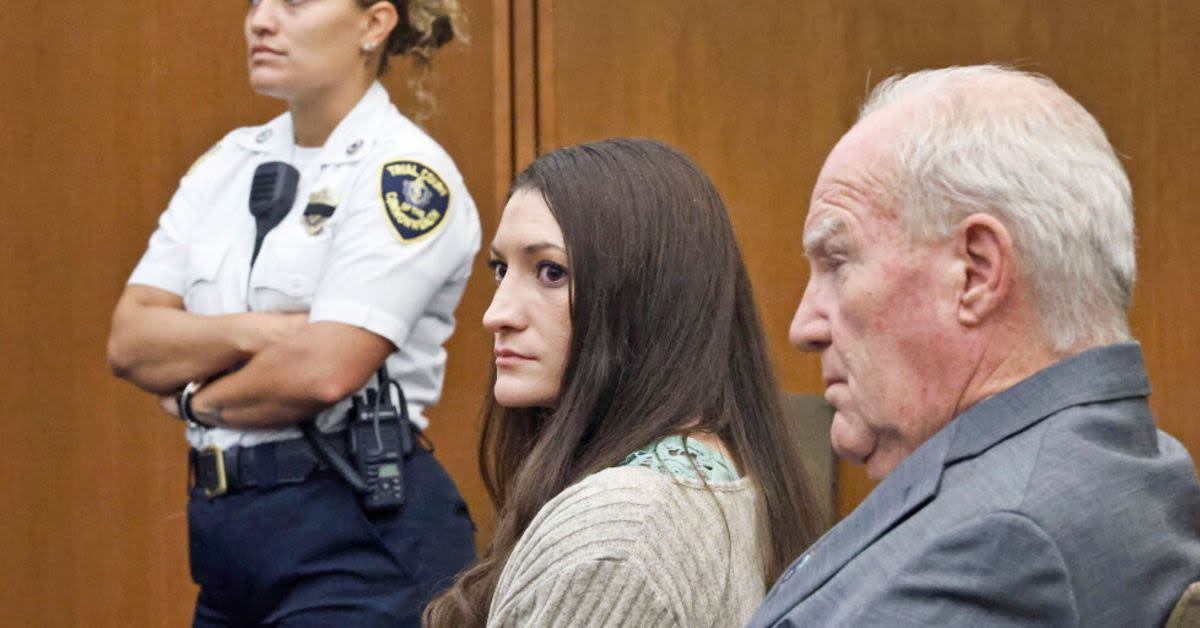
The Lindsay Clancy murder trial reached a dramatic impasse as the jury reported an 11-to-1 deadlock, prompting the judge to summon the lone holdout for questioning Friday morning.
According to Western Journal, the stalemate emerged after nearly a week of deliberations in Plymouth, Massachusetts, with courtroom developments strongly suggesting that the majority of jurors favor acquittal. While the identity and position of the dissenting juror have not been publicly disclosed, defense attorney Kevin Reddington made it plain that he believes the holdout is obstructing a lawful verdict and urged the court to intervene. The court has an instruction from the foreperson of that jury thats been working for a week now, saying that theres one juror who refuses to listen to the law that youve given him or her on reasonable doubt, Reddington told the court, according to The New York Times.
Judge William Sullivan, however, declined to remove the juror at this stage, even as tensions in the courtroom remained palpable. The panel has now entered its sixth day of deliberations, an unusually long period that underscores both the complexity of the case and the deep division among jurors. During the proceedings, the jury sent Sullivan a note stating that they remained hopelessly split, 11 to 1, and that the holdout juror refuses to listen to the law, according to CNN.
In response, Sullivan conducted a sidebar session with the jurors under oath to determine whether each member could and would follow the law as instructed. After that inquiry, he announced that he was not prepared to remove the dissenting juror, signaling a cautious approach to any action that might appear to favor one side. I dont feel that it is proper for me to side with one side or the other of the deliberations, Sullivan told the court. I dont feel its appropriate for me to say I agree with one juror or 11.
The jury is scheduled to resume deliberations for a seventh day on Friday, tasked with deciding whether Lindsay Clancy can be held criminally responsible for the deaths of her three young children in January 2023. Prosecutors allege that Clancy, then a 32-year-old mother, strangled her children before attempting to take her own life by leaping from a second-story window onto frozen ground. She survived the fall but was left paralyzed, a fact that has added a tragic dimension to an already emotionally charged case.
The defense has argued that Clancy was in the grip of severe mental illness at the time of the killings, including postpartum depression, psychosis, and bipolar disorder. Her attorneys have emphasized that she had been subjected to a revolving door of psychiatric medications and treatments that failed to stabilize her condition, contending that she is not guilty by reason of insanity. From a conservative perspective, the case raises serious questions about the modern mental health industry, the overreliance on powerful pharmaceuticals, and the failure of progressive health systems to protect both vulnerable mothers and their children.
Prosecutors, by contrast, insist that Clancys actions were deliberate and calculated, pointing to evidence of internet searches about methods of killing and her alleged orchestration of a window of opportunity by sending her husband out on errands. In their view, such planning demonstrates that she understood the nature and wrongfulness of her actions, satisfying the legal standard for criminal responsibility. The states argument implicitly challenges the increasingly expansive use of mental health defenses, a trend often encouraged by liberal legal and academic circles that can blur the line between genuine incapacity and moral accountability.
Massachusetts, a deep-blue state, maintains a relatively liberal standard for evaluating insanity pleas, which many legal observers believe makes a hung jury or outright acquittal more likely. That standard, shaped over decades by progressive legal reforms, tends to favor defendants who can present any plausible claim of diminished capacity, even in cases involving horrific violence against children. The Clancy trial has therefore become a flashpoint not only in the courtroom but also on social media, where debates often veer away from the legal issues and into broader ideological battles over motherhood, mental health, and personal responsibility.
On Wednesday, after the jury again reported that it was deadlocked, Judge Sullivan issued what is known in Massachusetts as a Tuey-Rodriguez instruction. This directive, sometimes called a dynamite charge, is designed to encourage jurors to re-examine their positions and strive for unanimity without abandoning their honest convictions. Otherwise known as a dynamite charge, a Tuey-Rodriguez instruction tells a jury that, given the facts as they were presented, there is no reason to believe a different jury would reach a different conclusion and implores them to keep working.
Legal experts note that such an instruction underscores the gravity of the jurys duty and the unique role citizens play in the justice system. It alerts the jury to, among other things, the seriousness of the obligation and unique qualifications to decide this case, retired Massachusetts Judge Jim Barretto told WCVB-TV. Still, there are limits to how far a judge can go in pressuring a holdout, and if the panel remains unmoved, the court may have little choice but to declare a mistrial.
If the deadlock persists, it is far more likely that Sullivan will opt for a mistrial than attempt to remove the lone juror, even though that is an outcome he appears eager to avoid. Nobody wants a mistrial. Nobody wants to have this case tried again, trial attorney Steven Vinick told CNN, adding that the judge is in a very, very difficult position. Vinick further observed that The judge is doing whatever he can to allow them to continue with their deliberations.
The standard for removing a juror is intentionally high, reflecting the constitutional importance of independent judgment in the jury room. And, as for removing a juror, you really have to make sure that youre removing them because they are not following the law, not simply because they disagree with the rest of the jurors, former federal prosecutor Berit Berger told the outlet. She added that Being a lone holdout is not only consistent with our law, we tell jurors that, you know, theyre not supposed to compromise their strongly held beliefs.
From a conservative standpoint, that principle is vital: the jury system is one of the last remaining checks ordinary citizens have against the power of the state. The idea that a single juror can stand firm against majority pressure, even in a high-profile case, reflects the Founders vision of a justice system that values conscience and individual judgment over mob sentiment. Yet the Clancy case also illustrates how progressive legal standards on insanity can complicate that process, making it harder for jurors to apply common-sense notions of right and wrong when the law itself is tilted toward excusing criminal behavior on psychological grounds.
For his part, Reddington has made clear that he does not want the case to end in a mistrial, though his reasons differ sharply from those of the prosecution. Theres a person who has doubt but will not listen to the judges instruction, Reddington told reporters. I dont want a mistrial. Why would I want a mistrial? I kicked the s*** out of their case.
His blunt assessment underscores the confidence the defense has in the evidence presented and in the states inability to overcome the generous insanity standard favored in Massachusetts courts. CNN correspondent Jean Casarez, meanwhile, said she had never seen anything like Reddingtons accusation that a juror isnt following the law, telling Anderson Cooper that if the holdout were to be removed, the deliberations would need to start anew. That prospect would mean yet another delay in a case that has already stretched the patience of the court, the families involved, and a public struggling to make sense of a tragedy that defies easy explanation.
Beyond the immediate legal drama, the Clancy trial has become a mirror reflecting broader cultural and political divides. On one side are those who emphasize mental health, systemic failures, and the supposed inevitability of such tragedies in a society that, in their view, does not provide enough government-funded support for mothers. On the other side are Americans who believe that while mental illness is real and serious, it cannot be allowed to erase personal responsibility, especially when the victims are defenseless children.
The outcome of this case will not resolve those deeper disputes, but it will send a signal about where the balance currently lies in a state long dominated by liberal policymaking. If the jury ultimately acquits Clancy by reason of insanity or remains hung, progressives will likely cite it as a victory for compassion and understanding of mental illness, while conservatives will see yet another example of a justice system that bends over backward for defendants and leaves victims in the shadows. If, against expectations, the panel returns a murder conviction, it will suggest that even under a liberal legal framework, there are limits to how far the insanity defense can stretch before it snaps under the weight of common sense.
For now, all eyes remain on that single juror and on Judge Sullivans next move as the seventh day of deliberations approaches. Whether this ends in a verdict, a mistrial, or a renewed trial months down the line, the Clancy case has already exposed the tensions between mercy and justice, between mental health narratives and moral accountability, and between a progressive legal culture and the enduring conservative belief that the law must ultimately protect the innocent first.
Login