
Seattle officials are facing mounting scrutiny over a cascade of communication failures surrounding the deadly Bite of Seattle mass shooting, even as police now say they are seeking two additional persons of interest more than a month after the attack.
Three people were killed and at least four others, including a toddler, were wounded when gunfire erupted on July 26 at the Bite of Seattle festival at Seattle Center. A 15-year-old suspect was arrested shortly after the shooting, but Interim Seattle Police Chief Andre Sayles disclosed this week that investigators have identified two more individuals they want to question after combing through roughly 450 hours of video, as reported by The Post Millennial.
"I can say that we are looking at a potential two persons of interest in this incident, not saying that they are the shooters or anything of that nature, but people that we have identified that we need to have a conversation with," Sayles told FOX 13 Seattle. Police have executed search warrants and are working with the Washington State Patrol Crime Lab, yet no additional arrests or suspect descriptions have been made public.
The new investigative leads emerged as Mayor Katie Wilson and Chief Sayles conceded that the city failed to provide residents with timely, clear information during and after the shooting, including basic guidance on whether the public remained in danger. "Seattle deserves clear and fast information in an emergency, and we fell short of that," Wilson told KOMO News. "So we are fixing that."
Despite those assurances, the city has still not publicly identified who was responsible for an approximately five-hour gap in public information following the first reports of gunfire. That vacuum left families, business owners, and festival-goers in the dark, while officials appeared more focused on staging a political tableau than on delivering urgent safety updates.
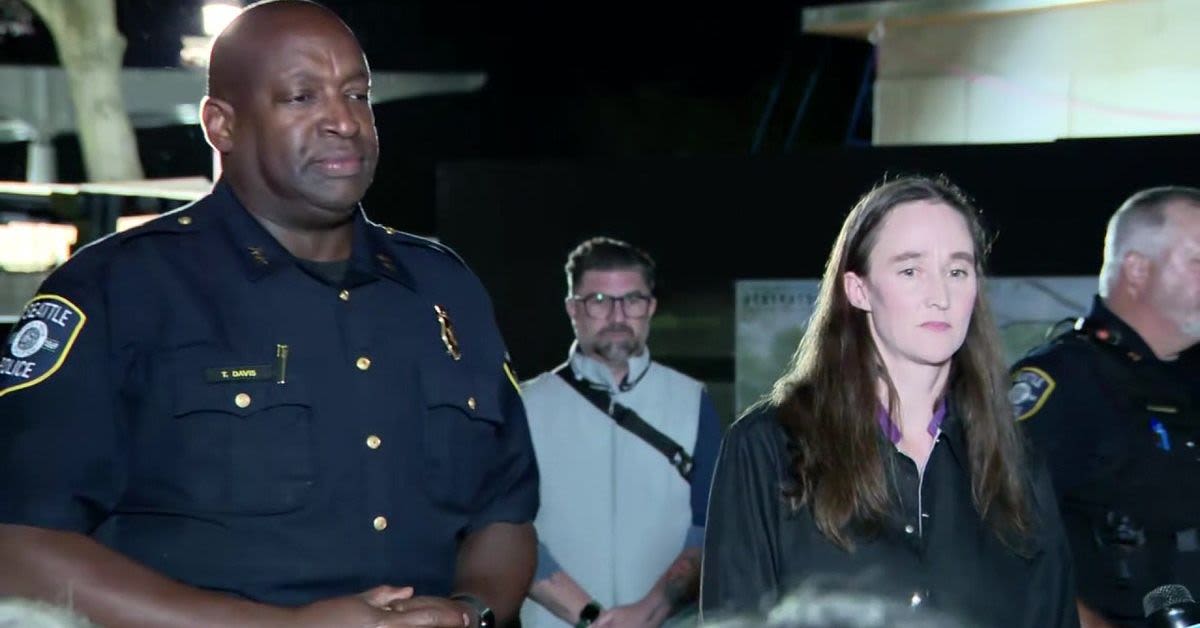
Wilson has now admitted that part of the delay occurred because officials waited for Democratic Gov. Bob Ferguson and Democratic Rep. Pramila Jayapal to arrive before holding the first news conference. Wilson said officials waited from approximately 9:45 pm until 10:45 pm for Ferguson and Jayapal, and when KOMO asked whether she or anyone in her office knew about or approved the roughly five-hour delay, the mayor did not directly answer, instead conceding, "There were significant communication gaps on the night of the Bite of Seattle tragedy."
That admission undercuts earlier efforts to distance Ferguson from the delay and raises fresh questions about whether political optics were prioritized over public safety. In the days following the shooting, Ferguson's office rushed to release text messages between the governor and Wilson amid speculation that officials had stalled the briefing to accommodate high-profile Democrats, and those messages did not show Ferguson personally asking anyone to postpone the news conference.
However, Wilson has now confirmed that officials did in fact wait approximately an hour for Ferguson and Jayapal to arrive at Seattle Center. Ferguson and Jayapal had already participated remotely in a multi-agency briefing beginning at 8:57 pm, according to a timeline released by Seattle City Council Public Safety Committee Chair Bob Kettle, and the 26-minute Teams call included Ferguson, Jayapal, Wilson, then-Seattle Police Chief Shon Barnes, Assistant Chief Tyrone Davis, Seattle Fire Chief Harold Scoggins, King County Executive Girmay Zahilay and Seattle City Council President Joy Hollingsworth.
Despite that early coordination, the first in-person news conference did not begin until approximately 10:50 pm, long after the shooting and long after residents had begun demanding answers. Wilson previously attempted to frame the delay as a matter of logistics, saying, "Once it became clear that SPD was ready to brief the press, I, the governor, and Congresswoman Jayapal, made our way rapidly to Seattle Center so that we would be able to be there to share that information with you all."
She later acknowledged a "miscommunication" between SPD and her office and admitted she did not grasp how little information had reached the public. "What I did not fully understand in that moment was how little information had reached the public or the press since the incident began at 6 pm," Wilson said. "Had I known that, I would have pushed for an immediate briefing rather than waiting for a press conference to be organized."
Wilson has also conceded that the city should have used AlertSeattle and other digital platforms to inform residents whether Seattle Center was secure and whether any suspects remained at large. Instead, the citys messaging was muddled from the outset, with Wilson initially announcing that two people were in custodyinformation that was later corrected as police clarified the number and status of those involved.
Police subsequently said there were at least three suspected shooters, including the 15-year-old who was arrested, a 19-year-old who was killed during the gunfire, and at least one other unidentified person. That evolving narrative has only intensified concerns that city leaders were not in command of basic facts even as they delayed public briefings to assemble a lineup of Democratic officials.
In response to the backlash, the city has announced new protocols, including using AlertSeattle and social media for critical safety information, establishing clearer communication channels between SPD and the mayor's office, and expecting police to provide a media briefing within an hour of a significant incident when safe and feasible. Those measures amount to an implicit acknowledgment that the existing systemoverseen by progressive leadershipfailed when it was needed most.
The investigative side of the case also continues to develop, with Sayles offering a cautious description of the two additional individuals being sought. "I can say with confidence that we're probably looking for two, but I wouldn't call them shooters," Sayles told KIRO 7. "We want to make sure that the video correlates with if they were shooters or were they on the other side of being shot at."
The political fallout has extended into the upper ranks of the Seattle Police Department, particularly Wilson's decision to force then-Chief Shon Barnes from the department just days after the shooting. Barnes has said Wilson never explained why she wanted him to resign and has denied ordering information to be withheld from the public, while Wilson has repeatedly refused to explain her decision, citing personnel rules, and Councilmember Kettle has publicly pressed her to justify the ouster.
When KOMO asked Wilson whether Seattle Police Detective Brian Pritchard was correct in disputing the city's account of the communications delay, Wilson declined to answer, further fueling perceptions of a lack of transparency. Sayles said he had not spoken directly with Pritchard but, despite the communication breakdown, defended officers' tactical response, noting that police took the 15-year-old suspect into custody within 20 to 30 seconds.
Wilson has asked Seattle's Office of Inspector General to conduct an independent review of the public-information response, a move that may help clarify the timeline but also underscores how badly the citys crisis communications faltered. The investigation is examining the sequence of events, internal and external communications, and the causes of the delays and is expected to be completed by mid-December, leaving residents to wait months for answers about why, in a moment of fear and uncertainty, their leaders chose to wait for politicians instead of speaking directly to the public.
Login