
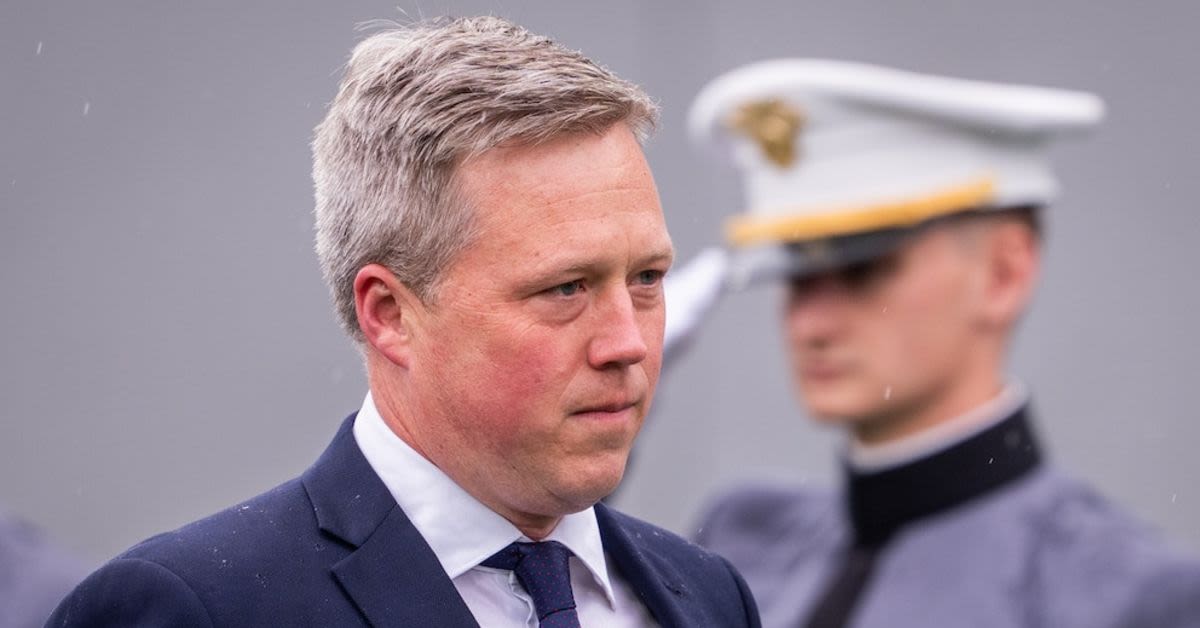
Army Secretary Dan Driscoll is stepping down from his post after a protracted clash with Secretary of War Pete Hegseth over the future direction and leadership of the U.S. Army.
According to Western Journal, multiple outlets have reported that the rift between the two senior officials intensified over personnel decisions and the broader question of how to maintain readiness and effectiveness in an increasingly dangerous world. A report from Axios said that Driscoll was particularly angered when Hegseth intervened in the promotions process by pulling two black men and two women from the promotions list, a directive Driscoll refused to carry out.
Despite the internal friction, the White House publicly praised Driscolls tenure and his alignment with the administrations national security priorities. Secretary Driscoll has been highly effective in advancing President Trumps agenda to Make America Strong Again at the Department of the Army by providing outstanding leadership during historic military operations, restoring an emphasis on readiness and lethality, assisting with negotiations between Russia and Ukraine, and more, White House representative Anna Kelly said in a statement.
Kelly emphasized that Driscolls work had strengthened the Armys capabilities at a critical moment for U.S. defense policy. The United States Army is more powerful than ever thanks to his work alongside the Commander-in-Chief and Secretary of War, she said.
Behind the scenes, however, sources described a deepening dispute over what conservatives often view as the core mission of the military: warfighting readiness rather than political experimentation. Driscoll brought up concerns with the administration surrounding Army transformation and readiness and Hegseths blocking those efforts specifically by firing the Generals who were responsible, Fox News quoted a source as saying.
The firing of key senior officers appears to have been the breaking point in the relationship between the two men. The removal of Army Chief of Staff Gen. Randy George was a flashpoint that led to Driscolls desire to step down, Fox News reported.
The Atlantic reported that Driscoll recently took his concerns directly to President Donald Trump, warning that the Armys leadership ranks were being hollowed out. A report in The Atlantic said that Driscoll last week shared his concerns with President Donald Trump that a large number of leaders had been either pushed out or passed over for promotion under Hegseth.
According to that account, Driscoll believed the scale of the shake-up was undermining the Armys ability to modernize and deter Americas adversaries. Driscoll argued that the Army could not transform itself the way it needs to, because of the departure of so many leaders, the report said, citing a source it did not name.
The same report indicated that Trump did not dismiss those concerns out of hand. The report said Trump expressed concern about the deep cuts to the Armys senior leadership.
The Wall Street Journal likewise noted that Hegseth and Driscoll were at odds over personnel changes, underscoring that this was not a minor bureaucratic disagreement but a fundamental dispute over who should shape the Armys future. The outlet reported that Dave Fitzgerald, the deputy undersecretary of the Army, is also expected to step down.
With Driscolls exit, the Armys civilian leadership structure will be significantly reshuffled at a time when conservatives argue that strength and clarity of purpose are essential. Mike Obadal, the Armys undersecretary, will be the Armys highest-ranking civilian after Driscoll leaves.
Driscolls departure also carries political implications inside the broader Trump coalition, where national security hawks and populist conservatives sometimes differ over personnel and priorities. NPR noted that Driscoll is very close to Vice President J.D. Vance, who supported Driscolls selection as secretary of the Army.
That relationship has fueled speculation that Driscolls next move may be back into the political arena rather than the Pentagon bureaucracy. The report said there had been widespread media speculation that Driscoll, who advised Vance on his 2024 campaign, would leave the administration to join a 2028 Vance campaign.
For conservatives who prioritize a lethal, apolitical military focused on defending the nation rather than advancing fashionable ideological causes, the episode highlights the stakes of internal personnel battles that rarely reach public view. Driscolls resignation, coming amid concerns over deep cuts to the Armys senior leadership and the sidelining of experienced generals, raises pressing questions about who will ultimately control the direction of the armed forces and whether the next generation of Army leaders will be chosen for battlefield competence or political convenience.
Login