
The psychiatrist who told a Massachusetts jury that nurse and mother Lindsay Clancy was criminally responsible for strangling her three young children is suddenly out of a job.
Dr. Avram Mack, a child psychiatrist who testified for the prosecution in the high-profile Duxbury murder case, is no longer employed by Nemours Childrens Health in Delaware. According to Gateway Pundit, Mack resigned on Monday, the same day he finished his explosive testimony in the Clancy trial, a timing that has fueled public speculation even as the hospital system has refused to link his departure to the courtroom drama.
Dr. Avram Mack is no longer employed by Nemours Childrens Health, the hospital system told the New York Post on Friday. Nemours declined to elaborate, insisting that employment decisions are confidential, a standard corporate line that does little to quiet questions about whether his controversial role in the case played any part in his exit.
The abrupt resignation comes as the Clancy trial has become a flashpoint in the national debate over mental illness, personal responsibility, and the limits of the insanity defense. The hospital has not publicly connected Macks departure to his testimony, but the optics are hard to ignore in a case where the stakes include not only a mothers fate but broader questions about accountability in an era when mental health is increasingly invoked to explain violent acts.
Mack was called as a rebuttal witness for the prosecution after evaluating Clancy twice in April 2026, more than three years after she strangled her children, Cora, 5, Dawson, 3, and eight-month-old Callan, with exercise bands in the basement of the familys Duxbury home. Clancys defense team does not dispute that she killed the children; instead, they argue she was in the grip of postpartum psychosis and therefore not criminally responsible for her actions.
On the stand, Mack conceded that Clancy was in a serious psychiatric state and was suffering when she killed the children on January 24, 2023. Yet he told jurors that, in his view, her condition did not rise to the level of legal insanity and that she retained the capacity to understand that what she was doing was wrong.
He testified that he found no psychotic features in her medical records and concluded she was experiencing a major depressive episode rather than postpartum psychosis. In a detail that stunned many observers, Mack told jurors she said Go to God as she strangled each child, adding that this was not proof she was detached from reality but rather proof she understood they were innocent.
Mack ultimately concluded that Clancy should be held criminally responsible, a position that aligns with a more traditional view of justice that resists broad expansions of the insanity defense. His testimony underscored a conservative concern that mental health labels are increasingly used to blur the line between illness and moral agency, especially in cases involving horrific violence against the most vulnerable.
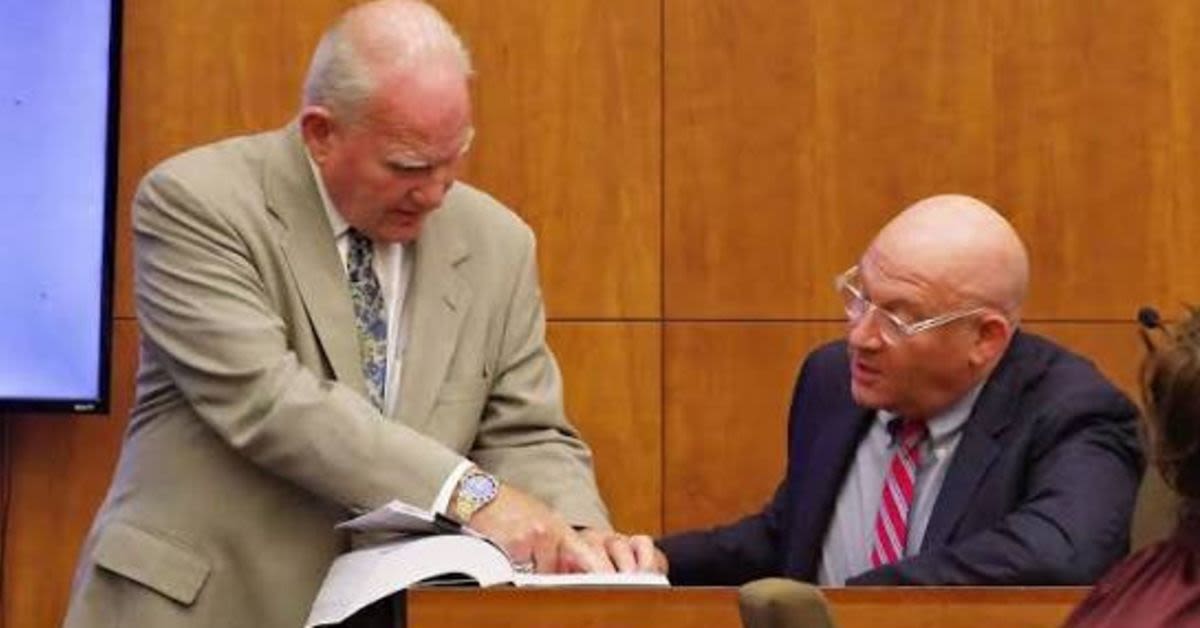
Defense attorney Kevin Reddington launched an aggressive cross-examination, repeatedly challenging Macks qualifications, his experience treating adults, his grasp of postpartum psychiatric disorders, and his conclusions about Clancys mental state. The exchange turned especially tense when Mack appeared to smile while discussing psychological testing, prompting Reddington to snap, What are you smiling for? and to admonish him, This is not funny, sir.
The back-and-forth grew so heated that Judge William Sullivan repeatedly intervened, instructing Mack to listen carefully and answer only the questions being asked. Doctor, please, Sullivan told him at one point, Listen to the question, and just answer the question, as asked, a rare public rebuke that highlighted the friction between the expert witness and the defense.
Macks testimony directly contradicted that of defense expert Dr. Phillip Resnick, who told jurors that Clancy was suffering from postpartum psychosis, delusions, and command hallucinations when she killed her children. Mack testified that Clancy reported hearing a loud male voice ordering her to kill the children so that she could then kill herself and that she remembered strangling them and telling them to go to God.
Despite that chilling account, Mack maintained that even severe mental illness, including psychosis, does not automatically strip a person of the ability to distinguish right from wrong. His stance reflects a more restrained, law-and-order approach to insanity claims, one that insists on preserving personal responsibility even in the face of profound psychological distress.
During closing arguments, Plymouth County Assistant District Attorney Jennifer Sprague emphasized the prosecutions narrative that Clancy methodically separated the children and killed them one by one. She knew that he might struggle, and so it made sense rationally to remove him and separate him first and kill him first, Sprague said of three-year-old Dawson, portraying the sequence as calculated rather than chaotic.
One female juror was reportedly brought to tears during the prosecutions closing argument, a sign of the emotional weight the panel carries as it weighs whether Clancy was a tormented, psychotic mother or a calculating killer. The jury ended its second day of deliberations Friday without reaching a verdict and is scheduled to return Monday, leaving both sides and the public in suspense.
Clancy, 36, faces three counts of first-degree murder and could spend the rest of her life in prison if convicted, a punishment consistent with the gravity of taking three innocent lives. If found not guilty by reason of insanity, she could be committed to a psychiatric facility until authorities determine she no longer poses a danger, a far more lenient outcome that many Americans, particularly those who prioritize accountability and the protection of children, will be watching closely as this case continues to unfold.
Login