
With the 2026 midterms still on the horizon, the political class is already looking past them toward 2028, and the maneuvering has quietly begun.
According to RedState, Republicans appear poised to rally around a relatively defined bench, with Vice President JD Vance and Secretary of State Marco Rubio widely viewed as the most plausible heirs to the GOP presidential nomination. On the Democratic side, however, the picture is far murkier and far more ideologically lopsided, with the partys energy and likely candidates clustered on the hard left.
If Democrats were to seek anything resembling a centrist standard-bearer, their options among current elected officials are vanishingly small, with Pennsylvanias Senator John Fetterman (D-PA) standing out as the lone figure who could plausibly be described as a moderate. That imbalance sets the stage for a 2028 contest in which Democrats may again struggle to connect with voters outside their progressive urban enclaves.
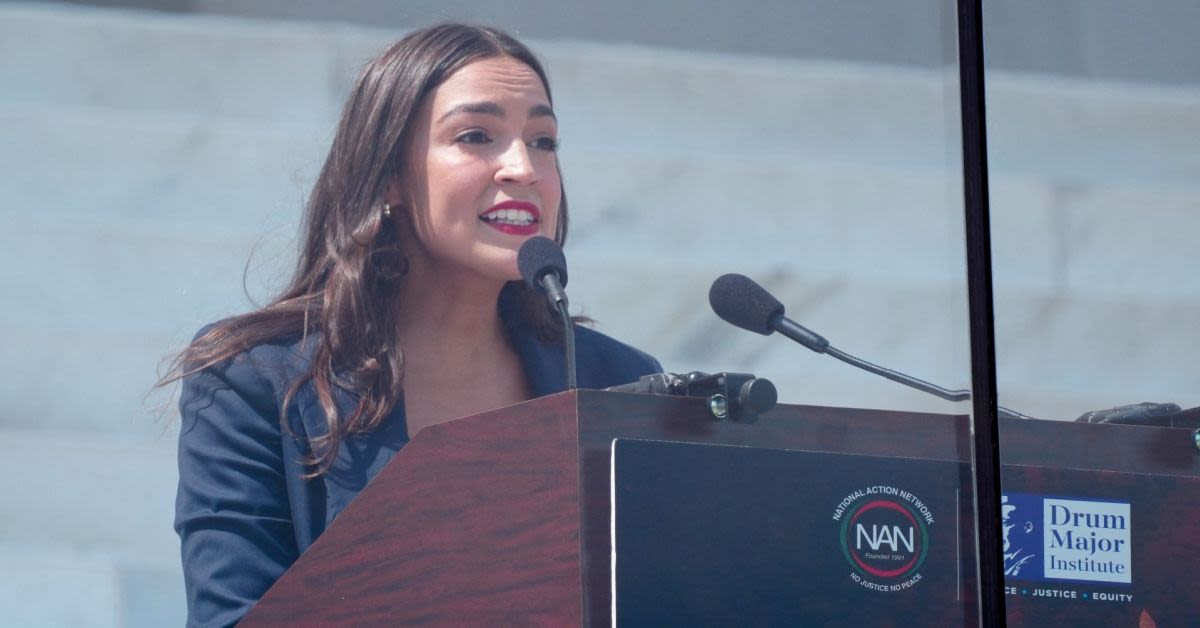
One of the most prominent faces of that left flank, Rep. Alexandria Ocasio-Cortez (D-NY), a self-described card-carrying member of the Democratic Socialists of America, is already rumored to be eyeing higher office. On Friday, reports surfaced of a significant shake-up inside her political operation, prompting speculation about whether the congresswoman is merely reorganizing or quietly preparing for a national campaign. The longtime campaign manager and senior adviser to Rep. Alexandria Ocasio-Cortez, D-N.Y., will leave in September, Axios reported Friday, citing two people familiar with the matter. The exit of Oliver Hidalgo-Wohlleben, who has long been central to AOCs political brand, suggests more than routine staff turnover.
The departure of Oliver Hidalgo-Wohlleben is part of a staff shake-up that comes as speculation swirls over whether the progressive leader will mount a presidential run or challenge Senate Minority Leader Chuck Schumer, D-N.Y., in 2028. That dual trackeither a White House bid or a primary challenge against one of the most powerful Democrats in Washingtonunderscores both Ocasio-Cortezs ambition and the ideological civil war roiling her party. Fiorella Bini, a longtime aide to Ocasio-Cortez, took over as interim campaign manager this month, according to Axios. Such a move keeps the operation in familiar hands while allowing for a strategic reset at a moment when national aspirations are being openly discussed.
Axios has outlined the two main paths under consideration as the congresswoman weighs her future. The personnel changes come months before the progressive leader will decide whether to launch a presidential campaign. She's also weighing a run for Senate Minority Leader Chuck Schumer's seat, which is also up in 2028. Either route would require Ocasio-Cortez to expand her appeal far beyond the deep-blue, safely gerrymandered district that has insulated her from serious competition.
Neither option, however, is remotely guaranteed. The Democratic Partys national brand is sagging badly in public opinion, and while Republicans are hardly soaring in the polls, both parties are confronting widespread voter fatigue and distrust. Polling snapshots, though, are ultimately curiositiesuseful for pundit chatter but not determinative of outcomes. What actually matters are elections, and recent primary contests have shown that far-left candidates tend to falter when they step outside the protective bubble of overwhelmingly progressive districts.
There are a few notable exceptions attempting statewide runs, such as Michigan Senate hopeful Abdul El-Sayed, a candidate whose hard-left platform has earned him the label of detestable from critics on the right. Yet it remains far from clear that such figures can prevail in competitive statewide races where suburban and working-class voters still expect some measure of moderation. In Texas, for example, James Talarico is widely viewed as without doubt the softest candidate for the Senate in this cycle, as he attempts to unseat Attorney General Ken Paxton while marketing himself as a centrist. Voters, however, appear unconvinced, and nobody with enough brains to pound sand is buying it.
Ocasio-Cortez would likely confront a similar problem if she tried to sell herself to the entire state of New York, let alone to the broader American electorate. Her current rhetoric and record are firmly anchored on the far left, making any sudden pivot to moderation both implausible and politically suspect. Observers are left to wonder whether the recent staff shake-up is an effort to rebrand her image or simply to professionalize an operation preparing for a larger stage. The notion of AOC successfully recasting herself as a moderate strains credulity, given her history, and frankly, not with what we have seen of her statements and her history so far.
Far-left nut and commie she may be, but you have to give AOC one thing: She's sincere. Unlike some politicians who trim their sails with every gust of public opinion, Ocasio-Cortez appears to genuinely believe the policies she advocates, however radical they may be. She really seems to believe the nonsense she spews. That ideological earnestness suggests she is inclined to seek higher office on the same uncompromising platform that made her a star on the activist left.
Shes in earnest about all this, and seems inclined to run for any future office on that basis. Yet that very authenticity, while appealing to progressive activists and social media followers, is likely to prove a liability in a national or statewide contest where voters tend to punish extremism. And that is precisely what is likely to sink her. If Democrats are serious about winning back disaffected moderates and working-class voters in 2028, they may need to look beyond the socialist wing of their party.
No, if the Democrats were smart, in 2028, they would be going hat-in-hand to someone like Joe Manchin, and asking, Please, Joe, save us! That hypothetical plea underscores the broader strategic dilemma facing the left: double down on ideological purity with figures like Ocasio-Cortez, or attempt a course correction with candidates who can credibly speak to the center.
For conservatives, the prospect of Democrats nominating a self-identified socialist is politically advantageous, reinforcing the contrast between progressive overreach and a right-of-center message grounded in limited government, individual liberty, and economic freedom.
Login