
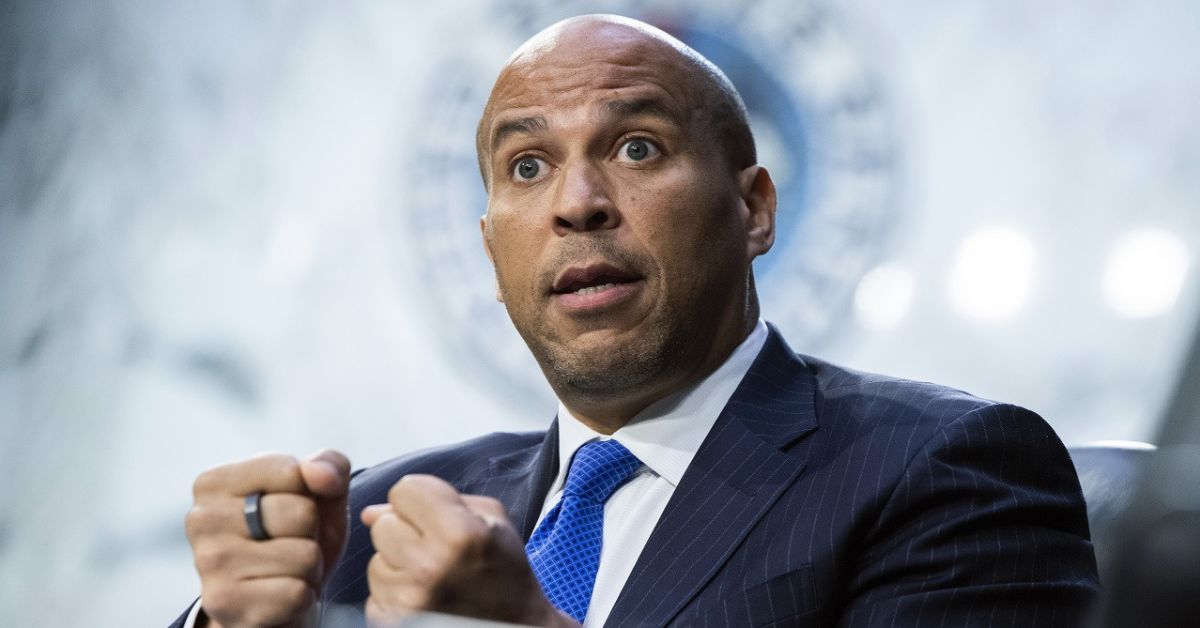
Senator Cory Booker (D-NJ) has ignited a sharp intra-party clash by denouncing left-wing influencer Hasan Pikers recent remarks about Jewish Americans as flatly antisemitic, underscoring a widening divide on the Democratic left over Israel, identity politics, and the boundaries of acceptable speech.
According to Mediaite, Bookers rebuke followed an August 20 Twitch livestream in which Piker, a prominent progressive streamer, suggested that American Jews risked inciting violence by publicly aligning themselves with Israel. During that broadcast, Piker declared, If youre running around tying your entire identity to a country that inevitably will be seen as, basically, Jewish ISIS, and youre saying as Jews, This is all we care about, youre making antisemitism worse.
Piker went further, warning that if Jews in America keep putting this idea out there that they are singularly invested in Israel, eventually someones going to come around and take action against them. For many observers, including centrist Democrats and conservatives alike, that framing sounded less like a critique of foreign policy and more like a rationalization of bigotry, effectively blaming a vulnerable minority for the hatred directed at them.
Booker, who has often tried to straddle his partys ideological factions, dispensed with any such nuance in a statement posted to X. Hasan Pikers dangerous and hateful language targeting Jewish Americans has no place in our civic discourse, he wrote, adding, Suggesting that Jewish Americans bear responsibility for hatred or violence directed against them is wrong, dangerous, and antisemitic.
The senator then drew a line between legitimate policy debate and targeting a religious community, a distinction conservatives have long urged progressives to respect. We can, and should, argue fiercely over policy. We should have meaningful dialogue and debate about the policies and actions of the Israeli government and American foreign policy. That is the lifeblood of democracy. But thats not what this is.
He pressed the point further, emphasizing that political disagreement must never morph into collective blame. No American should be told that their political beliefs make them responsible for hatred or violence directed against them. There is a bright line between vigorous debate and rhetoric that stokes hatred toward our neighbors. Mr. Piker has crossed that line, repeatedly and unmistakably.
Bookers stance aligned him with other senior Democrats who, under growing public scrutiny, are being forced to confront the radical rhetoric emanating from their own activist base. Senator Jacky Rosen (D-NV) branded Pikers comments a new low that traffics in antisemitic tropes by blaming victims, while House Minority Leader Hakeem Jeffries condemned the notion that American Jews are inviting violence against themselves.
Piker has responded by dismissing the backlash as a politically motivated hit job rather than a substantive critique of his words. He has characterized the uproar as a coordinated smear campaign, insisting that his intent was to caution against conflating Judaism with Zionism, a distinction often used on the left to shield harsh anti-Israel rhetoric from charges of antisemitism.
The fallout has also ensnared Michigan Democratic Senate candidate Abdul El-Sayed, whose past association with Piker has drawn renewed attention as voters scrutinize where Democrats stand on rising antisemitism. Nobody speaks for this campaign besides me and my campaign spokespeople, El-Sayed said Wednesday, adding, All Americans deserve the right to advocate for what they believe without fear of violence, particularly communities historically targeted by violence. Antisemitism is a scourge, and I remain committed to Jewish safety.
As President Trumps second administration continues to prioritize law and order and confront antisemitic incidents directly, this episode highlights a persistent problem inside the Democratic coalition: activists who couch hostility toward Jews in the language of critique while party leaders scramble to distance themselves after the fact. The clash over Pikers rhetoric underscores a broader cultural battle over whether America will hold the line on universal standards of dignity and responsibility, or allow ideological extremism to excuse threats and intimidation against a religious minority.
Login