
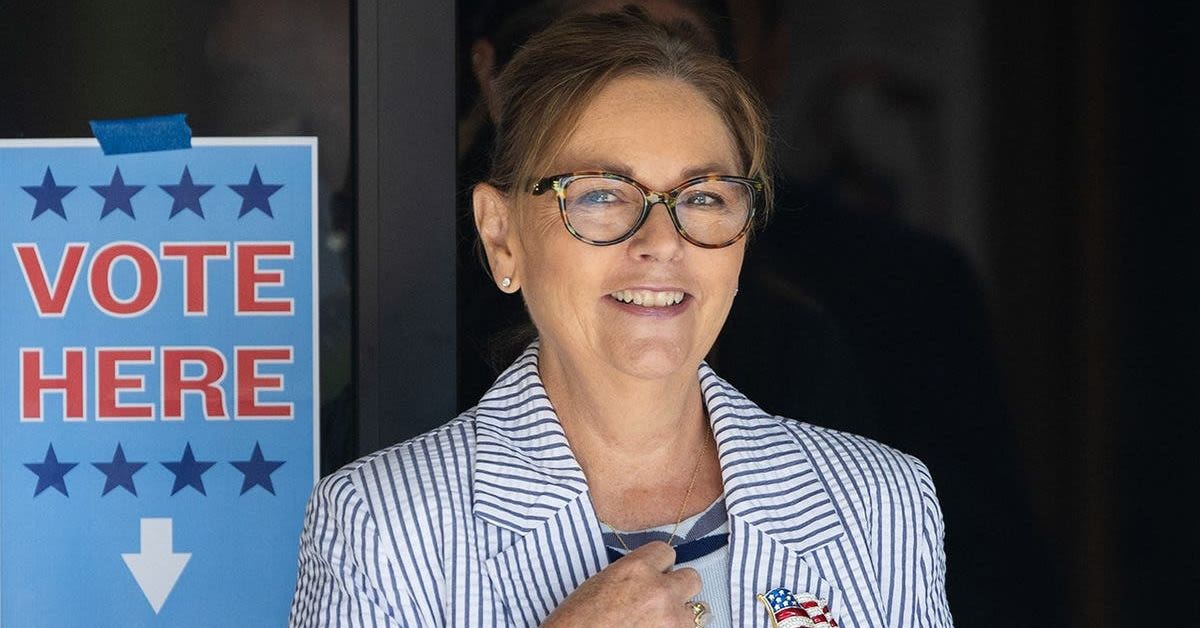
Sen. Darline Graham secured South Carolinas Republican U.S. Senate nomination on Tuesday, defeating Rep. Ralph Norman in a runoff that underscored President Donald Trumps continued dominance over GOP primary politics.
Her victory, which comes barely a month after she was appointed to complete the term of her late brother, Sen. Lindsey Graham, also preserved Trumps unblemished record in Republican Senate primaries this cycle, according to Newsmax. Trump-backed contenders had either won or advanced in every Senate GOP primary heading into Tuesdays contest, reinforcing the presidents role as the partys chief kingmaker despite relentless efforts by the left and the media establishment to sideline him.
Newsmax and Decision Desk HQ projected the race for Darline Graham just over 90 minutes after polls closed, as early returns showed her maintaining a steady edge. With 69% of the vote tallied, she led Norman 52.5% to 47.5%, a margin that held firm enough to shut down any realistic path for the congressman to overtake her.
Graham, 62, will now face Democrat Annie Andrews, a Charleston physician, in November in a state that has not sent a Democrat to the U.S. Senate since 1998. That long Republican streak, combined with Trumps backing and Grahams growing name recognition, positions the GOP as the clear favorite to retain the seat in a year when Democrats are already on the defensive nationwide.
The newly minted senator entered the two-week runoff as the frontrunner after finishing first in the Aug. 11 special Republican primary with roughly 33% of the vote. Norman, a five-term congressman and member of the conservative House Freedom Caucus, placed second with about 25%, leaving both short of the majority needed to clinch the nomination outright.
Trump endorsed Darline Graham even before she formally declared her candidacy, signaling early that he intended to shape the future of the Graham political legacy in South Carolina. He then escalated his involvement in the final stretch, flying to Myrtle Beach on Friday to rally with her and headlining a tele-rally on Monday to energize his base.
I want it to happen, Trump told supporters at Fridays event, offering a succinct but powerful blessing that has become decisive in Republican primaries across the country. Good luck, Darline.
MAGA Inc., the super PAC aligned with Trump, poured nearly $830,000 into calls and text messages on Grahams behalf in the closing days, a significant investment that helped her consolidate support among grassroots conservatives. That spending, combined with Trumps personal appearances, blunted Normans efforts to frame himself as the more seasoned conservative and reminded voters that alignment with the president remains the central fault line in todays GOP.
Grahams campaign was not without turbulence, particularly on foreign policy, where critics questioned her readiness for the Senate. During the candidates lone runoff debate, she stumbled when asked whether Taiwan and the South China Sea constitute national security interests for the United States, a moment Norman quickly tried to weaponize.
National security is not my thing, Darline Graham said on stage, adding candidly, Im not that informed on national security.
Norman seized on those remarks to argue that his opponent lacked the expertise required for the upper chamber, especially at a time of mounting global instability. This isnt a get training on the job. You cant do that, Norman said during the debate, casting himself as the more prepared and policy-savvy conservative.
Graham responded by steering the conversation back to her strengths, stressing her three decades in state government and her familiarity with the everyday concerns of South Carolinians. She focused her campaign on domestic priorities such as healthcare costs and affordability, themes that resonate strongly with working- and middle-class voters who feel squeezed by inflation and federal overreach.
Norman, 73, tried to turn the race into a referendum on experience versus loyalty to Trump, arguing that his long record as a conservative lawmaker should outweigh Grahams newcomer status. He assembled an impressive roster of endorsements from the partys traditional conservative wing, including former South Carolina Gov. Nikki Haley, former Sen. Jim DeMint, Sens. Rick Scott of Florida and Mike Lee of Utah, and the activist group Turning Point Action.
Yet the runoff ultimately demonstrated that, in todays Republican Party, Trumps imprimatur often eclipses institutional backing, even from respected conservative figures. Voters were presented with a clear choice between a veteran legislator supported by the old guard and a political newcomer closely aligned with the presidentand they sided with the latter.
For conservatives, Grahams win offers both opportunity and a test. Her openness about needing to grow on national security could be seen as a liability in Washington, but it also reflects a refreshing honesty in an era when many politicians feign expertise on every issue.
As she heads into the general election against Andrews, Graham will be expected to pair her domestic-policy focus with a stronger command of foreign affairs, particularly as China, Russia, and Iran challenge American interests abroad. If she can do that while maintaining her alignment with Trump and the priorities of South Carolinas conservative electorate, Republicans will likely keep the seat and add another reliable vote against the Biden agenda and the progressive policies that have driven up costs, weakened borders, and expanded the reach of the federal government.
Login