
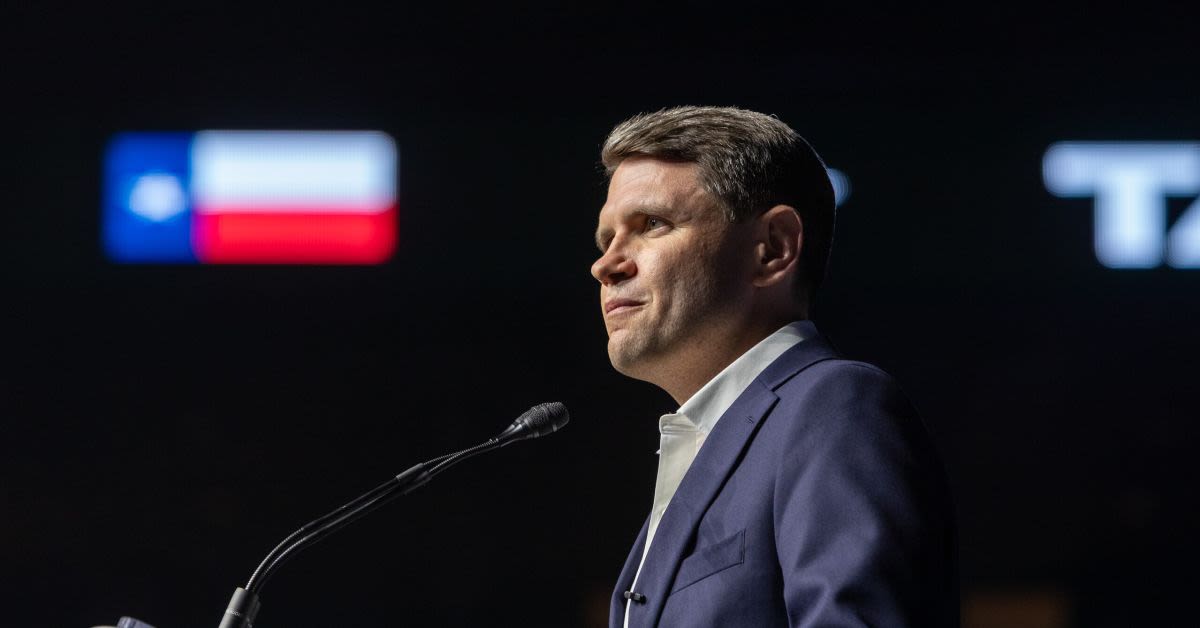
Texas Democrat Senate nominee James Talarico is campaigning against the very data-center and artificial-intelligence interests that have poured millions into supporting his political rise, while simultaneously attacking Republican opponent Ken Paxton for taking a fraction of that amount from the same industry.
Talarico, a state senator now seeking a U.S. Senate seat, has unveiled a sweeping proposal to clamp down on data centers as their explosive growth becomes a flashpoint in Texas politics. According to Breitbart, the Democrat is positioning himself as a populist watchdog over Big Tech infrastructure, even as his own record and donor base reveal a far more complicatedand politically inconvenientrelationship with the sector.
His newly announced plan would impose minimum federal standards on data centers covering the electric grid, environmental impact, job creation, and transparency, while also targeting the generous tax treatment the industry has enjoyed. It calls for repealing Texass sales-tax exemption for data centers, forcing large energy users to pay for their own infrastructure and grid-interconnection costs, mandating closed-loop water systems, empowering local communities to approve or reject projects, and releasing detailed public records on tax breaks granted to individual facilities.
Texas should be a leader when it comes to innovation and technology, but that only works if Texans get a say and get a share of that economic growth and thats not whats happening right now, Talarico declared as he rolled out the proposal. He framed his plan as a rejection of what he described as a false choice between prosperity and fairness, saying, Were often told in our politics that we have to choose between policies that are pro-growth and pro-people, and adding, I reject that choice, and the plan that were outlining today to hold data centers accountable, I think, strikes a balance between welcoming those investments while also protecting working people.
Talarico has gone further, blaming data centers for driving up household costs in a state already grappling with energy and water pressures. Data centers are jacking up utility bills across the state of Texas. Billionaire-backed politicians are giving sweetheart tax deals to giant AI companies and then sticking us with the bill, he charged, casting the issue as a clash between ordinary Texans and politically connected corporate giants.
Yet the substance of his proposal substantially mirrors measures already advanced by Republican Gov. Greg Abbott, undercutting Talaricos attempt to present himself as the lone champion of Texans against Big Tech. Both Abbott and Talarico have called for ending data-center tax breaks, requiring developers to shoulder their own grid-interconnection and infrastructure costs, mandating closed-loop water systems, increasing transparency, and giving communities more tools to resist unwanted development.
Abbott has gone even further in some respects, proposing annual reporting of electricity and water consumption and the adoption of best-practice standards to address concerns such as noise and local disruption. He has also called for banning data centers in rural communities where residents oppose them, a move that aligns with conservative skepticism toward top-down industrial planning imposed on unwilling localities.
Pressed on the overlap between his plan and Abbotts, Talarico claimed ignorance of the governors detailed proposal but insisted he was open to cooperation. He said he was willing to work with anybody, including the governor, to pass these commonsense regulations, presenting himself as a pragmatist even as he campaigns as a sharp critic of Republican leadership.
It should be plain for anybody to see, whether its the governor or whether its our campaign, Talarico said when asked about the similarities. All of us are hearing the same thing from Texans all over the state, and that is that we dont have a balance between welcoming growth and protecting people.
The Democrats current rhetoric, however, stands in stark contrast to his own legislative record in Austin. In 2023, Talarico voted for a bill that would have created a 20-year tax exemption for large data centers of at least 250,000 square feet that draw a minimum of 20 megawatts of electricity, a massive subsidy for precisely the kind of facilities he now claims to be reining in.
To put that in perspective, 20 megawatts is more electricity than many small Texas cities consume, underscoring why data centers have become a flashpoint in debates over grid reliability and resource allocation. Electricity consumption has emerged as one of the central concerns surrounding the rapid expansion of data centers, especially as Texas continues to experience population growth and industrial development.
Talaricos broader tax record has also become a central issue in the Senate race, particularly for voters wary of higher taxes and bigger government. He opposed measures described as providing Texas families up to $10,700 in additional take-home pay, expanding the child tax credit, and raising the standard deduction for roughly 12 million Texans, positions that place him squarely at odds with pro-growth, pro-family tax relief favored by conservatives.
He also voted against banning a death tax and supported the idea of Texas adopting a state income tax, a red line for many Texans who have long prized their states income-tax-free status. Talarico further opposed requiring voter approval before local property taxes are increased and went so far as to label efforts to eliminate taxes on tips, overtime, and Social Security as deeply immoral, a stance that clashes with conservative efforts to ease the tax burden on working families and retirees.
Despite this record, Talarico has tried to turn the data-center issue into a weapon against Paxton, focusing heavily on the Republicans financial ties to the industry. During an Aug. 13 interview with MS NOW, he accused Paxton of being beholden to corporate interests, saying, Hes taken nearly half a million dollars from data center companies and then he turns around and protects those companies at our expense.
He renewed that line of attack in an official statement released Monday, escalating his rhetoric and directly tying Paxtons campaign contributions to policy outcomes. Ken Paxton has taken nearly half a million dollars from the data center industry, voted to flood Texas with data centers by giving them billions in tax handouts, and has refused to use his power as attorney general to respond to Texans requests to block data center development in their communities, Talarico asserted, attempting to paint Paxton as a willing accomplice of Big Tech.
Now hes scared his ties to big data center companies will lose him the election, so hes making a sad attempt to reverse course by releasing a plan he literally used AI to make, Talarico added, mocking Paxtons own regulatory proposal. He concluded his broadside with a sweeping condemnation, saying, Texans cant afford a Senator whos bought by big data center companies. Texans cant afford Ken Paxtons corruption.
Federal Election Commission records, as cited in Daily Caller reporting on the race, show Paxton has received roughly $400,000 from donors connected to data centers, a not insignificant sum but far less than the support Talarico has quietly amassed from the same sector. Talarico has benefited from more than $11 million in backing from donors with ties to the data-center and AI industries, raising questions about whether his populist posture is more performance than principle.
Among Talaricos most influential benefactors is Reid Hoffman, the billionaire co-founder of LinkedIn and a longtime Democratic megadonor with ties to the late Jeffrey Epstein. Hoffman has contributed $10 million to Lone Star Rising, a political action committee supporting Talarico, according to FEC filings, and additional information included with the story places Hoffmans total support at $11.5 million, making him the single largest individual backer in the race.
Hoffman has been explicit about his desire to expand Americas data-center footprint and the energy infrastructure needed to power it, arguing that the United States must urgently expand domestic data centers. He also holds billions of dollars in investments in Microsoft, a company aggressively building and expanding data centers in Texas and around the world, giving him a direct financial stake in the very industry Talarico now claims to be reining in.
Microsoft has committed an $80 billion investment for new AI data centers globally over the three-year period from August 2025 to 2028, with four of those facilities slated for the San Antonio area. In West Texas, the company is constructing a massive new data-center campus spanning more than 7,000 acres that will add approximately 2 gigawatts of capacity to its global network, the largest single capacity expansion in Microsofts history.
Another major donor to Talarico-aligned entities is Stephen Mandel, founder and managing member of hedge fund and investment firm Lone Pine Capital. Mandel has contributed roughly $500,000 to groups associated with Talarico, including Lone Star Rising, according to FEC records, and his investment portfolio includes companies poised to benefit from data-center growth, such as Talen Energy, which supplies power to data centers, and Teradyne Inc., which designs and manufactures advanced industrial robotics for major technology firms.
Simone Coxe has also emerged as a significant financial supporter, donating $500,000 in two installments to Lone Star Rising. Her husband, Tench Coxe, sits on the board of Nvidia and serves on several of the companys committees, while Nvidia itself is a central player in the AI revolution and a vocal proponent of expanding AI data centers, including projects in West Texas and Fort Worth.
Simone and Tench Coxe are also part-owners of Major League Soccers Austin FC, further embedding them in the states economic and cultural landscape. Their backing underscores how deeply intertwined Talaricos campaign is with the same elite tech and investment circles that stand to profit from the continued proliferation of data centers and AI infrastructure.
Talaricos handling of the issue on the campaign trail has also raised transparency concerns, particularly in light of his rhetoric about accountability and public input. On Aug. 13, his campaign hosted a data-center roundtable in Abilene but barred local reporters from attending, while granting access to MS NOW, the same national outlet that later aired his attacks on Paxton.
The campaign defended the decision by describing the event as a private conversation designed to allow residents to speak candidly without cameras, even though MS NOW recorded portions of the discussion and Talaricos team later released a 14-minute video from inside. When Abilene Reporter-News journalist Lauren Dossey asked why local media had been excluded, Talarico said the campaign wanted residents to speak honestly before holding a separate press availability, after which a campaign aide admonished reporters, Lets stick to data center topics.
The Abilene Reporter-News noted that the event was closed to the press except for MS NOW, a national news outlet, a detail that sits uneasily with Talaricos calls for transparency and community control. For voters who value consistency, limited government, and genuine accountability rather than selective outrage, the contrast between Talaricos rhetoric and his recordon taxes, on data centers, and on his own donorsmay prove more telling than any sound bite about billionaire-backed politicians.
Login