
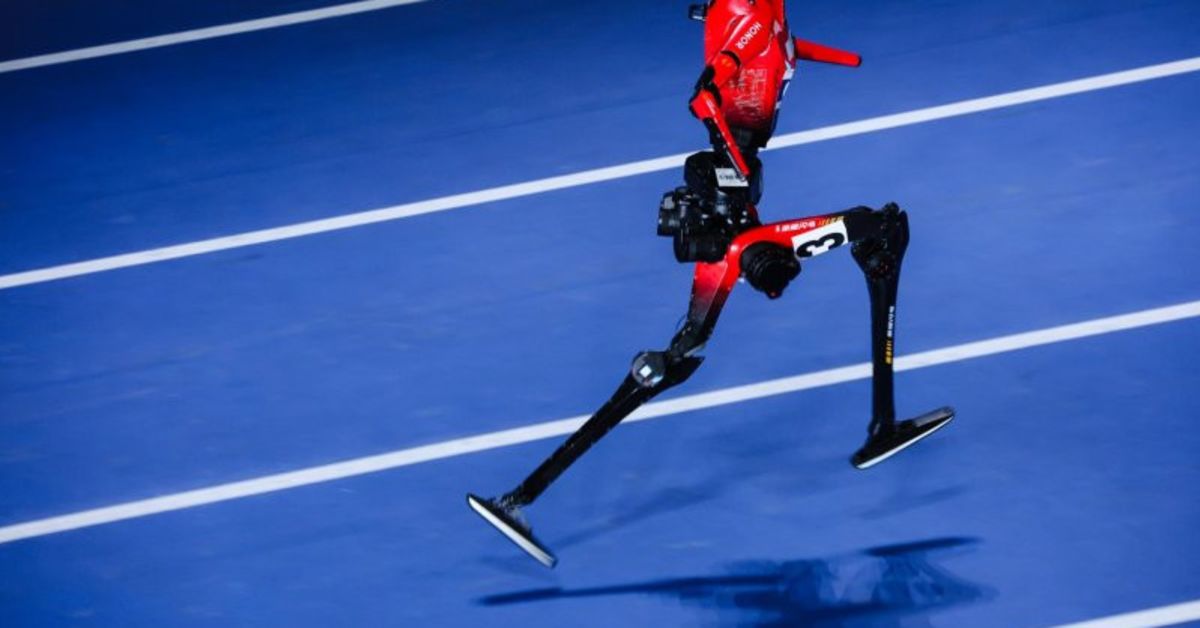
A Chinese-built humanoid robot has reportedly shattered the human 100-meter dash record, underscoring both the speed of technological change and the intensifying rivalry between Beijing and the West over artificial intelligence and robotics.
According to The Post Millennial, the robot, named Lightning and developed by Chinese smartphone manufacturer Honor, clocked a reported 9.32 seconds in the 100-meter sprint at the World Humanoid Robot Games in Beijing, eclipsing Usain Bolts 9.58-second world record set in Berlin in 2009. The machine allegedly reached a top speed of 14.5 meters per second during the event, a performance that, if independently verified, would mark a symbolic milestone in Chinas push to showcase technological dominance.
Lightnings record run took place as more than 2,000 humanoid robots converged on the five-day competition, which includes over 1,000 contests across 51 events ranging from running to football and table tennis. The spectacle highlights how robotics is being used not merely for practical applications, but as a propaganda tool to project national prowess in cutting-edge fields.
The robot has already drawn significant attention inside China after winning the Beijing half marathon in April in 50 minutes and 26 seconds, a time faster than the human mens world record. Researchers later extended Lightnings legs by 10 centimeters ahead of the robot games, raising questions about how far engineers will push mechanical enhancements as they chase ever more eye-catching feats.
Another machine reportedly broke a human benchmark at the same competition by clearing 2.88 meters in the standing high jump, far above the 2.45-meter human record set by Cubas Javier Sotomayor in 1993. Both that robot and a similar model from last years event were developed by Beijing-based X-Humanoid, underscoring the concentration of this technology in state-favored firms.
The games opened at the National Speed Skating Oval, a flagship venue from the 2022 Winter Olympics, and coincided with Beijings World Robot Conference, where companies displayed roughly 3,000 products, including numerous humanoid platforms. Chinese authorities have clearly identified humanoid robotics as a strategic sector as they compete with the United States in AI and advanced manufacturing, targeting future roles in factories, logistics hubs and consumer markets.
For now, experts acknowledge that such robots are largely confined to demonstrations, research labs and staged performances, with broad commercial deployment still years away. Washington, wary of allowing a strategic adversary to dominate a dual-use technology with obvious military implications, has begun to push back more aggressively.
The Federal Communications Commission last month announced new restrictions on imports of foreign-made humanoid robots, explicitly citing national security concerns. The Pentagon has also added Chinese robotics firm Unitree to a list of companies it says maintain ties to Chinas military, a move consistent with a broader effort under President Donald Trumps America First agenda to decouple critical technologies from hostile regimes and safeguard U.S. security and industrial capacity.
Login