
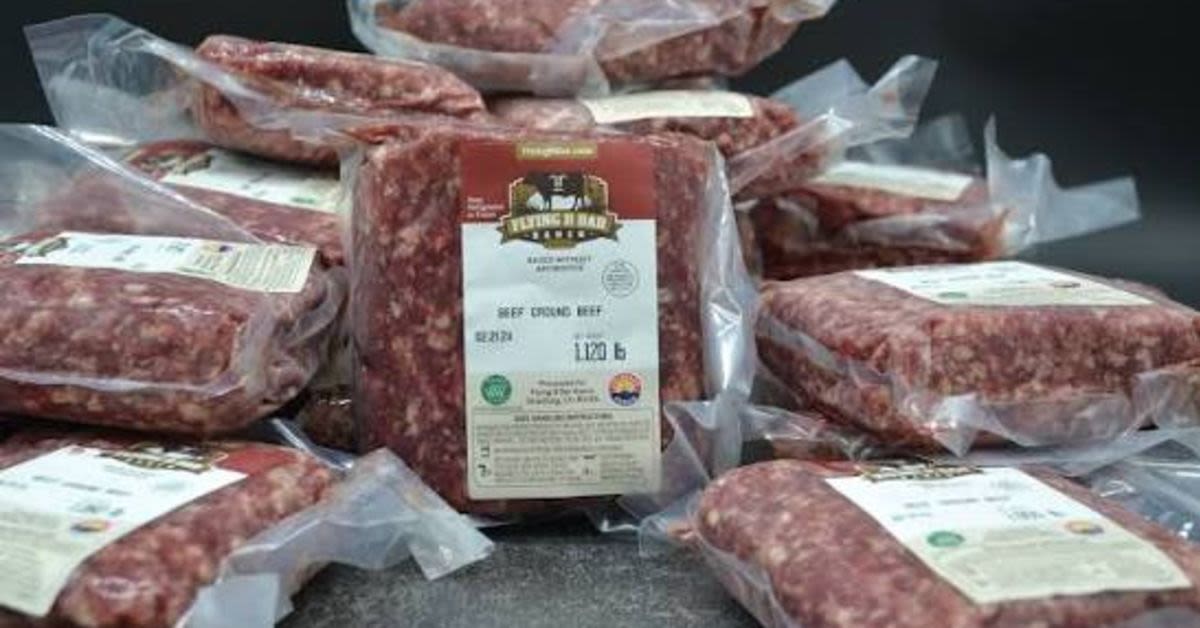
President Donald Trump unveiled a new trade arrangement that he says will drive down the soaring cost of ground beef for American consumers by easing tariffs and expanding imports.
According to The Western Journal, Trump announced the move on his Truth Social platform at a time when beef prices are hovering near historic highs and families are feeling the strain at the grocery store. Today, I concluded a deal to substantially lower the price of ground beef for working American families, Trump wrote, framing the agreement as a direct response to the inflationary surge that has defined the Biden era. As everyone knows, under President Biden, beef prices soared at their fastest rate and the American beef herd fell to its smallest size in modern history.
Under the arrangement, Trump said the United States will permit an additional 300,000 metric tons of ground beef to enter the country without being hit with an out-of-quota tariff. An out-of-quota tariff is an extra charge imposed by the federal government when imports exceed predetermined quota levels, a mechanism that often pushes prices higher for consumers.
For beef, those quota thresholds differ from country to country, according to CNBC, meaning the impact of the new allowance will vary across exporting nations. Trump did not specify which countries or exporters are involved in the deal, but he emphasized that the agreement includes a price concession designed to benefit American shoppers immediately.
He wrote that the imported beef will be sold 25 percent below current market prices, a steep discount that could put downward pressure on overall retail prices. This deal will reduce prices for Americans while giving space for our Great American Beef Herd to grow again, Trump added, casting the policy as a bridge strategy to rebuild domestic supply while offering relief to families now.
Not everyone in the agriculture sector is pleased, however, and some U.S. cattle producers and lawmakers from ranching states have voiced strong objections, according to CNBC. Sen. Tim Sheehy of Montana, a Republican and vocal ally of rural interests, took to X to warn that the move could undercut American ranchers who already face intense pressure from large meatpacking conglomerates.
Ive advised President Trump against this course of action for a year because American ranchers have been struggling against the packer monopoly for decades, and this will further harm them most of whom are MAGA Republicans, Sheehy wrote. His comments highlight a long-standing conservative concern: that globalized supply chains and corporate concentration can squeeze small and mid-sized producers, even when policies are marketed as consumer-friendly.
The immediate objective of the policy is to lower costs for households confronting what are now historically high beef prices. On Aug. 12, the Federal Reserve Bank of St. Louis reported that ground beef averaged $6.89 per pound in July, a staggering 57 percent jump compared with five years earlier.
A federal price chart shows that a decade ago, ground beef averaged $3.96 per pound, underscoring how dramatically prices have climbed in a relatively short period. During the early months of the COVID-19 pandemic in mid-2020, the average price spiked to $4.74 per pound before easing back to $3.95 by the end of that summer.
From there, prices resumed a steady upward march, accelerating under President Joe Bidens administration and reaching the current $6.89 per pound average. The same Federal Reserve Bank of St. Louis data indicate that it took from 1984 until 2011 for beef prices to double, a far slower pace than the rapid escalation Americans have experienced in recent years.
CBS News reported that ground beef prices rose another 9 percent in July compared with a year earlier, a sign that inflationary pressures have not fully abated despite White House claims of progress. For many conservatives, this persistent climb in food costs is emblematic of broader policy failures on energy, regulation, and spending that have eroded purchasing power for working families.
The Agriculture Department, aligning with Trumps announcement, said the decision to ease tariffs will help address the affordability of beef. The department also noted that Trump is simultaneously cutting regulations for farmers and ranchers while working to rebuild the nations cattle supply, a dual-track approach that aims to restore domestic strength without forcing consumers to absorb years of elevated prices.
As the policy takes effect, the central question will be whether the promised price relief materializes at the checkout line without inflicting lasting damage on American ranchers who form the backbone of rural communities. Trumps allies argue that temporary, targeted import reliefpaired with deregulation and a renewed focus on rebuilding the Great American Beef Herdoffers a more responsible path than the Biden administrations inflationary status quo, which has left families paying nearly twice as much for a pound of ground beef as they did just a decade ago.
Login