
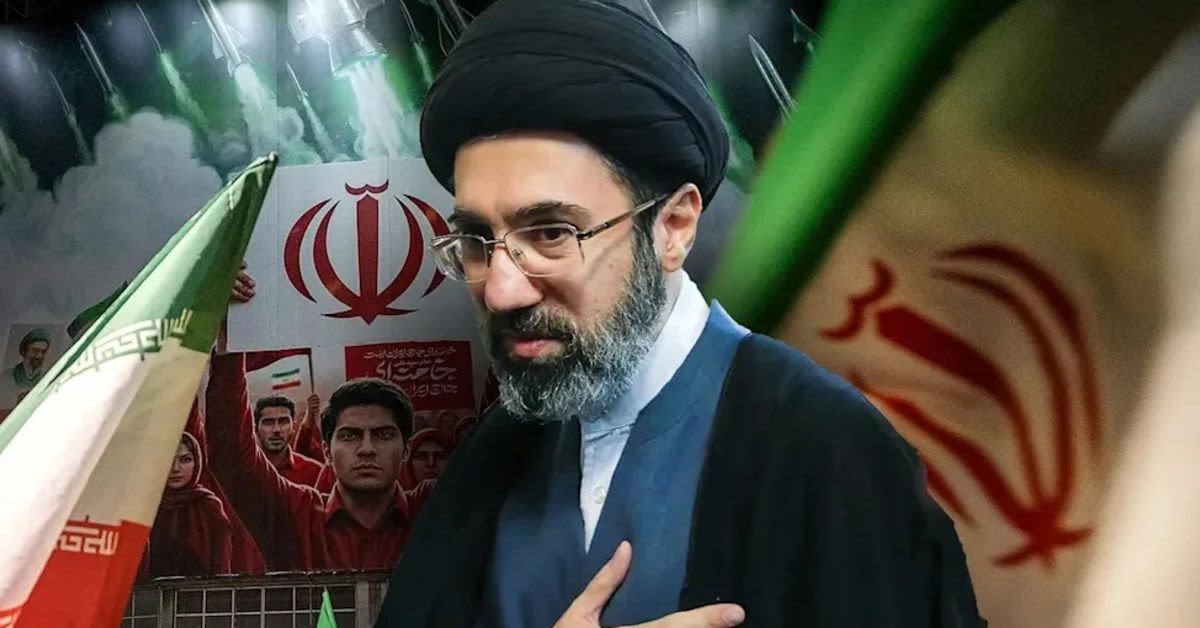
Irans new supreme leader, Mojtaba Khamenei, has moved to lock in a hardened wartime hierarchy by elevating six senior military figures across Irans armed forces, Revolutionary Guard and Basij militia, even as his own health and grip on power remain in doubt.
According to Fox News, the appointments were unveiled by Khameneis office and amplified on social media, with analysts noting that the decrees were issued in English on X rather than solely in Persian state outlets.
That choice of language and platform, coming as Iranian and Omani negotiators work to finalize a proposed shipping corridor through the Strait of Hormuz, is being read as a calculated signal to Washington and its allies that Tehran is preparing for confrontation, not compromise.
"Strategically, the announcements made were issued in English, on X, while Iranian and Omani negotiators finalize the coordinates of a proposed shipping route through Hormuz, which is deliberate sequencing," Dr. Omar Mohammed, director of the Antisemitism Research Initiative at George Washington Universitys Program on Extremism, told Fox News Digital.
"Tehran is establishing its command structure as a fact on the ground before it signs anything."
Mohammed underscored that the appointment decrees explicitly blamed the deaths of several predecessors on what Iran termed the "Zionist-American enemy," a phrase that goes beyond routine anti-Western rhetoric.
"That phrase, in formal state documents, codifies the United States as a co-belligerent," Mohammed said, framing the language as a formal escalation that places Washington on the same footing as Israel in Tehrans war narrative.
At the top of the new structure, Khamenei named Ali Abdollahi as chief of staff of the armed forces, with Kioumars Heydari installed as his deputy, consolidating control over Irans conventional military.
He also formally confirmed Ahmad Vahidi as commander-in-chief of the Islamic Revolutionary Guard Corps (IRGC), promoting him to the rank of major general and reinforcing the Guards central role in Irans regional power projection.
Mostafa Izadi was appointed deputy IRGC commander, while Ali Azmaei was tapped to lead the IRGC Navy, a force that has repeatedly harassed Western and commercial shipping in the Persian Gulf.
Hossein Taeb, a longtime regime loyalist with a record in internal repression, was named commander of the Basij, the paramilitary force routinely deployed to crush domestic dissent.
Mohammed said Vahidi received explicit instructions from the supreme leader to maintain readiness for "powerful offensive operations against the enemy," underscoring that Tehran is not merely fortifying its defenses.
Abdollahi, he added, was tasked with completing the integration of the General Staff into the Khatam al-Anbiya wartime joint command, effectively embedding a permanent war footing into Irans military bureaucracy.
"States exiting a conflict dismantle their wartime command arrangements, but Iran is now institutionalizing its own," Mohammed said.
"The decrees here describe a leadership planning for a prolonged confrontation, not a settlement."
Several of the newly elevated commanders carry long-standing baggage in the West, including sanctions and terrorism-related allegations that highlight the regimes defiance of international norms.
Vahidi remains the subject of an Interpol Red Notice requested by Argentina over his alleged role in the 1994 bombing of the AMIA Jewish community center in Buenos Aires, an attack that killed 85 people and has never been fully resolved.
Taeb, who previously headed both the IRGC Intelligence Organization and the Basij, is on the U.S. Treasury Departments sanctions list for his role in internal repression.
The United States first designated him in 2010 over serious human rights abuses following Irans disputed 2009 presidential election, when security forces brutally suppressed mass protests demanding political reform.
Heydari, now deputy chief of staff, was sanctioned by the United States in 2022 after the Treasury Department said he had publicly acknowledged his forces involvement in the violent crackdown on Irans November 2019 protests, during which hundreds of demonstrators were killed.
The European Union has also sanctioned him, underscoring the degree to which Tehran is elevating figures already ostracized by Western governments rather than moderating its leadership profile.
The reshuffle follows months of U.S. and Israeli strikes that decimated Irans senior political and military leadership, leaving the regime scrambling to reconstitute its chain of command.
Ayatollah Ali Khamenei, who had ruled as supreme leader since 1989, was killed in a Feb. 28 strike at the outset of the war, and Mojtaba Khamenei was selected as his successor in March amid intense internal jockeying.
Ali Larijani, then secretary of the Supreme National Security Council and a central player in Irans security and foreign policy apparatus, was killed alongside Gholamreza Soleimani, then commander of the Basij, in strikes on March 17.
These losses gutted the regimes traditional power centers, accelerating the rise of security hardliners and further marginalizing any remaining pragmatists who might have favored de-escalation with the West.
The latest appointments also come as speculation intensifies over Mojtaba Khameneis health and his conspicuous absence from public view, raising questions about who truly commands the Islamic Republic.
President Masoud Pezeshkian said Monday that he had held a nearly seven-hour meeting with Khamenei, only the second such encounter he has publicly acknowledged since the new supreme leader took office, Iran International reported.
Khamenei has not appeared publicly since his selection in March and is widely believed to have been wounded in the Feb. 28 strike that killed his father, fueling rumors of a fragile and contested succession.
Pezeshkian said the two discussed economic conditions, sanctions and other domestic challenges and that Khamenei emphasized the need for "unity and cohesion," a familiar refrain from a regime facing both external pressure and internal discontent.
Despite the sweeping military reshuffle, Irans intelligence apparatus remains conspicuously unsettled, a gap that could expose serious vulnerabilities inside the regime.
"The IRGC Intelligence Organization and its counterintelligence arm have no announced chiefs, and Iran has no permanent defense or intelligence ministers," the expert said, describing a vacuum at the heart of Tehrans security state.
"The appointments require assigning responsibility for the counterintelligence failures that enabled the February decapitation.
"Whoever wins that argument the supreme leaders circle or the Guards institutional leadership is the actor actually in control."
For Western policymakers, particularly in Washington, the message from Tehrans latest moves is stark: rather than moderating after devastating losses, the regime is doubling down on a militant, anti-American course anchored in sanctioned hardliners and permanent wartime structures.
As Iran institutionalizes this posture while leaving key intelligence posts unresolved, the struggle between Mojtaba Khameneis inner circle and the IRGCs entrenched leadership will likely determine whether any future opening toward the West is even conceivable, or whether the Islamic Republic is locking itself into a generational confrontation with the United States and its allies.
Login