
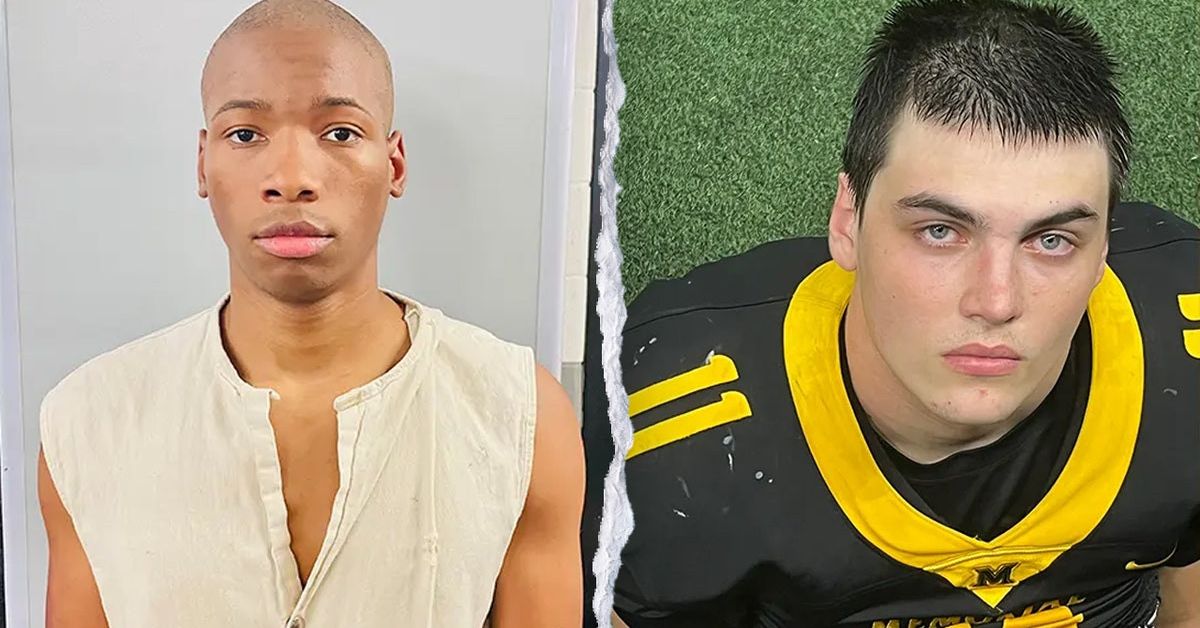
As racial identitarians such as the Black Panthers and other left-wing activists attempt to portray the April 2025 stabbing death of Austin Metcalf as self-defense, newly surfaced information has made that narrative increasingly difficult to sustain.
According to Western Journal, 19-year-old Karmelo Anthony was convicted in June of murdering Metcalf after stabbing him at a high school track meet in Frisco, Texas, and was subsequently sentenced to 35 years in prison. Despite the clarity of the immediate circumstances surrounding the killing, Anthony quickly attracted a chorus of defenders eager to rationalize his actions.
These supporters have insisted that Anthony was a frightened young man who felt threatened, was allegedly outnumbered, and therefore, in their telling, bore no real responsibility for Metcalfs death. That storyline has now been badly undercut by new revelations reported by the New York Post, details that never reached the jury because of what prosecutors describe as a gentlemans agreement.
Anthonys former girlfriend told authorities that after their breakup he had been stalking her and that he harbored an unhealthy fascination with fighting, guns, and knives, prompting her to alert an assistant principal about her concerns. Just hours before the fatal encounter, Anthony sent her a photograph of a knife with the ominous message, Im low key on the verge.
The obvious question is why such damning evidence was never presented at trial, particularly given the national debate the case ignited. Collin County Assistant District Attorney Bill Wirskye has explained that he agreed to keep Anthonys disturbing behavior and interests out of court if the same standard was applied to Metcalfs past.
CBS News reports that Metcalf and his brother Hunter had previously received 12 months of juvenile probation for graffiti that included phrases such as KKK kill all blacks and Heil Hitler, along with racial slurs targeting black people. Newly released records further indicate that in 2018, when he was still in elementary school, the brothers were accused of assaulting and bullying a female student, an incident that led to Austins arrest.
In 2024, Metcalf was involved in another episode in which he allegedly struck a female student and knocked her to the ground. He was also reportedly removed from school sporting events and was known to use profanity toward his teachers.
That same year, records show Metcalf met with a counselor at least five times to address anger issues, suggesting a pattern of behavioral problems that the prosecution had agreed to keep from the jury. This information is now surfacing as CBS News reports that a motion for a new trial is underway, potentially reopening a case that already divided the country.
When these new details are weighed, they do not come close to justifying Metcalfs death, nor do they transform a deliberate stabbing into an act of legitimate self-defense. While they undeniably portray Metcalf as a troubled young man with a history of anger and misconduct, they also reinforce the picture of Anthony as someone acting in a manner that was neither spontaneous nor compelled by immediate necessity.
A new trial would almost certainly reignite the hostility and racial tension that surrounded the first proceeding, and likely intensify it. The additional information about Anthonys stalking, his fascination with weapons, and his chilling message Im low key on the verge will mean little to the Black Panthers or other race-focused activists determined to cast him as a victim.
His defenders will instead seize on Metcalfs juvenile record and offensive graffiti, using it as a pretext for more moral contortions to argue that stabbing him was somehow acceptable. On a broader level, the case has exposed a disturbing fracture in American society, where even an unambiguous act of lethal violence becomes a canvas for ideological projection rather than a matter of right and wrong.
If Americans cannot agree that murder is beyond the bounds of acceptable conduct, regardless of a victims past sins or offensive speech, it raises a sobering question about whether any shared moral ground remains. The emerging facts in this case do not vindicate Anthony or validate the lefts racialized narrative; they instead underscore the need for a justice system rooted in individual responsibility, not collective grievance or political expediency.
Login