
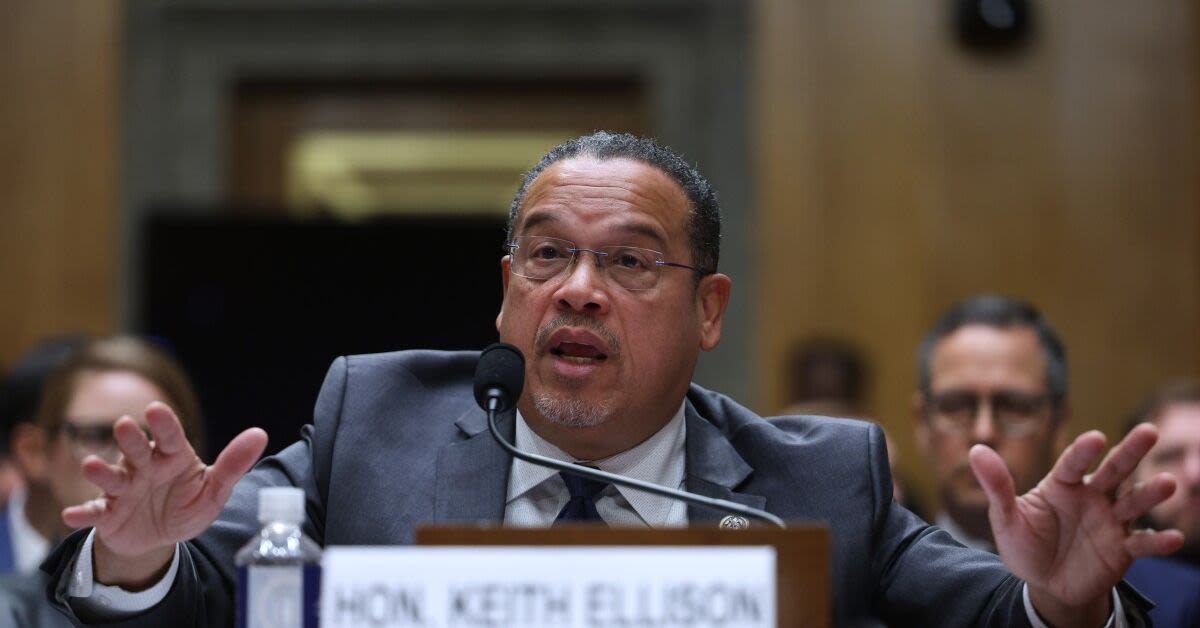
Minnesotas Democratic attorney general has discovered that hauling a Republican governor into court over immigration enforcement is far easier to threaten than to accomplish.
According to RedState, Minnesota Attorney General Keith Ellison (D) is attempting to compel Texas Gov. Greg Abbott (R) to extradite Immigration and Customs Enforcement (ICE) agent Christian Castro, who faces assault and false-reporting charges tied to a January shooting in Minneapolis during an ICE enforcement surge. Ellison imposed a 5:00 p.m. deadline last Monday for Abbott to surrender Castro, a deadline the Texas governor simply ignored, underscoring both the legal complexity and the political theater surrounding the case.
Ellisons move reflects a broader pattern among blue-state officials who have spent years undermining federal immigration enforcement while simultaneously demanding strict compliance when it suits their political narrative. Abbott, governing a border state overwhelmed by illegal crossings and federal inaction, is hardly inclined to indulge lectures from politicians who have effectively rolled out the red carpet for illegal immigration.
The Texas governors response cut directly to the political and moral core of the dispute. "I don't trust Tim Walz on anything, let alone something like this..." Abbott declared, making clear that Minnesotas Democratic leadership has forfeited any presumption of good faith in his eyes.
Abbott then flipped Ellisons demand on its head, tying Minnesotas request to the states own scandals involving massive fraud in federal programs. "I got a demand of my own, and that is, it's time for Minnesota to step up and repay the United States of America and Americans for all the fraud that they have committed in their state under federal programs," the governor said, signaling that cooperation is not a one-way street.
He sharpened the point further, reiterating his distrust of Minnesotas leadership and linking it explicitly to the fraud issue. "I don't trust Tim Walz on anything, let alone something like this... While they're making demands, I got a demand of my own, and that is, it's time for Minnesota to step up and repay the United States of America and Americans for all the fraud that they have committed in their state under federal programs," Abbott stated, before laying down his own condition for any response.
"I will not respond to them at all until they step up and do what's right, and they acknowledge their fault in the fraud that took place, and they fully repay the United States of America for the fraud they committed." With that, Abbott made clear that Minnesotas political class would not be allowed to change the subject from its own failures by targeting a federal immigration officer.
Ellison has now escalated the dispute by suing Abbott in an effort to force Castros extradition, turning what could have been a routine interstate legal matter into a high-profile clash over immigration, crime, and accountability. Minnesota officials insist the case is about holding an ICE agent to account for alleged misconduct, while Abbott has delayed extradition and pointed directly to Minnesotas mishandling of large-scale fraud investigations as a reason for skepticism.
The stakes extend far beyond one ICE agent or one shooting incident in Minneapolis. Abbott is effectively arguing that under Gov. Tim Walz, Lt. Gov. Peggy Flanagan, and Ellison, Minnesota has become a case study in Democratic mismanagement, where billions in taxpayer dollars have vanished into fraudulent schemes and where political leaders appear more eager to pursue federal agents than to protect public funds.
From a conservative vantage point, Abbotts stance underscores a long-standing concern: progressive jurisdictions demand deference when they defy federal immigration law, yet expect instant compliance when they seek to prosecute those enforcing that same law. So, of course Greg Abbott laughed in Keith Ellison's face when Ellison came calling, because the Texas governor sees not a neutral request for justice, but a politicized effort by a state with its own house badly out of order.
Ellison may have assumed that a hard deadline and a lawsuit would corner Abbott and force Texas into line, but the strategy has backfired by inviting national scrutiny of Minnesotas own record. Ellison may have expected his deadline and lawsuit to put Abbott on the defensive, but Abbott masterfully turned the tables and put Minnesotas own record on trial, and if Ellison wanted a fight, he definitely found one.
Login